
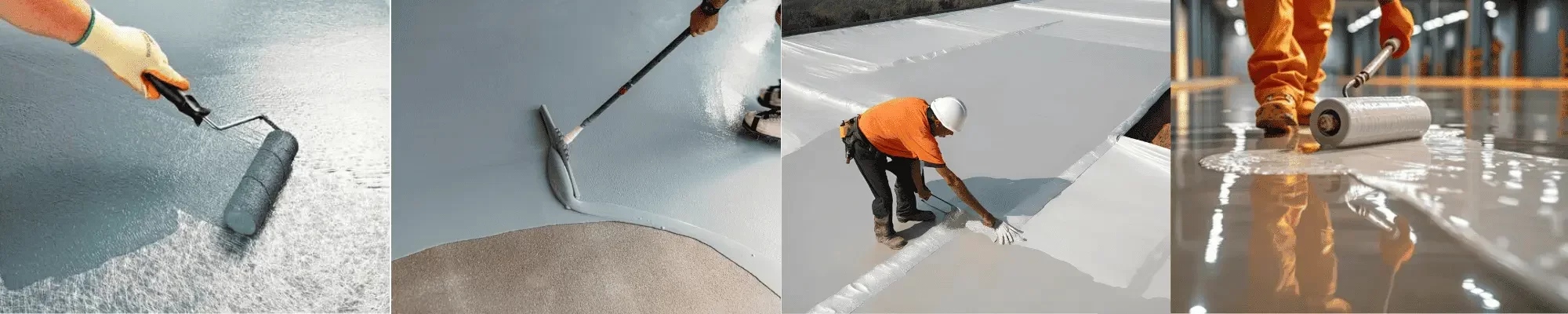
Waterproofing Products & Waterproofing Chemicals for long lasting infrastructure
Multichem offers a complete product line for waterproofing products for buildings and structures to prevent water leakage, seepage and moisture ingress. Our waterproofing solutions are applied to roofs and terraces, basements, foundations, underground structures, water tanks, wet areas, concrete structures and other areas exposed to water or moisture. It is crucial to select the correct waterproofing system as each structure has unique exposure issues, water pressure, surface characteristics and movement needs, and ; the right system will provide long-lasting protection, prevent recurring water-related damage and extend the service life of the structure.
Explore our Waterproofing Solutions
- Roof & terrace waterproofing
- Basement & foundation waterproofing
- Podium & Balcony Waterproofing
- Bathroom & wet-area waterproofing
- Water tank waterproofing
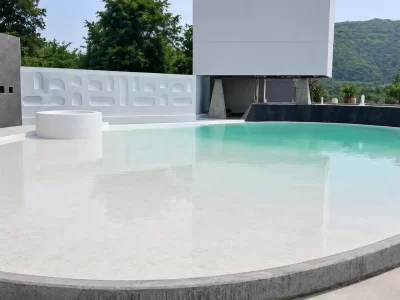
- Swimming Pool Waterproofing
- Concrete waterproofing
- Injection grouting
- Waterproofing admixtures
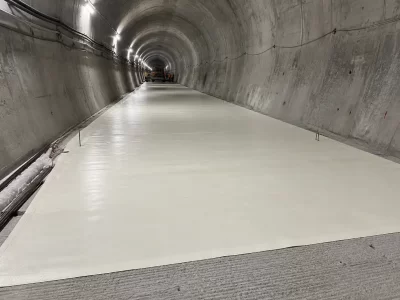
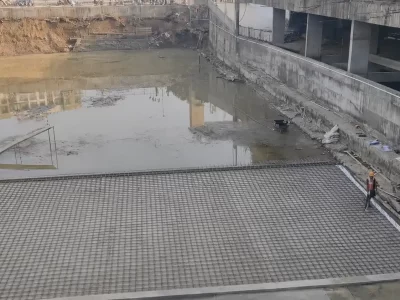
- Tunnel & Infrastructure Waterproofing
- Industrial Waterproofing
Types of Waterproofing Products
Different structures experience different types of water exposure. Multichem offers a range of waterproofing chemicals based on different technologies and application requirements to achieve reliable and long-term performance.
Crystalline Technology
Best for: Basements waterproofing, foundations and concrete water-retaining structures.
How it works: Crystalline materials react within the cementitious matrix to form insoluble crystalline structures that help reduce water pathways through concrete.
Advantages: Can be used on concrete substrates and may be appropriate for negative-side waterproofing (depends on the system and site).
Considerations: Cracks, construction joints, movement joints and active leaks generally require separate treatment.
read more...
Polyurethane Systems
Best for: Roofs, terrace, Tank waterproofing, balconies, wet areas and concrete surfaces requiring flexible waterproofing.
How it works: Liquid polyurethane cures to form a seamless, flexible membrane that helps prevent water penetration and accommodates limited substrate movement.
Advantages: Seamless application, good flexibility and suitability for exposed roofs, terraces and wet-area applications.
Considerations: Surface preparation, moisture conditions, primer selection and coating thickness are critical to long-term performance.
Cementitious Systems
Best for: Basements, foundations, bathrooms, wet areas waterproofing and concrete water-retaining structures.
How it works: Cementitious waterproofing forms a dense protective layer over concrete or masonry, helping reduce water penetration through the treated surface.
Advantages: Good compatibility with concrete and masonry, easy application and suitability for many below-ground and wet-area applications.
Considerations: Rigid systems may have limited movement tolerance, so dynamic cracks and movement joints require separate assessment and treatment.
Integral Admixtures
Best for: Foundations, slabs, basements, water-retaining structures and new concrete construction.
How it works: Admixtures are added during concrete or mortar mixing to reduce permeability and limit water movement through capillary pores.
Advantages: Integrated into the concrete, helps reduce permeability and complements surface-applied waterproofing systems.
Considerations: Does not replace proper treatment of cracks, construction joints, movement joints and service penetrations.
Elastomeric Coatings
Best for: Roofs, terraces, external walls and concrete surfaces exposed to weather.
How it works: Elastomeric coatings cure into flexible membranes that resist water penetration while accommodating limited surface movement.
Advantages: Flexible, seamless and suitable for many exposed applications where protection against rainwater and moisture is required.
Considerations: Performance depends on substrate preparation, adhesion, coating thickness and compatibility with the existing surface.
Polyurea Systems
Best for: Industrial structures, roofs, decks, tanks and applications requiring rapid return to service.
How it works: Two reactive components combine during application and cure rapidly to form a seamless, tough and flexible waterproofing membrane.
Advantages: Very fast curing, seamless application, high flexibility and strong resistance to abrasion and demanding service conditions.
Considerations: Requires specialised spray equipment and trained applicators, with surface preparation and application conditions critical to performance.
Polymer Modified Systems
Best for: Concrete and masonry surfaces requiring improved flexibility and adhesion.
How it works: Polymer modification enhances the cementitious matrix, improving adhesion, flexibility and resistance to minor substrate movement.
Advantages: Better adhesion and flexibility than many conventional cementitious systems, with suitability for various concrete, masonry and wet-area applications.
Considerations: Product selection should account for substrate condition, water exposure, required flexibility and the extent of potential movement.
HDPE Membrane
Best for: Basements, foundations, retaining structures, podiums and below-ground structures.
How it works: HDPE membranes create a continuous physical barrier that prevents groundwater and surrounding moisture from reaching the protected structure.
Advantages: High resistance to water penetration, durable polymer construction and suitability for demanding below-ground waterproofing applications.
Considerations: Correct installation, overlaps, joints, terminations and protection against construction damage are essential for membrane performance.
Injection Grouting
Best for: Active leaks, concrete cracks, construction joints and defined water ingress pathways.
How it works: Specialised grout is injected into cracks or voids, where it reacts, expands or cures to seal the pathway through which water is entering.
Advantages: Targets specific leakage paths, can treat inaccessible water pathways and allows grout chemistry to be selected according to site conditions.
Considerations: Injection grouting is generally a targeted repair technique and does not replace a complete waterproofing system where broader protection is required.
Silicone Coatings
Best for: Exterior walls, facades and porous mineral surfaces requiring water repellency.
How it works: Silicone-based treatments penetrate compatible porous substrates and create a water-repellent surface that reduces water absorption.
Advantages: Provides effective water repellency, suits many porous mineral substrates and can maintain substrate breathability depending on the formulation.
Considerations: Not a substitute for membrane waterproofing where hydrostatic pressure, active leakage or significant cracking is present.
For best results, waterproofing should be treated as a complete system rather than as an isolated chemical application.
| Waterproofing System | Best For | Flexibility | Water Exposure | Multichem Products |
|---|---|---|---|---|
| Crystalline | Basements, foundations, concrete water-retaining structures | Low–moderate | Hydrostatic pressure | Hydronil Multiguard In-Depth |
| Polyurethane (PU) | Roofs, terraces, balconies, wet areas | High | Rain, immersion depending on product | Flexithane, Ultraroof, Ultrathane, Hydrothane |
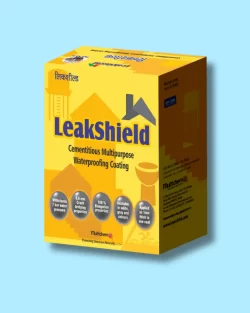
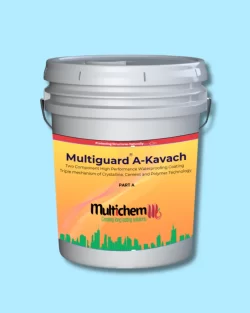
| Cementitious | Bathrooms, tanks, basements, concrete structures | Low–moderate | Wet areas, water exposure | Multiguard A Series, Leakshield |
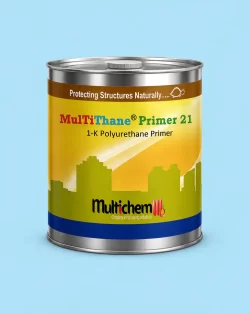
| Polyurea | Infrastructure, roofs, decks, industrial structures | High | Heavy water exposure | Armourthane, MultiThane, Ultrathane, Armourtuff |
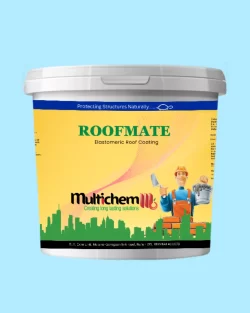
| Elastomeric | Roofs, terraces, exterior surfaces | High | Rain / UV exposure | Multiguard, Roofmate, Roofshield, Rainshield |
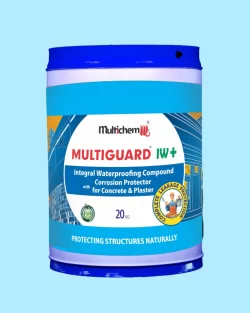
| Integral Waterproofing Admixture | New concrete, foundations, slabs, water-retaining structures | N/A | Reduced concrete permeability | Multiguard IW Series |
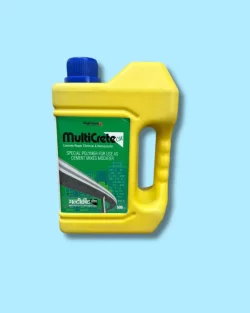
| Polymer-Modified | Concrete and masonry requiring improved adhesion and flexibility | Moderate–high | Wet areas, moisture exposure | Multicrete, Mixcrete, Flexcrete |
| HDPE Membrane | Below-grade structures, basements, foundations | Flexible | Groundwater / hydrostatic pressure | Hydrofab |
| Injection Grouting | Active leaks, cracks, construction joints, water ingress pathways | System-dependent | Active water ingress | Hydrofom, Primegrout, Multigrout |
Matching the Right Waterproofing Product to Your Area
Every part of a building faces different challenges from weather, usage, and water exposure. Using the same product across an entire building usually leads to early failure in at least one area.
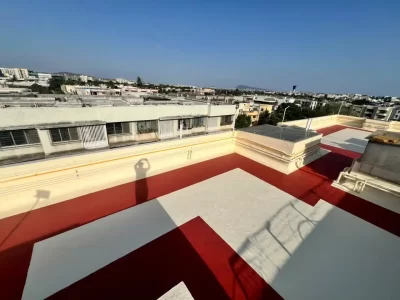
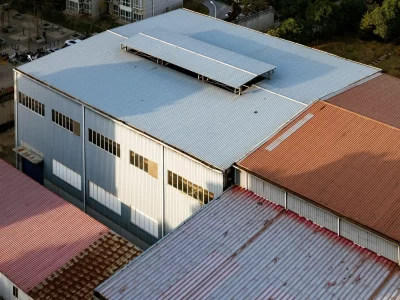
Exposed Roof Slabs & Podiums
The Challenge: Blistering summer heat, heavy rain, and continuous structural expansion.
Recommended Solution: A multi-coat liquid polyurethane membrane reinforced with a polyester mesh at joints and corners. Selected UV-resistant polyurethane or elastomeric coating systems can provide durable protection on exposed roofs and terraces; suitability should be confirmed from the product’s technical data sheet..
Bathrooms, Kitchens & Restrooms
The Challenge: Frequent water splatters, household chemical exposure, and tile placement for wet areas waterproofing
- Recommended Solution: Flexible acrylic-cementitious slurries. Apply two coats over floor slabs and carry the coating at least 300mm (12 inches) up the surrounding walls. This creates a waterproof tray underneath your floor tiles.
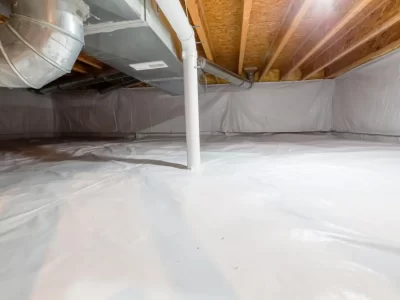
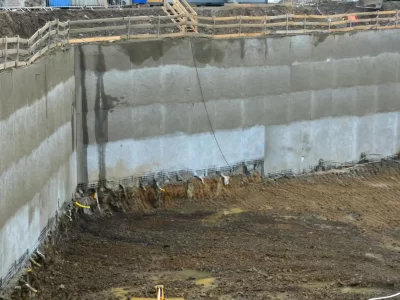
Basements & Retaining Walls
- The Challenge: Heavy, continuous groundwater pressure pushing through the foundation walls from the outside.
Recommended Solution: Combine a crystalline waterproofing chemical applied to the interior concrete with a geotextile drain board installed on the exterior exterior wall to channel groundwater away from the foundation.
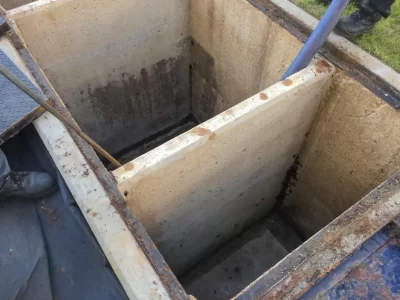
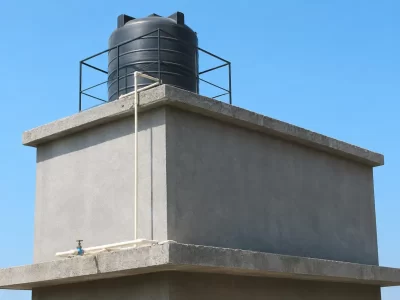
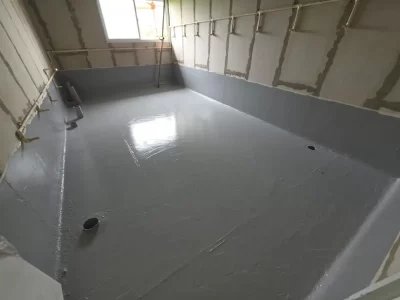
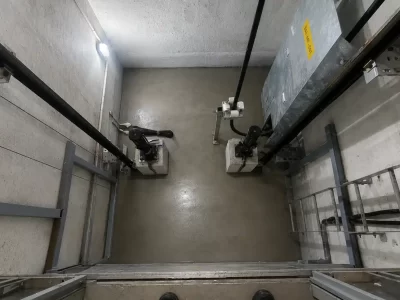
Water Tanks- Over Head and Underground
- The Challenge: Continuous water immersion, hydrostatic pressure, moisture penetration, and the need to prevent contamination of stored water. Coating failure can lead to leakage, peeling, algae growth, or water quality concerns.
- Recommended Solution: Use a food-grade, potable-water-safe polyurethane or cementitious waterproofing coating specifically designed for water tanks. Apply it over a properly prepared concrete surface to create a seamless, flexible and durable waterproof barrier. For drinking-water tanks, select a coating that is certified/compliant for potable water contact and resistant to long-term immersion.
Certifications and Quality Standards for Waterproofing Products
BIS Standards
Where applicable, individual waterproofing products are evaluated against relevant Bureau of Indian Standards (BIS) requirements. The applicable IS standard should be stated against the specific product where compliance has been established through the appropriate testing or certification documentation.
ISO Standards 9001 : 2015
Multichem is an ISO 9001:2015 certified organisation, reflecting the implementation of a quality management system covering the applicable scope of its operations. ISO 9001 certification relates to the organisation’s quality-management processes and should not be interpreted as product certification or proof that every waterproofing product meets a particular performance standard.
ASTM Testing
Selected products may be evaluated using relevant ASTM test methods to assess properties such as tensile strength, elongation, adhesion, water absorption, permeability, crack bridging or other performance parameters. The applicable ASTM method and test result should be referenced at the individual product level rather than presented as a general certification for the complete waterproofing range.
Quality, Standards & Testing
Waterproofing performance depends not only on the chemistry selected but also on formulation consistency, manufacturing controls and verified product performance. Multichem supports its waterproofing range through quality-management practices, applicable standards and product-specific testing. Certifications and test results should always be considered in relation to the specific product and intended application, rather than treated as a blanket certification for the entire waterproofing range.
Product Specific Testing
Waterproofing products can be assessed for performance characteristics relevant to their intended application, including water penetration resistance, tensile strength, elongation, adhesion, crack bridging, permeability, abrasion resistance, curing characteristics and chemical resistance. Product-specific TDS and test reports should be used to verify the applicable test method, measured value and acceptance criteria.
How to Select the Right Waterproofing Product?
1. Type of Structure
Consider whether the application involves a roof, terrace, basement, foundation, water tank, bathroom, industrial structure or infrastructure project.
2. Source of Water
Identify whether the structure is exposed to rainwater, groundwater, hydrostatic pressure, water retention or intermittent moisture.
Positive vs Negative Side Waterproofing
Positive-side waterproofing is applied on the side of the structure directly exposed to the water source, creating a barrier that helps prevent water from reaching the concrete. It is generally preferred for new basements, foundations, retaining walls and below-ground structures where the external surface is accessible.
Negative-side waterproofing is applied on the opposite side of the water source and is particularly useful for existing basements, underground structures and remedial projects where accessing the exterior would require excavation or major disruption.
While positive-side waterproofing offers direct protection by stopping water before it reaches the structure, negative-side systems must be carefully selected because hydrostatic pressure can act behind the waterproofing layer. Cracks, construction joints and active leaks may also require separate repair or injection grouting. The appropriate approach depends on the construction stage, site accessibility, water pressure, substrate condition and the selected waterproofing system.
3. Substrate Condition
Concrete, masonry, metal and other substrates may require different waterproofing products and surface preparation methods.
4. Structural Movement
Areas exposed to structural movement or thermal variation may require a flexible membrane or elastomeric waterproofing system.
5. Crack width and movement
Existing cracks, joints and construction interfaces should be assessed and appropriately treated before application of the selected waterproofing product.
6. Exposure Conditions
Temperature, UV exposure, chemicals, traffic, immersion and environmental conditions can influence waterproofing product selection.
7. Application Requirements
Surface preparation, primer requirements, number of coats, dry film thickness, curing time and conditions should follow the respective technical specifications and product data sheet.
Along with it following points should also be taken care of: Expected structural movement, Traffic/mechanical loading, Potable-water requirements and Compatibility with existing coatings
| Problem | Potential System |
|---|---|
| Roof and terrace leakage | PU / Elastomeric / Polyurea waterproofing |
| Bathroom and wet-area seepage | Cementitious / Polymer-modified waterproofing |
| Basement, foundation and underground structure water ingress | Crystalline / Cementitious / HDPE membrane systems |
| Active water leakage through cracks or joints | Injection grouting |
| Water tank leakage | Potable-water-approved cementitious / PU system |
| Concrete permeability and water ingress | Crystalline waterproofing / Integral waterproofing admixture |
| Exterior wall dampness and rainwater absorption | Silicone / Elastomeric coating |
Final product selection should be based on project conditions and the respective technical data sheet.
Common Waterproofing Mistakes to Avoid
- Applying waterproofing over dirty concrete
- Ignoring active leaks
- Not repairing cracks
- Applying insufficient thickness
- Mixing products incorrectly
- Applying outside recommended temperature/moisture conditions
- Ignoring movement joints
- Not treating pipe penetrations
- Covering waterproofing before curing
- Using a non-compatible primer
- Selecting a product based only on price
- Using a non-potable-water-approved coating in drinking-water tanks
Why choose Multichem Waterproofing Products
Selecting the right waterproofing products is not merely an aesthetic or surface-level choice—it is a critical engineering decision that influences the durability, protection and maintenance lifecycle of a structure.
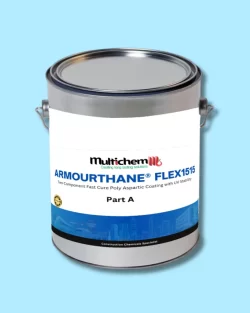
Multichem offers a comprehensive range of waterproofing solutions across different technologies and applications, including Multiguard cementitious and crystalline waterproofing systems, HydroThane polyurethane waterproofing, Armourthane, Ultrathane and Armourtuff polyurea systems, RoofMate and RoofShield elastomeric coatings, and Multigrout, PrimeGrout and Hydrofom injection grouting solutions. This range enables waterproofing systems to be selected based on the substrate, water exposure, structural conditions and specific project requirements, supporting a complete approach to long-term water ingress protection.
Our focus combines:
Advanced Technology
Technologies designed for different substrates and exposure conditions, helping address diverse waterproofing requirements.
Application-Specific Products
Solutions for roofs, terraces, basements, foundations, water tanks, wet areas and infrastructure.
Construction Chemical Expertise
A broad portfolio of construction chemicals supporting repair, protection and long-term durability.
In-House Product Development
Products developed through dedicated research and development capabilities with a 33+ years of experience.
Complete System Approach
Waterproofing is considered as a complete system involving substrate preparation, detailing, waterproofing layers, coatings and protection.
Technical Support
Technical support for product selection, system design, application methodology and site requirements.
Industries & Infrastructure We Serve
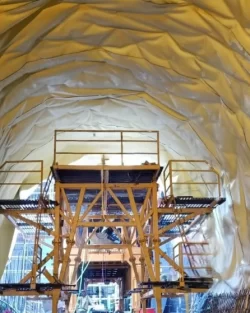
Metro, highways, residential projects, tunnels, data centers, solar power energy, marine, chemical and airports.
Products
- Admixtures
- Concrete Repair Systems
- Crystalline Waterproofing
- Deck Coatings
- Decorative Concrete Systems
- Demolition Products
- Engineering Grouts
- Fibres
- Floor Hardeners
- Flooring Products
- Highway Repair
- Protective Coatings
- Ready Mix Plaster
- Restoration
- Roof and Wall Protection
- Sealants
- Sealers
- Surface Treatment
- Tiles & Stone Adhesives
- Wall Finishing Systems
- Waterproofing Products
Need Help in Selecting a right Waterproofing System?
Tell us about your structure, substrate, water exposure and project requirements. Our technical team can help identify the appropriate Multichem waterproofing system and provide product documentation.
Contact us to for Technical Consultation or Product Recommendation: info@multichemgroup.net/ +91 9619091025