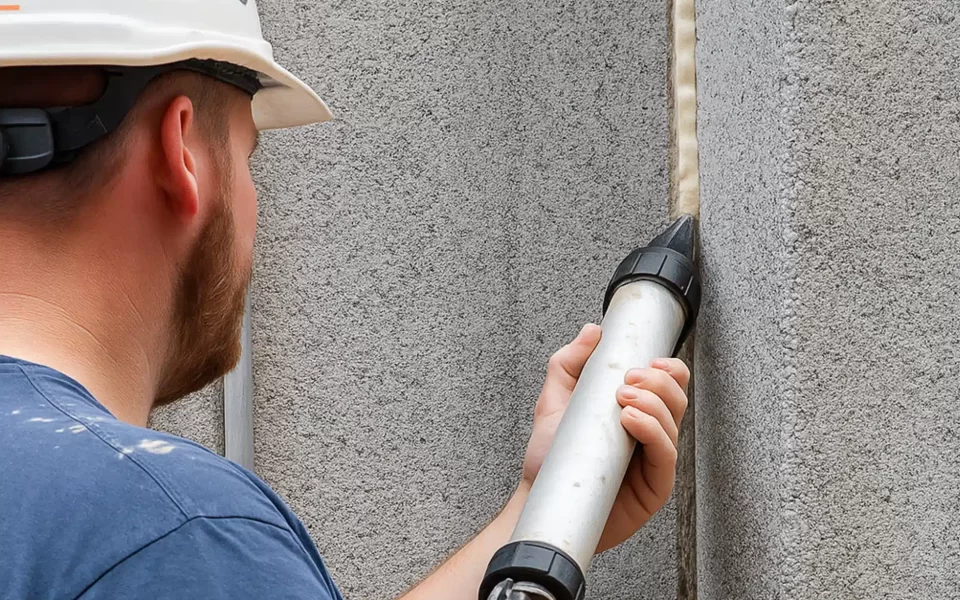
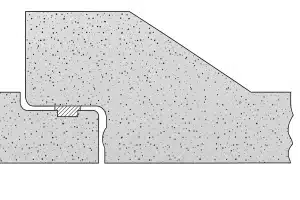
Joints and openings are found between construction elements in different parts of structures. Precast concrete elements, around windows and doors, interface of walls and floors, storage tanks, manholes, concrete pipe, vaults, box culverts, septic tanks, and vertical panel structures.
Joint sealants constitute a very small value over total construction project cost. Yet, joint sealants play a very critical role in keeping building and other civil structures, air and water tight and thus preventing damages and unforeseeable consequential losses. Proper choice of joint sealants makes structure stay durable for its designed life cycle.
In order to fulfill sealants’ functions, over whole lifetime of a construction, the selection of right solution/chemistry and the correct designs becomes a very important step. With advancement in building technology and construction of complex structure, joint sealant will become more critical part of design in the near future.
Need for Joint Sealants
Various civil engineering structures are casted with individual elements which exhibit relative movements to each other. These movements could be of two types, based on which joints sealants are classified. Such movements are:
- Thermal, and
- Structural.
Thermal movements
Every civil structure faces changes in temperature during day and night time, during change in seasons, which ultimately result in an expansion or contraction of the building elements, i.e. joints become larger (extension) in low temperature or smaller (compression) in hot temperature continuously. Thermal movements are also equally important when there is different construction material is used due to difference in thermal conductivity (property of material). For example, concrete will expand differently than window made of metal or pipes made of PVC.
Structural movements
These movements are caused by external elements such as settlement of bases due to load, vibration due to wind or other forces. High raised building structures with horizontal span are one such example. Structural movements result in shear stress.
Classification of Joint Sealants
Because of thermal and structural movements, joint sealants may be classified broadly into two categories:
- Sealants used for Moving Joints
- Sealants for Fixed Joints
Sealants for Moving Joints: These joints are normally called expansion joints. They are designed to take care of structural movement due to various external factors. Different products are designed for such joints.
Sealants for Fixed Joints: Fixed joints, also includes construction joints, joints formed due to different sections brought together to form civil structure.
Civil Sealants & Adhesives
Multichem manufactures products to suit to all requirement of civil industry. Some of the products are mentioned below:
- MultiDur – Flexible epoxy resin joint sealant: Two-part epoxy based flexible joint sealant of a putty like consistency curing to form a tough but resilient sealant and patching compound used for sealing joints with little or no movement, particularly in heavy duty concrete floors and for sealing cracks in concrete.
- SuperFlex – High performance joint sealing system: High performance joint and crack sealing system for construction joints, expansion joints and cracks capable of extreme movement in multiple directions whilst maintaining a high-quality water-tight seal. Suitable for many different structures including tunnels and culverts, hydro power plants, sewerage treatment plants, basements, water retaining structures, steel and concrete pipes and swimming pools.
- Multiflex PU – High performance chemical resistant polyurethane sealant: High performance chemical resistant polyurethane-based sealant used in areas for storage, filling and handling contaminated water and other liquids such as floor perimeter joints, storage tanks and bunds, petrol station floor joints and joints in sewerage, water treatment plants and aeration tanks.
- PrimeSeal CR – Highly chemical resistant joint sealant: Highly chemical resistant fast curing durable joint sealant suited to chemical bund areas, floor joints in chemical processing plants, concrete joints exposed to acid spillage, swimming pools, sewerage processing tanks, wine and citrus processing areas.
- Multiflex SR – High joint movement accommodation joint sealant: High performance, high joint movement accommodation silicone rubber joint sealant for sealing joints in concrete roads and pavements, bridge decks, car parks, aircraft runways and aprons.
- RoadSeal SL – Self smoothing joint sealant: Self smoothing silicone joint sealant for sealing sawn joints in asphalt roads and pavements, slot sealing of cable installations in asphalt and concrete pavements, abutment joints between concrete and asphalt pavements.
- Multiflex PS – High movement, tough, two-part joint sealant: Fuel resistant high joint movement accommodation tough two-part polysulphide joint sealant suitable for sealing high movement joints in building and civil engineering structures including superstructures, reservoirs, floors, basements and subways.
- MultiCryl – High performance acrylic sealants for construction joints and cracks: Cold applied high-performance joint sealant for construction joints, cracks, resistant to fuel and oil spillage for sealing and maintenance of joints in concrete roads, hard standings and other large concrete pavement areas, petrol stations and parking areas.
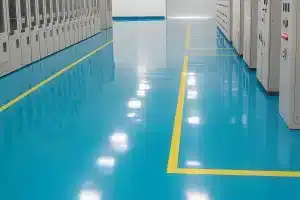
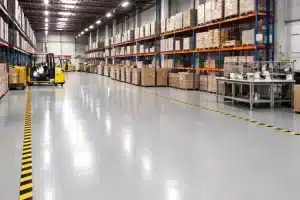
- MixSeal EU – Epoxy urethane joint sealant for internal industrial floors: Heavy duty three part coloured epoxy joint sealant for internal industrial floors subject to heavy industrial use in factory and warehouse floors including food factories and maintenance areas.
- Multiband – Highly flexible joint bandage membrane system: Hypalon rubber membrane system designed to be bonded over movement joints or cracks in a structure to prevent the ingress of water and chemicals. Also suitable for use on silos, roofs, tanks, sewers, reservoirs, pipelines and swimming pools where the joint movement may exceed the capability of conventional sealants.
For further details contact:
Multichem Industries Pvt. Ltd.
Phone No: +91 9619091025
E-mail: info@multichemgroup.net
Web: www.multichemgroup.net