RTV Silicone Electrical Insulation Coating (Electrogard SiCoat): Simple Protection for Powerful Electrical Systems

Ever wondered how electrical equipment kept outdoors, for example- transmitters, substations, electrical panels, etc stays unaffected to rain, dust or heat? It is because they are protected with smart protective layer of RTV silicone electrical insulation coating. Let’s understand what is it, how it works and why it is important?

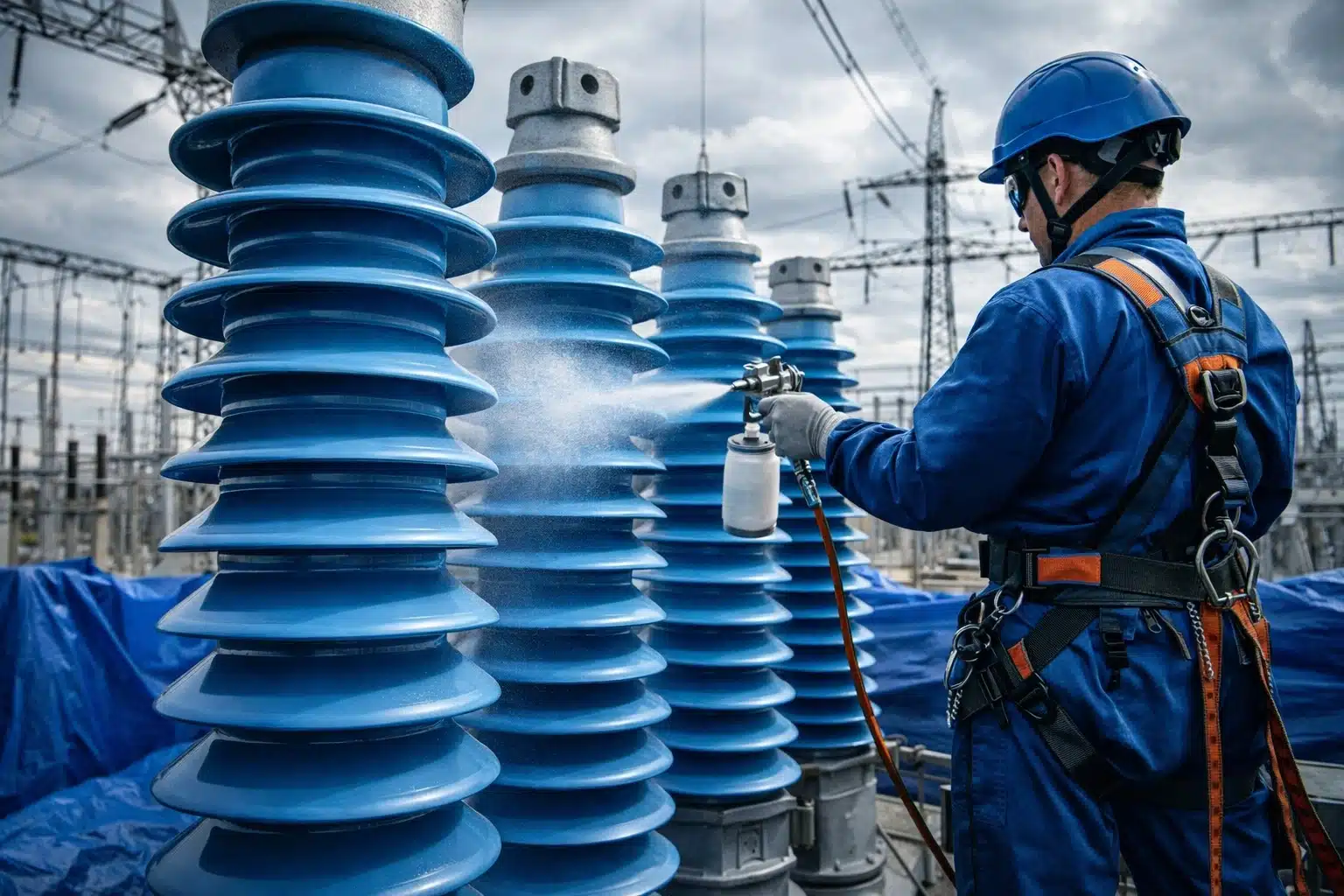
RTV (Room Temperature Vulcanizing) Silicone Electrical Insulation Coating (Electrogard Sicoat) is applied to high-voltage insulators to prevent flashovers and current leakage caused by pollution, salt, and moisture, significantly improving grid reliability in harsh environments like coastal or industrial areas

What Is RTV Silicone Electrical Insulation Coating (Electrogard Sicoat)?

  • RTV stands for Room Temperature Vulcanizing
  • RTV silicone is a hydrophobic electrical insulation coating (Electrogard Sicoat) is a special protective liquid coating applied on electrical components and insulators.
  • It forms a flexible, waterproof, and electrically insulating layer that protects equipment from electrical leakage.
  • This coating turns into silicone rubber layer at normal room temperature without any need of heating
  • It is supplied as a ready-to-use liquid coating, not powder or slurry

Risks associated with Electrical Equipment/ Systems:

  • Current Leakage– Dust, moisture or even pollution accumulated on unprotected surface can allow current to flow
  • Flashovers and short circuits– In wet conditions, current may jump across insulators causing flashover and short circuit
  • Unexpected shutdowns and downtime– Electrical faults can force emergency shutdowns, affecting productivity and operations.
  • Reduced equipment life– Continuous electrical stress and environmental exposure leads to early aging and damage of components.
  • Higher maintenance cost– Uncoated insulators require regular cleaning, increasing manpower and operational expenses.
  • Safety hazards– Electrical failures can pose serious risks to personnel working near live equipment.
  • Poor performance– Coastal areas, industrial zones, and high-humidity regions experience faster insulation failure without RTV protection.

Hence, electrical equipment faces many challenges every day, such as:

  • Moisture from rain and humidity
  • Dust and industrial pollution
  • Salt from coastal environments
  • Extreme heat and sunlight
  • Electrical stress and aging

And RTV Silicone Electrical Insulation Coating (Electrogard Sicoat) helps by

  • Repelling water- It has excellent hydrophobic properties where water cannot spread on surface. Instead, water forms small droplets and rolls off easily.
  • Prevents Electrical Leakage– It forms a protective layer that stops electrical current from flowing across surfaces
  • Protects Against Pollution– Dust, chemicals, and salt do not easily stick to the coated surface, keeping insulators clean and effective for longer periods.

How It Works

  1. Surface Preparation:Insulators are thoroughly cleaned to remove dust, grease, and contaminants.


  2. Application:The coating is in liquid form, applied evenly in using airless spray.


  3. Curing: It cures into a flexible, resilient silicone rubber layer when exposed to moisture in the air. Full curing is achieved within 24 to 48 hours depending on humidity and temperature.


  4. Hydrophobicity Migration:Low molecular weight silicone chains migrate to the surface, creating a non-wetting layer that pushes contaminants away, maintaining insulation integrity and forms an Anti-Pollution Flashover Coating

Technical Characteristics You Should Know

  • System Type: Available in 1K and 2K systems where 1K systems cure with atmospheric moisture whereas 2K systems cure by chemical reaction
  • Colour: Typically, available in light grey, transparent, or customised colours as per requirement
  • Coating Thickness: Generally applied at 0.3 mm to 0.5 mm dry film thickness (DFT) for effective insulation and durability
  • Dielectric Strength: High dielectric strength and suitable for high-voltage applications
  • Hydrophobic Recovery Test: Successfully passes hydrophobicity recovery tests, ensuring long-term water repellence even after aging and contamination
  • Resistance Properties: Highly resistant to marine salt fog, water, industrial pollution (cement dust, fly ash, acid emissions), UV exposure, and rough weather conditions
  • Applicable Codes and Standards: Manufactured and tested as per relevant IEC, ASTM, and utility performance standards.

Key Benefits of RTV Silicone Electrical Insulation Coating- Electrogard Sicoat

Here are the main reasons why industries trust this solution:

  • Excellent electrical insulation
  • Long-lasting outdoor performance
  • High resistance to UV rays and weather
  • Reduces maintenance and cleaning needs
  • Improves safety and reliability
  • Easy application on existing equipment

Where RTV Silicone High Voltage Insulator Coating (Electrogard Sicoat) can be used?

This coating is commonly used in:

  • Power transmission and distribution insulators
  • Electrical substations
  • Switchyards and transformers
  • Industrial electrical panels
  • Coastal and high-pollution zones
  • High-voltage outdoor equipment

Most of insulation failures are caused by negligence or environmental exposure. Using RTV silicone electrical insulation coating (Electrogard Sicoat) is a preventive step which protects before problem arise. Above all, it extends the life of critical electrical assets.

Electrical systems are powerful, but they need the right protection to work with safely and efficiently. If you want long-term insulation performance, reduced maintenance, and improved safety, this coating is not just an option, but a necessity.

To know more about RTV Silicone Electrical Insulation Coating- Electrogard Sicoat, contact Multichem Group- info@multichemgroup.net/ +91 96190 91025

Facebook
Twitter
LinkedIn
esd flooring

ESD Flooring That Protects Equipment, People, and Compliance

ESD Flooring That Protects Equipment, People, and Compliance A Practical Guide to Conductive & Static Dissipative Epoxy Floor Systems In electronics manufacturing, cleanrooms, defense facilities, and data-driven environments, electrostatic discharge isn’t a minor risk it’s a silent operational threat. One uncontrolled static discharge can: Damage sensitive electronic components Cause product

Read More »