Marine Coating for Metal: Long Life Protection in Aggressive Environments

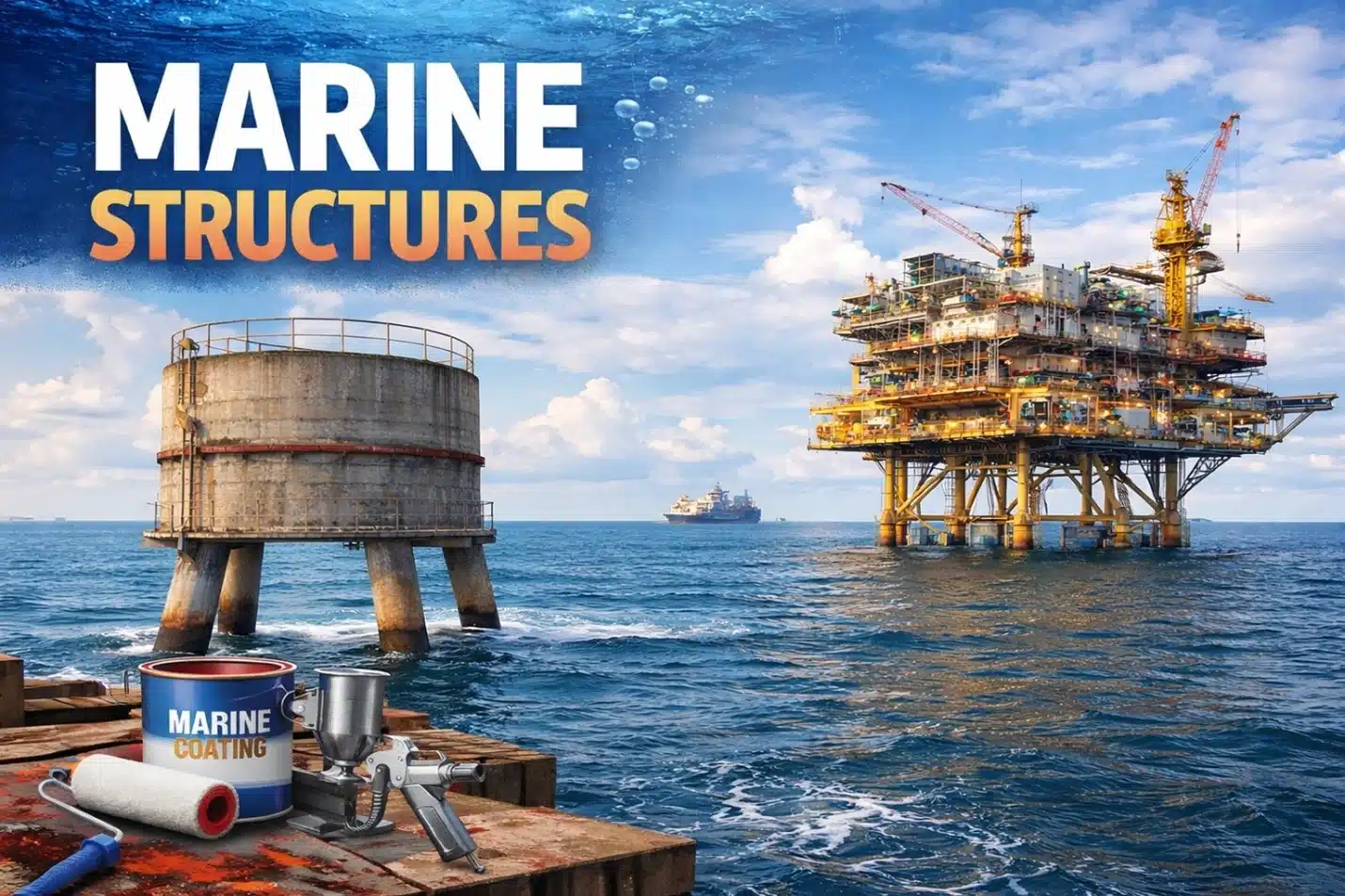
Metal failure in marine and coastal zones is rarely sudden it’s progressive, electrochemical, and expensive when ignored. Salt spray, UV exposure, cyclic wetting drying, and microbial activity accelerate corrosion far beyond what conventional industrial coatings can withstand.

Why Standard Coatings Fail in Marine Conditions

Most decorative or general anticorrosive paints fail because they:

  • Allow moisture and oxygen diffusion over time
  • Lose adhesion under thermal cycling
  • Degrade rapidly under UV and saline exposure
  • Require frequent recoating, increasing lifecycle cost

What Technically Differentiates a Marine Coat for Metal?

A high-performance marine coating for metal is defined by four measurable parameters:

1. Surface Chemistry & Adhesion Mechanism

Marine primers based on epoxy resin technology chemically anchor to properly prepared steel, offering:

  • Strong polar bonding with the substrate
  • Tolerance to micro-surface irregularities
  • Resistance to cathodic disbondment

This primer layer is critical; without it, even the best topcoat will fail prematurely.

2. Film Build & Diffusion Resistance

Marine coatings are typically high-build or high-solids systems, enabling:

  • Reduced porosity
  • Lower water vapor transmission rate (WVTR)
  • Extended time to corrosion initiation

In immersion or splash zones, coatings with 80%+ volume solids significantly outperform thin-film alternatives by maintaining barrier integrity over time.

3. Resin Architecture: Epoxy vs Siloxane Hybrids

Different exposure zones demand different chemistries:

  • Epoxy systems provide excellent abrasion resistance, chemical resistance, and adhesion ideal for immersion, splash zones, and industrial marine assets.
  • Siloxane hybrid coatings engineer low surface energy, creating ultra-smooth films that reduce fouling adhesion, friction, and long-term drag.

This distinction becomes critical when evaluating the best marine coat for metal in operational environments.

4. UV & Thermal Stability

For marine coating for metal roofs, UV stability is non-negotiable. Marine-grade systems resist:

  • Polymer chain scission under UV exposure
  • Chalk formation
  • Loss of gloss and mechanical properties

Lifespan Engineering: Coating vs Lifecycle Cost

From a lifecycle standpoint, marine coatings outperform conventional systems due to:

  • Fewer recoating intervals
  • Lower corrosion-related repair costs
  • Reduced downtime
  • Predictable inspection and maintenance planning

Final Technical Takeaway

The best marine coating for metal is not defined by thickness alone, but by:

  • Correct resin selection
  • Proper surface preparation
  • Adequate film build

Alignment with exposure severity

Marine coatings are not decorative solutions they are corrosion engineering tool.
At multichem the product available for marine coatings is the SeaMate range by Multichem, designed for fouling control with benefits such as superior fouling resistance, fuel consumption reduction, long-lasting surface, and environmental friendliness, suitable for all vessel types and speeds with performance lasting up to 90 months.

1. Multipox metaprime 1200 :

Is used for priming of substrate before topcoats. It is designed for use on metal substrates and components where high levels of corrosion resistance are required. It has found considerable use in the maintenance and restoration industries.

2.Seamate Xtragard 340 :

Is a one component UV stable coating with excellent anticorrosion properties.It is ideal product as a single coat Direct to Metal or over suitable primes for high corrosive environments. It is not only useful for ship,vessels,tankers but also useful for bridges, containers, refineries, petrochemical industry, power-plants, storage tanks, cranes,windmills and steel structures part of civil structures e.g. airports, stadia, tall buildings.

Frequently Asked Question

A marine coating for metal is a high-performance protective system engineered to resist corrosion caused by saltwater, humidity, UV exposure, and cyclic wet–dry conditions in marine and coastal environments.

The best marine coat for metal depends on exposure severity. Epoxy primers combined with high-build epoxy or siloxane hybrid topcoats provide superior protection in C4–C5 corrosive environments.

Yes. A marine coating for metal roof offers enhanced UV stability, corrosion resistance, and longer service life compared to conventional anticorrosive paints, especially in coastal and industrial zones.

With proper surface preparation and correct film thickness, marine coating systems can deliver a service life of 8–15 years, significantly reducing maintenance and recoating frequency.

Proper surface preparation ensures strong adhesion, reduces underfilm corrosion, and allows the marine coating to achieve its designed protective performance and lifespan.

Facebook
Twitter
LinkedIn
esd flooring

ESD Flooring That Protects Equipment, People, and Compliance

ESD Flooring That Protects Equipment, People, and Compliance A Practical Guide to Conductive & Static Dissipative Epoxy Floor Systems In electronics manufacturing, cleanrooms, defense facilities, and data-driven environments, electrostatic discharge isn’t a minor risk it’s a silent operational threat. One uncontrolled static discharge can: Damage sensitive electronic components Cause product

Read More »