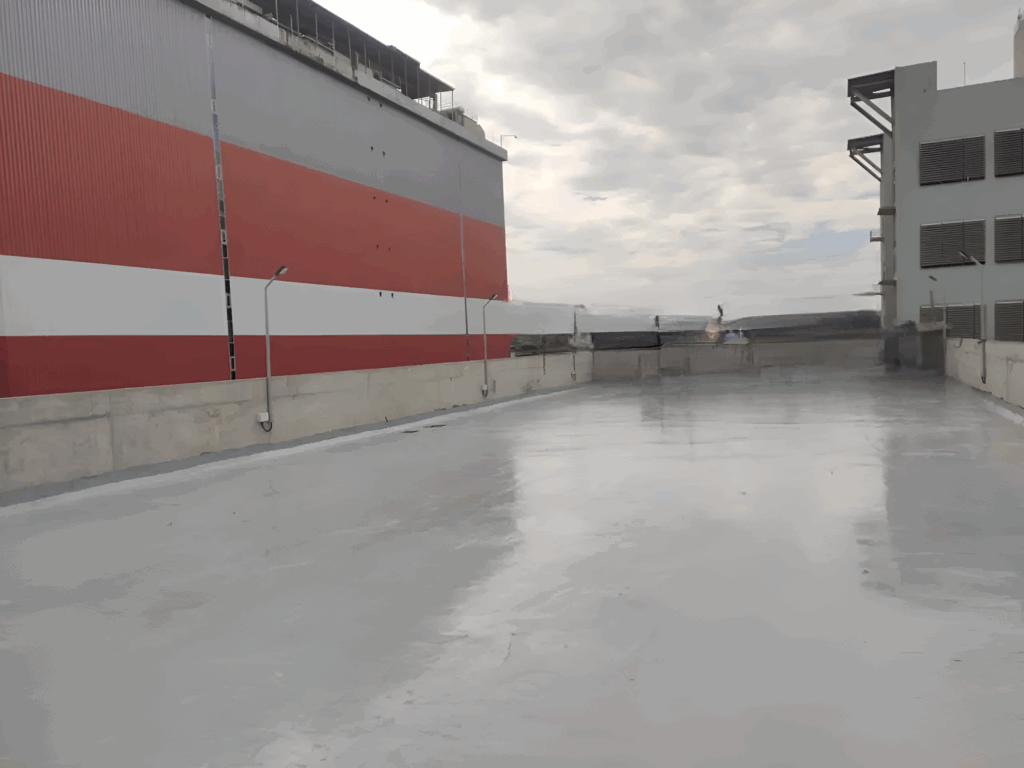
💧The Magic of Polyurethane: Your Flexible, Rubber-Like Shield Against Water

Polyurethane coating

Imagine a liquid plastic that dries into a tough, highly elastic, rubber-like film. That’s the power of Polyureathane coating, offering a seamless, durable barrier that moves with your building.

What is This “Polyurethane Coating”?

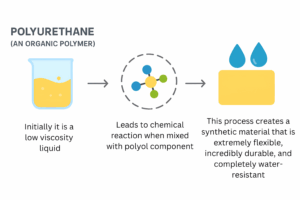
At its core, polyurethane is an organic polymer. Initially it is a low viscosity liquid that leads to chemical reaction when exposed to moisture in environment (1K) or reaction with hardener  in 2K. This process creates a synthetic material that is extremely flexible, incredibly durable, and completely water-resistant.

✨Polyurethane Coatings Superpower

Seamless & Jointless- As it is liquid, it creates a single, continuous membrane with no seams, joints, or weak points for water to exploit.

High Elasticity- It can stretch and contract with surface that expand and shrink due to temperature changes. This avoids cracks formation.

UV & Weather Resistant- Modern PU coatings are designed to stand up to the sun’s harsh UV rays, rain, and extreme temperatures without degrading.

Abrasion Resistance- It’s tough skin can resists wear and tear from foot traffic, chemical exposure, and impact.

Long Service Life When applied correctly, polyurethane waterproofing delivers an average lifespan of 15–20 years.

📍Where Does This Polyurethane Magic Work?

Hydrothane Polyurethane CoatingPolyurethane is incredibly versatile, making it a top choice for exposed surfaces:
Hydrothane Polyurethane Coating

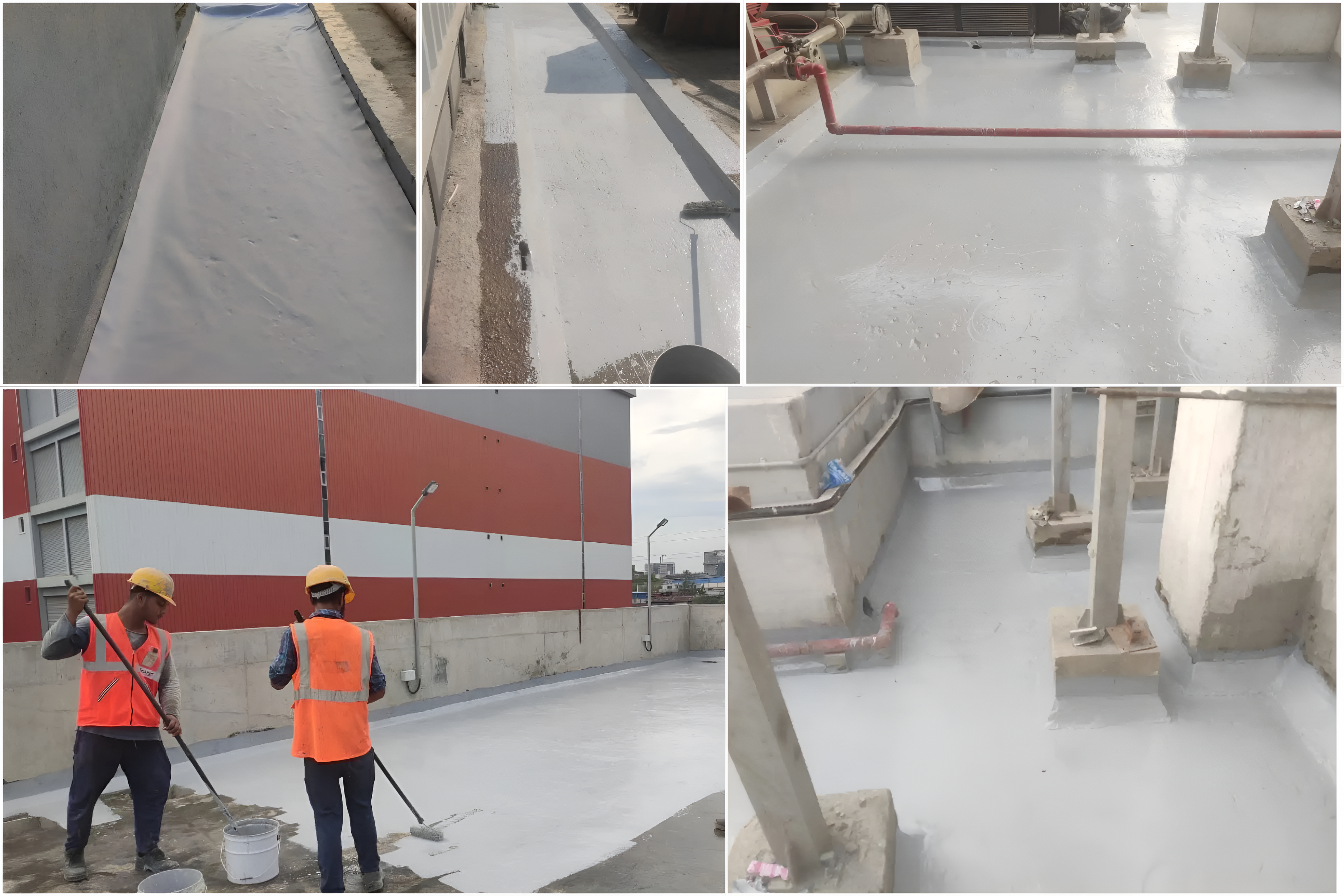
Polyurethane coating Application of Hydrothane Polyurethane Coating at the Data Center Terrace

  • Foundation Walls and Basements- PU creates a durable, seamless barrier against ground moisture and hydrostatic pressure. Its elasticity ensures the coating won’t crack due to foundation movement.
  • Planter Boxes and Green Roofs- The membrane provides excellent protection from constant moisture and organic acids present in the soil. It is highly resistant to root penetration and harsh chemicals, protecting the structure from damage.
  • Industrial Kitchens and Food Processing Plants- Polyurethane provides a highly hygienic, jointless surface that is resistant to harsh cleaning chemicals and frequent washing for meeting strict sanitation standards.
  • Bridges and Flyovers- Its fast-curing formulations allow for quick application, minimizing road closures. It provides a flexible, durable layer that protects the concrete deck from water and de-icing salts.
  • Tunnels and Underground Structures- The material’s flexibility allows it to bridge minor cracks that develop due to soil movement, ensuring long-term water tightness in dynamic subsurface environments.
  • Parking Garages – PU coatings offer excellent abrasion resistance and skid-proof properties, protecting the structural concrete from vehicular traffic, and variety of oils.

🧪 Polyurethane Chemistry: How It Works

The science behind this shield:

1.The Components: Main ingredients for this reaction are two chemical compound called an Isocyanate and a Polyol (or Polyurethane Polymer).

2.The Reaction: When these components are mixed in a two-component system or when a single component reacts with moisture in the air, they form long, linked molecular chains which is the polyurethane polymer.

3.The Result: The liquid rapidly cures and hardens into the tough, elastic membrane that completely seals the surface and hence protects from damage.Polyurethane Coating

💡 Fun Facts

  • Unexpected Uses: Polyurethane is used in everything from car seats and the insulation in your refrigerator to the soles of running shoes! Its versatility is astonishing.
  • Repair Stats: Globally, a significant portion of all concrete repair work is due to waterproofing failures. Investing in PU saves long-term costs.Hydrothane Polyurethane Coating

🛡️ The Process of Laying the Shield…

Applying a PU coating is a systematic process that itself ensures maximum performance:

  1. Surface Preparation: The surface must be clean, dry, and free of dust, grease, and loose material. This is the most crucial step for adhesion.
  2. Primer Application: A special primer is first applied. This acts like double-sided tape, ensuring a strong, permanent bond between the concrete and the PU layer.
  3. PU Application: The liquid polyurethane is applied using a roller, brush, or spray gun. Often, two or three layers are applied to get the desired, consistent thickness (measured in microns or millimetres).
  4. Curing: The final layer is allowed to cure and fully harden, creating the seamless, rubber-like membrane.

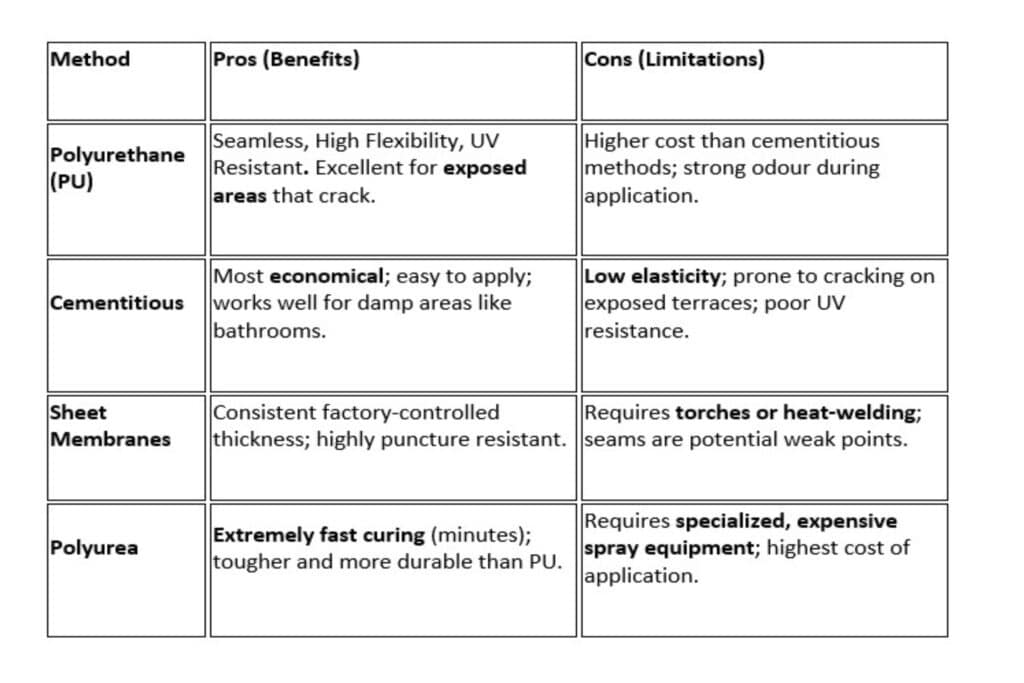
Polyurethane vs. Other Methods

Polyurethane Coating

❓ People Also Ask

Q: How long does Polyurethane waterproofing last?

A: When properly applied to a prepared substrate, a high-quality PU membrane can easily last 10 to 20 years or more, depending on environmental exposure and formulation.

Q: Is it safe to apply?

A: During application, most PU materials emit strong fumes (solvents/VOCs). Proper ventilation and personal protective equipment (PPE) are essential for applicators. Once cured, the membrane is inert and safe. Polyurethane coatings which are 100% do not emit any fume or volatile organic compounds.

Q: What happens if the PU layer gets punctured?

A: Though tough, a puncture can happen. The good news is that PU has excellent adhesion, meaning water won’t travel sideways underneath the coating. And repairs are simple, just clean the area and apply a fresh coat of PU over the damage.

Q: How long does polyurethane take to cure?


A: It usually takes 6–8 hours to touch dry, and 24–48 hours for full curing, depending on formulation and weather.

Q:  Can polyurethane be applied over old waterproofing?

A: Yes, but only after proper surface preparation, primer application, and ensuring compatibility.

🚀 The Future of Polyurethane Waterproofing

The industry is moving toward sustainable and user-friendly solutions:

  1. Eco-Friendly Chemistry: The future lies in low-VOC or zero-VOC (Volatile Organic Compounds) PU systems, making them safer for both applicators and the environment.
  2. Hybrid Systems: Hybrid PU-Polyurea and PU-Acrylic systems are combining the flexibility of PU with the faster curing times and lowers the cost of other materials.
  3. Smart Coatings: Researchers are developing ‘smart’ coatings that change color or signal when they need maintenance leading to easier and reliable inspection

Polyurethane is not just a building material; it’s an investment in the longevity and health of your structure, ensuring your home or infrastructure stays protected from the damage water can inflict.

With a comprehensive range of 1K and 2K polyurethane waterproofing systems, Multichem delivers solutions for every application, from roofs, walls, and terraces to tanks, industrial floors, and high-performance containment areas. Each formulation is developed using advanced polymer and polyurethane chemistry to ensure long-lasting elasticity, seamless protection, superior UV stability, and resistance to weathering, chemicals, and temperature variations.

From versatile 1K elastomeric coatings range like FlexiThane to a high-performance water-based system such as UltraRoof Superflex Plus and its variants (Water based system hence zero VOC, Multichem offers complete flexibility for diverse project needs. For more demanding environments, the 2K polyurethane range—including Aquasmart PU, and the HydroThane series—provides exceptional durability, enhanced chemical resistance, and long-term waterproofing performance, with options available in both food-grade and STP-grade formulations.

By combining innovation with proven reliability, Multichem’s polyurethane coatings deliver a waterproofing system built to last for years, even in the most challenging conditions.

Facebook
Twitter
LinkedIn
esd flooring

ESD Flooring That Protects Equipment, People, and Compliance

ESD Flooring That Protects Equipment, People, and Compliance A Practical Guide to Conductive & Static Dissipative Epoxy Floor Systems In electronics manufacturing, cleanrooms, defense facilities, and data-driven environments, electrostatic discharge isn’t a minor risk it’s a silent operational threat. One uncontrolled static discharge can: Damage sensitive electronic components Cause product

Read More »