There is a reason so many people and companies choose concrete for their homes and businesses: Concrete is durable, versatile, easy to care for, low maintenance, and can last a long, long time. Now, that doesn’t mean that concrete will last forever, but properly installed and maintained, concrete can last decades without showing real signs of wear and tear. Today’s most of the good designed concrete can last anywhere between 30 to 100 years, whereas some of the old structures have life more than 2000 years. What’s more, concrete is repairable!
So, when time comes to invest in concrete repair or add concrete additions, you can rest assured that concrete is an investment that’s worth your time and money.
Durability of reinforced concrete structures is mainly dependent on the quality of the concrete, minimum shrinkage cracking, minimum to zero corrosion of reinforcing steel, cover for the reinforcement, curing of concrete, and quality management of concrete construction. In concrete, cement paste is the primary active constituent. Therefore, the properties and performance of concrete is to an extent determined by the properties of the cement paste. The broad category of factors, which determine the durability of a concrete structure are design, material properties, and construction practice. Errors in design or carelessness in detailing may lead to cracking, leading to premature demise of useful life of a concrete structure. Microstructure characteristics of concrete such as its porosity, pore size distribution, properties of transition zone, and connectivity of pores, govern almost all the gas and liquid transport phenomena through the concrete. Therefore, the rate at which a concrete structure may deteriorate is governed to a significant extent due to the permeability quality of the concrete; as well as how the concrete is placed, compacted, cured, and allowed to sustain stress in a crack-free concrete.
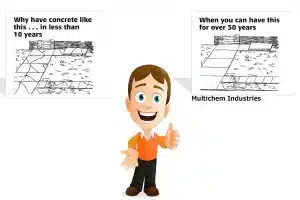
Contact with certain aggressive chemicals, such as chlorides, sulphides, acids, carbon dioxide, and even water, causes the deterioration of the concrete. Such deterioration involves either leaching of material (e.g., calcium hydroxide) from the concrete by a dissolution mechanism or by expansion of material inside the concrete. Exposure conditions vary over a wide range including cyclic freezing and thawing, hot and dry desert ambient air, wind, and rain or snow. Higher ambient air temperature may accelerate the chemical reaction of concrete leading to faster deterioration. Mechanical abrasion or erosion by water or wind may also affect the life of the concrete structure. These factors affecting the life of the concrete structure may act singly or, usually, in combination. Furthermore, the concrete quality degradation mechanism may be either a physical effect such as shrinkage, creep, erosion, and similar factors, or a chemical reaction such as sulphate attack, reinforcement corrosion, alkali-silica reaction, carbonation, freezing and thawing, and other similar factors.
Of the various factors cited, cracking due to shrinkage, environmental factors, and overload/stress initiates the process to reduce concrete durability. Such concrete cracking, which cannot be eliminated, though minimized, allows reinforcement corrosion to start. Therefore, the first need is for quality management for concrete placement, compaction, and curing. Also, reinforcement should be placed such that it has “sufficient” cover protecting it from deeper and wider cracks; and/or, reinforcement which does not corrode or would corrode only a predetermined, minimum amount.
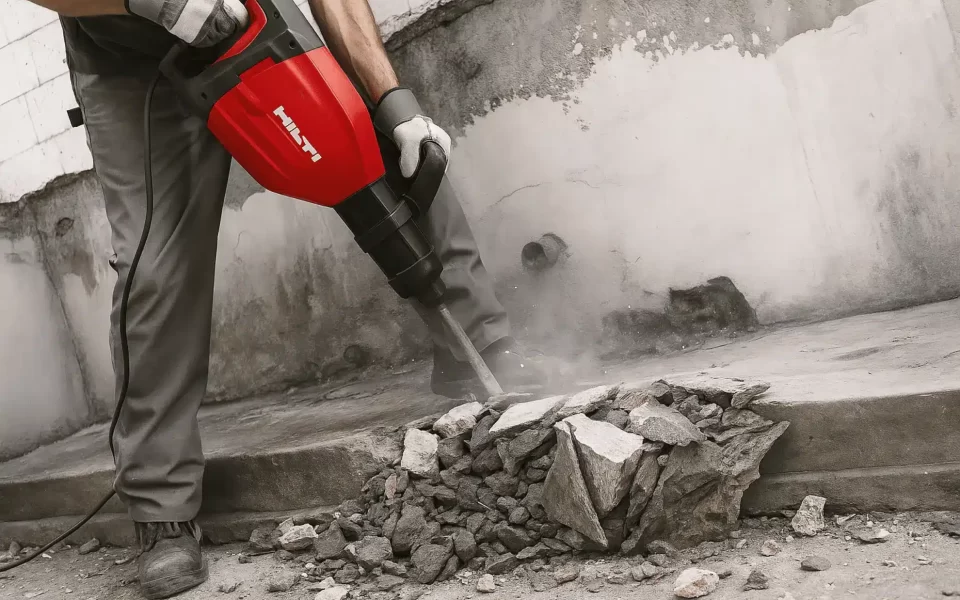
Most people think of concrete as a maintenance-free building material, and in most structures, it is. As mentioned above, the defects may be present from the time of construction or may develop over time which are unacceptable. They may affect one or more aspects of the structure’s performance, or they may simply be unsightly. Whatever the cause and whatever the symptom, repairs are then necessary and should not be neglected.
As per types of concrete defect, many repair techniques have been developed with suitable repair materials. For most repairs several different options will be available, ranging in convenience, effectiveness, and cost. An effective repair is carried out not simply to hide or disguise a defect, but to address any aspects of performance that are affected and to manage the extent and rate of future deterioration in accordance with the needs of the structure’s owner.
This article describes the process of selecting the most appropriate repair for a given application, and outlines the main features of methods and materials for repairing various common defects that may affect concrete performance. It also outlines treatment for cosmetic defects such as efflorescence or discoloration, moisture-related problems, or damage caused by exposure to specific chemicals.
In wake of the current economic situation as well as the devastating natural disasters that have occurred in recent times, repair and renovation of existing structures, especially concrete structures are imperative.
With the prices of real estate as low as they are, many have elected to purchase existing buildings rather than build and more owners opt to update rather than replace existing buildings. This current trend has re-opened the door to repair and renovation as well as increased awareness of concrete restoration needs.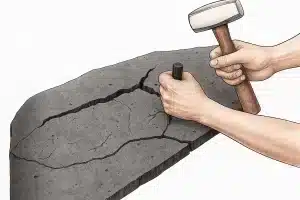
Additionally, much of the infrastructure within our country and abroad is due for an upgrade. We can look at the many dams requiring modifications, bridges that are the lifeline of cross-country transportation needing structural strengthening, and historical government buildings requiring repair for their ensured preservation.
Facts of Old Structures:
Most of the concrete structures built during this century are not expected to last for 100 years because Portland cement concrete cracks and deteriorates due to a number of interrelated causes such as thermal contraction, drying shrinkage, exposure to cycles of freezing and thawing, corrosion of embedded steel, alkali-aggregate reaction, and sulfate attack. In contrast, some of the Roman structures built approximately 2000 years ago are still in good condition. Therefore, to build long-lasting concrete structures in the future, it is prudent to begin with a basic knowledge of the methods and materials that were used in the construction of ancient structures that have endured for centuries.
The Pantheon in Rome, built by the emperor Hadrian in 128 A.D., is a circular building of concrete with 6.1 m (20 ft) thick walls and a dome measuring 43.3 m (142 ft) in diameter that rises to a height of 21.6 m (71 ft) above its base. According to the Encyclopedia Britannica, the exact method of construction is unknown; however, two factors have contributed to the success of the building that stands today entirely in its original form, namely: the excellent quality of the mortar in the concrete mixture, and the careful selection and grading of the aggregate material. Similarly, in regard to the Roman aqueducts, it is credited to the construction methods as well as the high quality of a well compacted, non-shrinking concrete for excellent durability of crack-free canal linings that were installed without any construction joints.
Both the Greeks and the Romans were aware that certain volcanic materials (later known as pozzolans), when finely ground and mixed with lime and sand, yielded a mortar that was not only cementitious but also water resistant. There is evidence that Greeks and Romans also used crushed potshards and tiles as artificial pozzolans. In comparison with the Portland cement concrete structures of today that crack within a few months of completion, why has the ancient lime-pozzolan concrete remained crack-free after 2000 years of service? To build a long-lasting concrete structure, it is important to find an answer to this question. Ancient concrete mixtures were generally characterized by low cementitious material content, low water content (consolidation was achieved by tamping), a very slow rate of strength development, and almost no shrinkage strains from cooling and drying.
Driven by the push for faster construction and perceived financial gains, modern Portland cement concrete often contains high amounts of finely ground, highly reactive cement. This leads to rapid hydration, high early strength, and a high modulus of elasticity—but also increased heat of hydration and early-age shrinkage cracking. Shrinkage from cooling and drying induces tensile stress, and when this exceeds the concrete’s tensile strength, cracks form. While low modulus and high creep can reduce cracking risk, today’s concrete typically has the opposite properties. Though steel reinforcement limits crack width, it can result in numerous fine cracks that compromise impermeability—accelerating deterioration due to corrosion, freeze-thaw damage, and alkali-aggregate reactions. Construction joints aim to control cracks but often become leak paths and durability concerns. While older concrete mixes showed minimal shrinkage, replicating them with today’s materials and timelines is a major challenge.
Repair of Concrete:
High Humidity and Wind-Driven Rain:
Concrete is resistant to wind-driven rain and moist outdoor air in hot and humid climates because it is impermeable to air infiltration and wind-driven rain. Moisture that enters a building must come through joints between concrete elements. Annual inspection and repair of joints/cracks will minimize this potential. Good practice for all types of wall construction is to have permeable materials that breathe (are allowed to dry) on at least one surface and to not encapsulate concrete between two impermeable surfaces. Concrete will dry out if not covered by impermeable treatments. Coating with good quality elastomeric materials such as Raishield or UltraFlex along with crack filling compounds (Multiflex AC / CrackFix).
Ultraviolet Resistance:
The ultraviolet portion of solar radiation does not harm concrete. Using colored pigments in concrete retains the color in concrete long after paints have faded due to the sun’s effects. 100% acrylic coating (Raishield for wall and Roofshield for roof) can protect structures from UV rays.
Inedible:
Vermin and insects cannot destroy concrete because it is inedible. Some softer materials are inedible but still provide pathways for insects. Due to its hardness, vermin and insects will not bore through concrete. Gaps in exterior insulation to expose the concrete can provide access for termite inspectors.
Moderate to Severe Exposure Conditions for Concrete:
The following are important exposure conditions and deterioration mechanisms in concrete. Concrete can withstand these effects when properly designed.
Resistance to Freezing and Thawing:
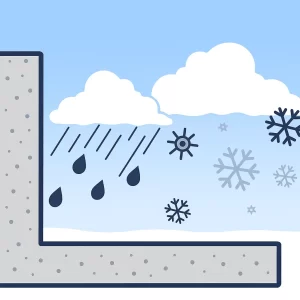
The most potentially destructive weathering factor is freezing and thawing while the concrete is wet, particularly in the presence of deicing chemicals. Deterioration is caused by the freezing of water and subsequent expansion in the paste, the aggregate particles, or both.
With the addition of an air entrainment admixture, such as Multiplast AEA, concrete is highly resistant to freezing and thawing. During freezing, the water displaced by ice formation in the paste is accommodated so that it is not disruptive; the microscopic air bubbles in the paste provide chambers for the water to enter and thus relieve the hydraulic pressure generated. Concrete with a low water-cementitious ratio (0.40 or lower) is more durable than concrete with a high water-cementitious ratio (0.50 or higher). Air-entrained concrete with a low water-cementitious ratio and an air content of 5 to 8% will withstand a great number of cycles of freezing and thawing without distress.
Chemical Resistance:
Concrete is resistant to most natural environments and many chemicals. Concrete is virtually the only material used for the construction of wastewater transportation and treatment facilities because of its ability to resist corrosion caused by the highly aggressive contaminants in the wastewater stream as well as the chemicals added to treat these waste products.
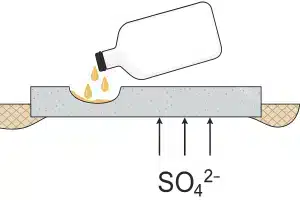
However, concrete is sometimes exposed to substances that can attack and cause deterioration. Concrete in chemical manufacturing and storage facilities is especially prone to chemical attack. The effect of sulfates and chlorides is discussed below. Acids attack concrete by dissolving the cement paste and calcareous aggregates. In addition to using concrete with a low permeability, surface treatments with Multicoat (epoxy, PU and other technologies) range of products can be used to keep aggressive substances from coming in contact with concrete.
Resistance to Sulfate Attack:
Excessive amounts of sulfates in soil or water can attack and destroy a concrete that is not properly designed. Sulfates (for example calcium sulfate, sodium sulfate, and magnesium sulfate) can attack concrete by reacting with hydrated compounds in the hardened cement paste. These reactions can induce sufficient pressure to cause disintegration of the concrete.
Like natural rock such as limestone, porous concrete (generally with a high water-cementitious ratio) is susceptible to weathering caused by salt crystallization. Examples of salts known to cause weathering of concrete include sodium carbonate and sodium sulfate.
Sulfate attack and salt crystallization are more severe at locations where the concrete is exposed to wetting and drying cycles, than continuously wet cycles. For the best defense against external sulfate attack, design concrete with a low water to cementitious material ratio (around 0.40) and use cements specially formulated for sulfate environments along with additives such as Multicrete IWC.
Seawater Exposure:
Concrete has been used in seawater exposures for decades with excellent performance. However, special care in mix design and material selection is necessary for these severe environments. A structure exposed to seawater or seawater spray is most vulnerable in the tidal or splash zone where there are repeated cycles of wetting and drying and/or freezing and thawing. Sulfates and chlorides in seawater require the use of low permeability concrete to minimize steel corrosion and sulfate attack. A cement resistant to sulfate exposure is helpful. Proper concrete cover over reinforcing steel must be provided, and the water-cementitious ratio should not exceed 0.40. Multiguard EPC is specially designed to address such problems.
Chloride Resistance and Steel Corrosion:
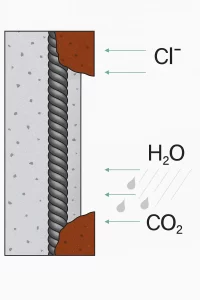 Chloride present in plain concrete that does not contain steel is generally not a durability concern. Concrete protects embedded steel from corrosion through its highly alkaline nature. The high pH environment in concrete (usually greater than 12.5) causes a passive and non-corroding protective oxide film to form on steel. However, the presence of chloride ions from deicers or seawater can destroy or penetrate the film. Once the chloride corrosion threshold is reached, an electric cell is formed along the steel or between steel bars and the electrochemical process of corrosion begins.
The resistance of concrete to chloride is good; however, for severe environments such as bridge decks, it can be increased by using a low water-cementitious ratio (about 0.40), at least seven days of moist curing, and supplementary cementitious materials such as silica fume, to reduce permeability. Increasing the concrete cover over the steel also helps slow down the migration of chlorides. Other methods of reducing steel corrosion include the use of corrosion inhibiting admixtures (such as Multiplast RPA), epoxy-coated reinforcing steel (with Multicoat), surface treatments, concrete overlays (with Multicrete CM), and cathodic protection.
Resistance to Alkali-Silica Reaction (ASR):
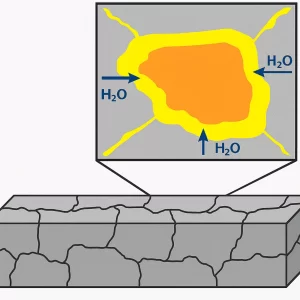 ASR is an expansive reaction between
reactive forms of silica in aggregates and potassium and sodium alkalis, mostly from cement, but also from aggregates, pozzolans, admixtures, and mixing water. The reactivity is potentially harmful only when it produces significant expansion. Indications of the presence of alkali-aggregate reactivity may be a network of cracks, closed or spalling joints, or movement of portions of a structure. ASR can be controlled through proper aggregate selection and/or the use of supplementary cementitious materials (such as fly ash or slag cement) or blended cements proven by testing to control the reaction.
Abrasion Resistance:
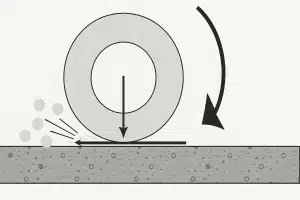
Concrete is resistant to the abrasive effects of ordinary weather. Examples of severe abrasion and erosion are particles in rapidly moving water, floating ice, or areas where steel studs are allowed on tires. Abrasion resistance is directly related to the strength of the concrete. For areas with severe abrasion, studies show that concrete with compressive strengths of 12,000 to 19,000 psi work well. Concrete floors with FloorHard products will enhance abrasion resistance of concrete.
Surface Repair Method:
1) Patching Method
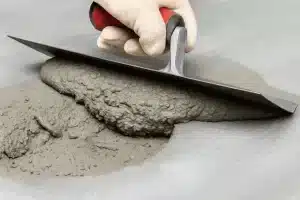 All flexible pavements require patching at some time during their service life. Surface patching should be performed to a standard
commensurate with resource availability and the objective of retaining a smooth ride as long as possible. Since patching materials are one of the larger materials costs a high-quality patch is one of the most cost-effective means of utilizing available resources. There are two principal methods of repairing asphalt pavements:
- Remove and replace the defective pavement and surfacing or base material.
- Cover the defective area with an overlay of a suitable material to renew the surface, seal the defective area, and stabilize the affected pavement. These repairs can be called ‘dig-outs’ or ‘overlays’ according to the method used.
2) Grouting Method
This method consists of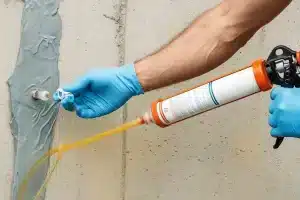 cleaning the concrete along the crack, installing injection ports (grout nipples) at intervals astride the crack (to provide a pressure-tight contact with the injection apparatus), sealing the crack between the injection ports, flushing the crack to clean it and test the seal, and then grouting the cracks with PrimeGrout SuperAdd products.
3) Spray Method
Sprayed Concrete Repairs are also sometimes referred to as
– Gunite Concrete Repairs (although purists will say that ‘Gunite’ relates to the original dry spray process of spraying traditional concrete mixes with fine aggregate component (<12mm only). They are also described as – Machine Applied Concrete Repairs.
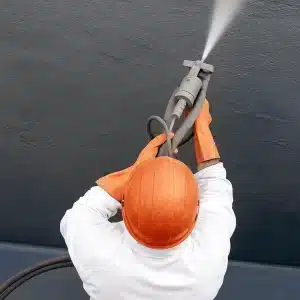 Application process:
- Higher bond performance
- Fewer voids because of better compaction
- Faster application
Full Depth Replacement Method:
Cracks that extend through the entire depth of the slab are defined as full depth cracking. These cracks often begin moving and functioning as a contraction joint without load transfer devices.
Full depth cracking can be caused by: repeated heavy traffic loads, failure of the doweled joints to function properly, loss of aggregate interlock along the crack face, inadequate joint sawing (saw timing), lack of subgrade support, excessive shrinkage, or the intrusion of incompressible materials in the open cracks.
To prevent full depth cracking saw joints in the sawing window, cure fresh concrete in a timely manner, and properly maintain joints by protecting the joints from the infiltration of incompressible material. Use of fibre ‘Fibrecon’ gives secondary reinforcement to avoid further cracks.
Further Deterioration:
Penetrating Sealers:
The most common penetrating sealers are based on silicon, such as WaterRepel S, although low viscosity solvent-based coatings applied as primers such as Clearseal or PaverCoat may also fall into this category.
Silicate-based solutions are also available (e.g. FloorHard / FloorFinish). These react with calcium hydroxide in the concrete to form products that block the pores. They are also used as surface hardeners.
Coatings:
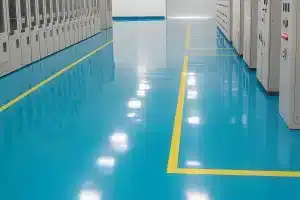
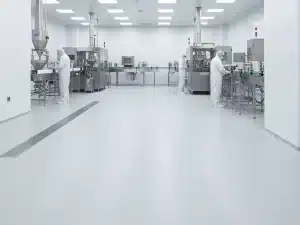
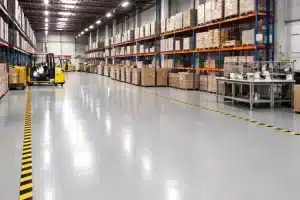
Coatings range in thickness from thin surface sealers to thicker high build coatings and elastomeric membranes through to overlays. They include the following materials:
- Epoxies: good chemical resistance and hard-wearing but brittle and have poor UV resistance.
- Polyurethane: good chemical and weathering resistance, flexibility and toughness, such as Superflex, Multishield, FloorPrime, TraffiDeck, TraffiCoat, Deckcoat, to name a few options.
- Polyester, vinyl ester/acrylate: excellent chemical and temperature resistance, cure at low temperatures. Multiscreed is based on these technologies.
- Acrylic: decorative, good weathering and crack bridging properties, water-vapour permeable, resistant to ingress of carbon dioxide and chloride solutions, not suitable for immersion or surfaces subject to ponding.
- Vinyl, synthetic elastomers, chlorinated rubber: general barrier coatings, good weathering resistance, but solvent sensitive.
- Bitumen: low-cost waterproofing, sensitive to solvents, oxidizes if exposed to the atmosphere.
- Cementitious: good barriers against carbon dioxide and moisture but poor acid resistance. Acid resistance may be better in products containing fine silica. Flexibility can be improved by polymer modification. Good impact and abrasion resistance. Multiguard A falls in this category.
Following is the brief of products required for complete concrete repair and protection:
- Concrete Repair
- Patch-up Materials: PrimeMix RM / Surfix Level-Coat / FairFinish / FeatherPatch / PrimePatch / Microtop; cementitious products
- Protection
For further details contact:
Multichem Industries Pvt. Ltd.
Phone No: +91 9619091025
E-mail: info@multichemgroup.net
Web: www.multichemgroup.net