Dielectric Coating Can Make the Biggest Impact in EV Plants

We are witnessing the rise of EV vehicles, which are expected to grow rapidly replacing 30%–50% traditional fuel vehicles in the coming decades. This transition will result into rapid growth of EV vehicles and ensuring electrical safety in EV manufacturing plants becomes a critical priority

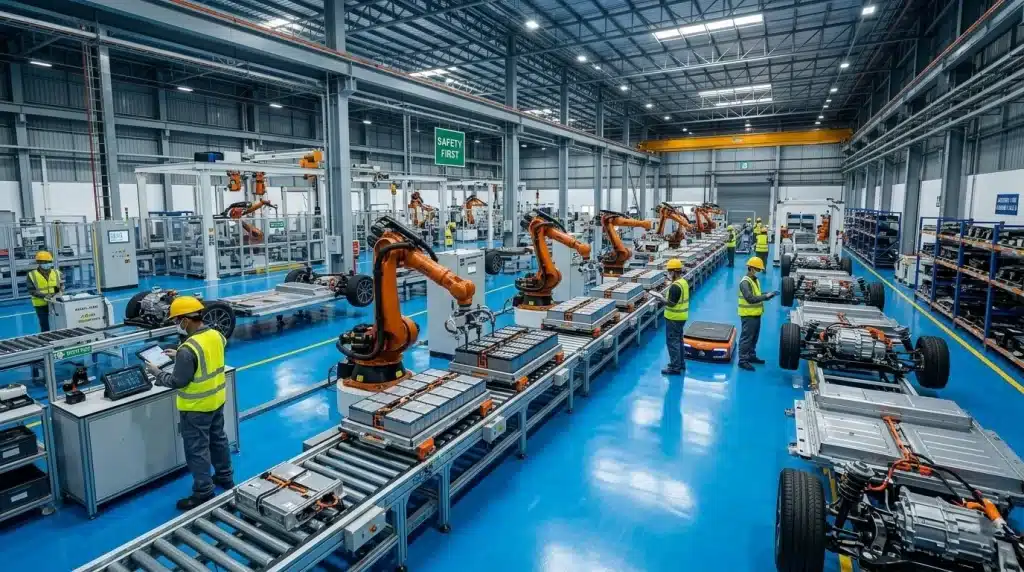
While we are ready to cater this demand, these set up also introduces significant electrical safety risks. EV production plants have high-voltage equipment, battery assembly lines, charging infrastructure, robotics, and sensitive electronics installed.

dielectric insulation coating for EV manufacturing plants

Even minor electrical leakage, moisture or insulation failure can lead to serious fire incidents, equipment breakdown and production downtime. In a rapidly developing economy, such negligence can have significant consequences.

High-voltage equipment, battery packs, charging systems, and automation lines require reliable insulation protection to ensure worker safety and prevent electrical accidents. This is why dielectric insulation coating for EV manufacturing plants are becoming increasingly important as an EV manufacturing facility safety solutions.

Why EV manufacturing plants need dielectric protection?

1. High-Voltage Battery Systems

  • Modern EV battery packs typically operate between 400V and 800V.
  • Next-generation EV platforms are moving toward 1000V battery architectures.
  • During battery assembly, testing, and charging, workers operate near high-voltage system.
  • Failure of insulation or safety procedures can create serious electric shock hazards.

2. Arc Flash and Arc Blast Incidents

  • Arc flash is one of the most dangerous electrical hazards in industrial environments.
  • It occurs when electrical current leaves its intended path and travels through the air between conductors.

According to the National Fire Protection Association, arc flash incidents are responsible for numerous industrial electrical injuries every year, particularly in facilities operating high-energy electrical systems.

3. Battery Thermal Runaway Events

Lithium-ion batteries store large amounts of energy in compact spaces. Under certain conditions such as overcharging, internal damage, or short circuits, batteries can enter thermal runaway and cause Gas release, Fires or explosions, Electrical discharge hazards, etc

4. Ground Faults and Leakage Currents

Ground faults occur when electrical current unintentionally flows to the ground through conductive materials.

In EV manufacturing plants, this can happen due to:

  • Damaged insulation
  • Moisture or conductive contaminants
  • Equipment malfunction
  • Wiring faults

5. High-Power Charging and Testing Infrastructure

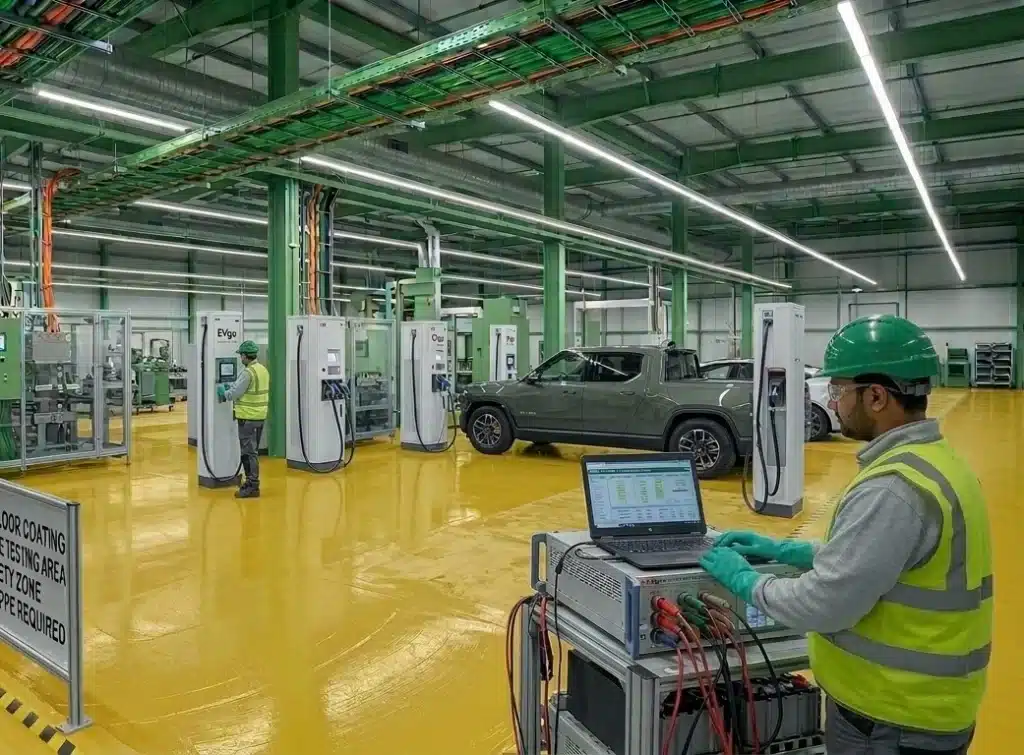
  • EV production facilities use charging and testing stations to replicate real-world EV charging conditions.
  • Modern DC fast chargers used in testing deliver extremely high current and power levels.
  • These high-energy systems require strict electrical control and proper insulation for safe operation.

Critical Components of EV Manufacturing Plant:

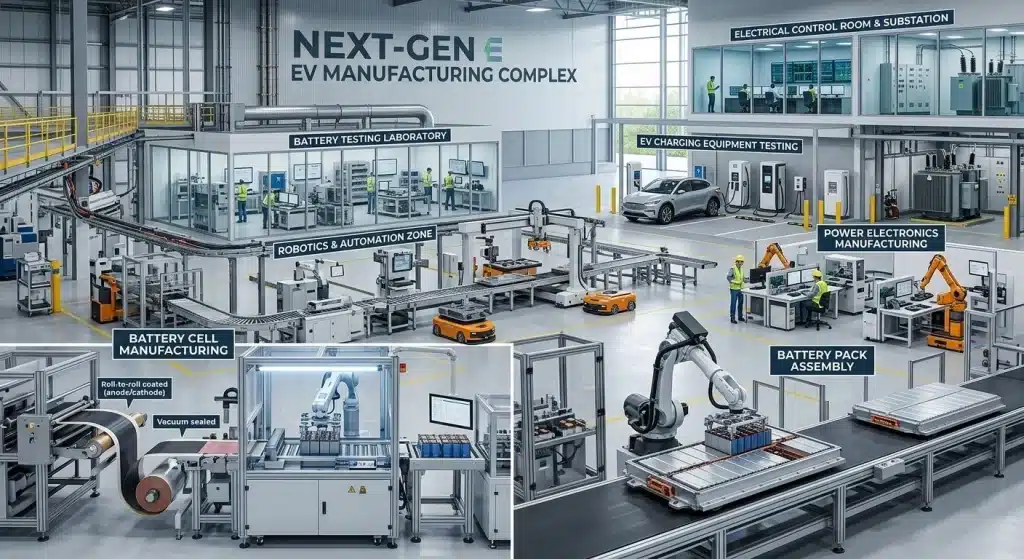
EV manufacturing facilities have critical and fragile components that needs to be protected. These plants operate with high-voltage electrical systems, especially in areas such as:

  • Battery cell manufacturing
  • Battery pack assembly lines
  • Battery testing laboratories
  • Power electronics manufacturing
  • EV charging equipment testing
  • Robotics, conveyor belts and automation zones
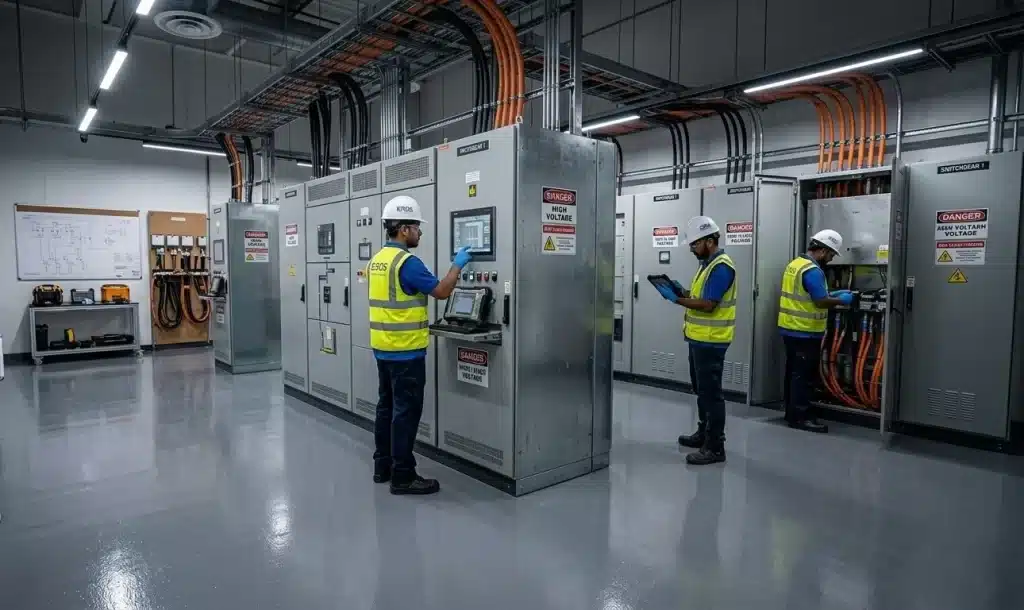
  • Electrical control rooms and substations

These interconnected systems form the backbone of EV manufacturing, where precision, reliability, and protection of critical infrastructure are essential for uninterrupted production.

Other safety solutions used in EV manufacturing facilities for dielectric protection:

1. Electrical Insulating Rubber Mats (Most Common)

These mats are made from high-dielectric rubber or elastomer and are designed to prevent current from flowing from equipment to the ground through a person.

Advantages

  • Easy installation
  • Low initial cost
  • Easy replacement

Limitations

  • Mats move or shift
  • Wear and tear over time
  • Frequent inspection and maintenance

This limitation is exactly why industrial dielectric flooring and dielectric insulation coating for EV manufacturing plants are becoming alternatives.

2. Insulating Rubber Sheets / Carpets

Insulating rubber sheets are often thinner, more versatile, and used for fabrication, lining, or covering surfaces where high-voltage resistance is less critical.

Limitations

  • High cost
  • Complex installation
  • not biodegradable
  • limited heat/chemical resistance

3. PPE + Ground Protection Combination

EV manufacturing facilities also relies on multiple safety layers, such as: insulating gloves, tools, dielectric footwear, rubber mats on the floor, but it also has several practical disadvantages.

In busy EV manufacturing environments:

  • Workers may forget PPE
  • Workers stepping outside the mat
  • Mat dislocation
  • multiple independent components (PPE + mats)

A missed step in any layer can compromise overall electrical safety in EV manufacturing plants.

4. Emerging Alternative: Dielectric Floor Coatings

Dielectric paint rises up among all the disadvantages of other insulating methods.

These coatings:

  • Bond directly to the concrete floor
  • Create a seamless insulating layer
  • Reduce maintenance compared to mats

They are particularly recommended for electrical panel rooms and high-voltage zones where continuous insulation is required. Solutions such as Electrogard dielectric coating are increasingly used in modern EV plants.

What is Dielectric Flooring?

It is a specialized dielectric insulating floor coating system designed to prevent the flow of electrical current through the floor.

It is applied directly onto the concrete substrate, creating a seamless, continuous insulating barrier.

This protective layer helps:

  • Prevent electrical shock hazards
  • Improve workplace safety
  • Protect sensitive electrical equipment
  • Reduce risk of electrical accidents
  • Reduce grounding risks near high-voltage equipment

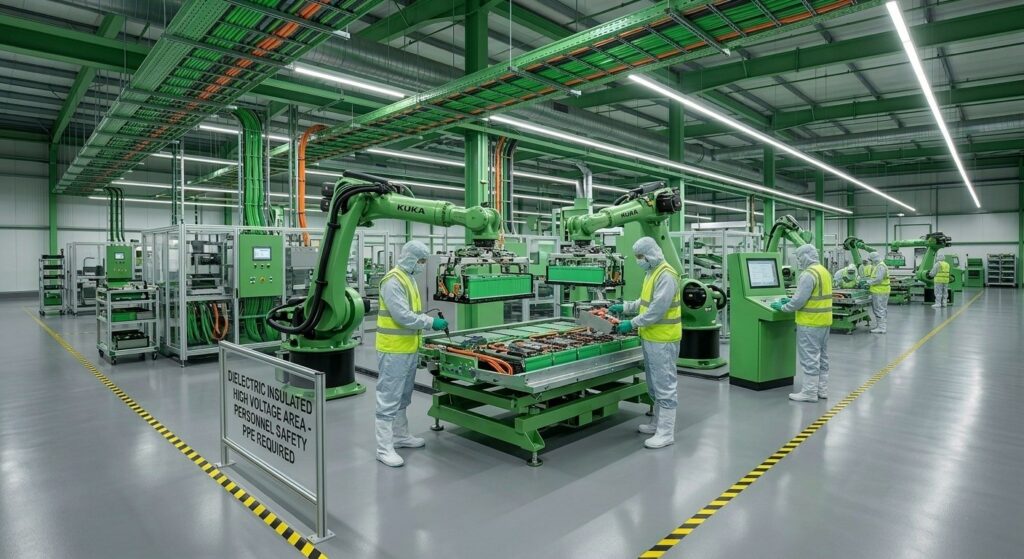
For EV manufacturing plants dealing with high-voltage equipment, this high voltage flooring system acts as a critical electrical insulation layer across the entire floor surface.

Application Areas of Dielectric Insulation Coating in EV Manufacturing Plants

1. Electrical Control Panels and Switchgear

It can be applied on surfaces near electrical panels, switchgear systems, and distribution boards to improve insulation and reduce the risk of accidental electrical contact.

They help create an additional insulation layer in areas where technicians frequently operate.

2. Battery Testing Laboratories

Battery testing labs handle high-voltage charging and discharging systems. Dielectric Coating for EV battery pack testing zones can help improve electrical safety around test rigs and equipment zones.

3. Charging Infrastructure Testing Areas

It can be used in these areas to provide insulation protection in zones where high current and voltage levels are present.

4. Transformer and Power Distribution Rooms

EV manufacturing plants require large electrical power infrastructure including transformers, substations, and power distribution rooms.

Applying dielectric coatings on floors or structural surfaces can help improve insulation and support safer maintenance operations.

5. Automation and Robotics Zones

Automated production lines rely on robots, conveyors, and electrically powered systems.

These coatings can help protect floors and surrounding infrastructure from electrical leakage risks where heavy electrical machinery operates continuously.

6. Battery Pack Assembly Lines

Battery pack assembly involves connecting multiple cells into high-voltage packs.

These coatings can help improve electrical safety in assembly zones where workers interact with battery modules and electrical connections.

7. Maintenance Areas for High-Voltage Equipment

Maintenance areas used for servicing EV batteries, inverters, or charging systems require controlled electrical environments and a reliable high voltage flooring system.

Why Dielectric Flooring is Ideal for EV Manufacturing Facilities

  • Protection in high voltage areas

EV battery manufacturing and testing involve high voltages. It creates an insulating barrier that reduces the risk of current flow through the ground.

  • Seamless Protection Across the Floor

Unlike rubber mats that cover limited areas, dielectric flooring forms a continuous protective surface, eliminating gaps where electrical hazards may occur.

  • Long-Term Durability

Industrial dielectric coatings are designed to withstand heavy equipment movement, chemical exposure, forklift movement, foot traffic and abrasion, industrial cleaning processes, etc. This makes them ideal for demanding EV production environments.

  • Improved Worker Safety

A permanent insulating surface reduces the risk of accidental contact with conductive floors in high-voltage zones.

  • Low Maintenance

These systems require minimal maintenance while providing consistent insulation performance for years unlike rubber mats that require frequent inspection, repositioning, and replacement.

  • Cost Advantage

Though other insulation methods may have lower in costs but in the long run they incur maintenance, inspection or potential fire incident costs. On the other hand dielectric coatings may have a higher upfront cost but provide permanent, long-term protection.

  • Better Safety Compliance

Many EV manufacturing plants follow strict safety standards for electrical installations. Its facilities comply with industrial electrical safety guidelines.

Supporting the Future of Electric Mobility

As EV production continues to grow, manufacturing facilities must adopt advanced EV manufacturing facility safety solutions to protect workers and infrastructure.

Dielectric flooring is not just a coating, it is a critical safety layer for modern high-voltage manufacturing environments.

By replacing traditional insulation mats with a seamless industrial dielectric coating system, EV manufacturing plants can achieve:

  • Enhanced electrical safety
  • Long-term reliability
  • Improved operational efficiency

In an industry where innovation drives progress, safety must evolve as well.

Floorkrete by Multichem offers specialized dielectric protection systems designed to support electrical safety in modern industrial facilities, helping protect both personnel and critical infrastructure.

Electrogard systems, designed to deliver high dielectric strength, seamless protection, and long-term durability in electrically intensive industrial environments. These dielectric paint is available in single and two component system with additional benefit of UV resistance. These coatings help create safer production floors while protecting both personnel and critical equipment in modern EV manufacturing facilities

Speak With Our Technical Team

If your EV manufacturing facility requires advanced electrical insulation flooring, our experts can help you design the right solution.

Request a consultation today to evaluate dielectric flooring for your plant.

📩 Contact us for technical specifications, test reports, and project guidance.

info@multichemgroup.net/ +91 9619091025

FAQ:

High electrical risk include thermal runaway, electrical shock, short circuits, and chemical exposure. These hazards require strict monitoring, insulation systems, and controlled production environments.

Dielectric flooring creates a continuous insulating surface that helps reduce electrical conduction through the floor. This adds an extra layer of safety for workers operating near high-voltage equipment.

Electric vehicles rely on battery systems, electric motors, and power electronics instead of internal combustion engines. This makes EV factories more dependent on high-voltage electrical infrastructure.

EV battery plants require electrical insulation systems, fire suppression systems, controlled ventilation, and strict grounding protocols. These safety layers help protect workers and equipment in high-energy environments.

Electrical hazards can be minimized through proper insulation, equipment maintenance, safe handling procedures, and infrastructure-level safety measures. These practices help ensure safe operation around high-voltage battery systems.

Facebook
Twitter
LinkedIn
anti corrosion coating

RustoBlock S: A Versatile Anti-Corrosion Coating for Metal & Concrete

RustoBlock S: A Versatile Anti-Corrosion Coating for Metal & Concrete Despite various developments in technology over the past few years, corrosion continues to pose significant problems for the construction industry. From roofing sheets, steel structures, pipelines, or concrete, exposure to moisture, oxygen, and other chemicals causes deterioration of materials over

Read More »