
ESD Flooring That Protects Equipment, People, and Compliance

esd flooring

A Practical Guide to Conductive & Static Dissipative Epoxy Floor Systems

In electronics manufacturing, cleanrooms, defense facilities, and data-driven environments, electrostatic discharge isn’t a minor risk it’s a silent operational threat.

One uncontrolled static discharge can:

  • Damage sensitive electronic components
  • Cause product rejections and warranty failures
  • Compromise cleanroom and audit compliance
  • Create safety hazards in explosive or controlled zones.

This is why ESD flooring is no longer optional. It is a core infrastructure decision and choosing the wrong system can be as damaging as having none at all.

What Is ESD Flooring and Why Epoxy Systems Are Preferred

ESD flooring is engineered to safely control static electricity by either:

  • Dissipating static charges gradually (static dissipative flooring), or
  • Conducting charges directly to ground (conductive epoxy floor systems)

Epoxy/PU-based ESD flooring systems are preferred in industrial environments because they offer:

  • Seamless, joint-free surfaces
  • High mechanical and chemical resistance
  • Stable electrical properties over time
  • Compatibility with grounding tapes and conductive primers

Unlike surface-applied anti-static coatings, true ESD epoxy flooring works as a complete system, not a temporary solution.

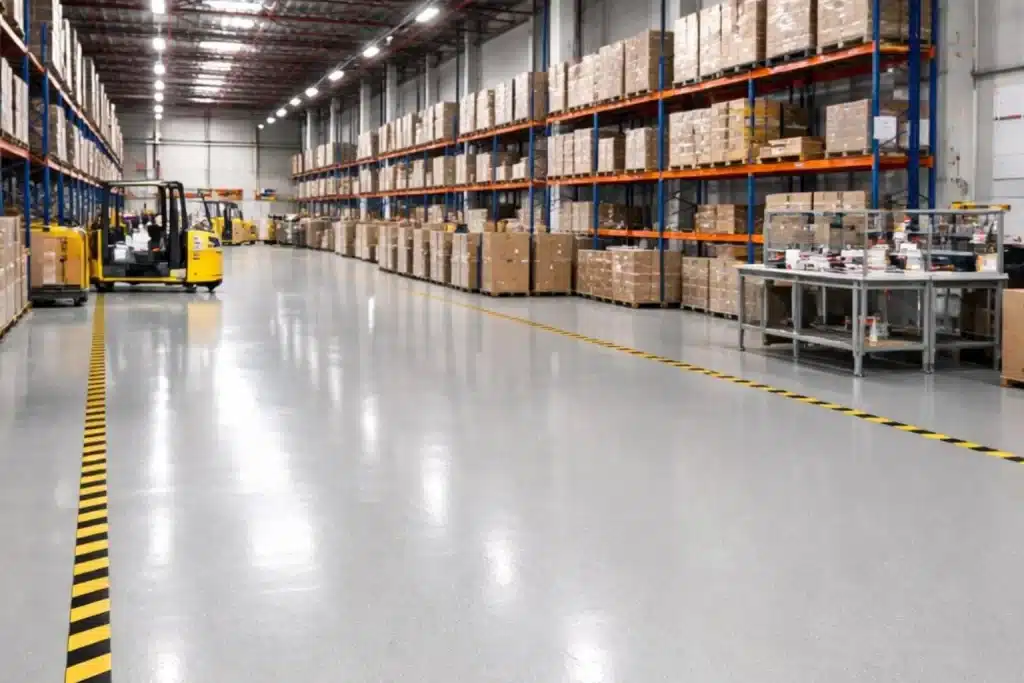
antistatic flooring

Conductive vs Static Dissipative Flooring: Choosing the Right System

Static Dissipative Epoxy Flooring (Electroshield ELC-5406)

Best suited for:

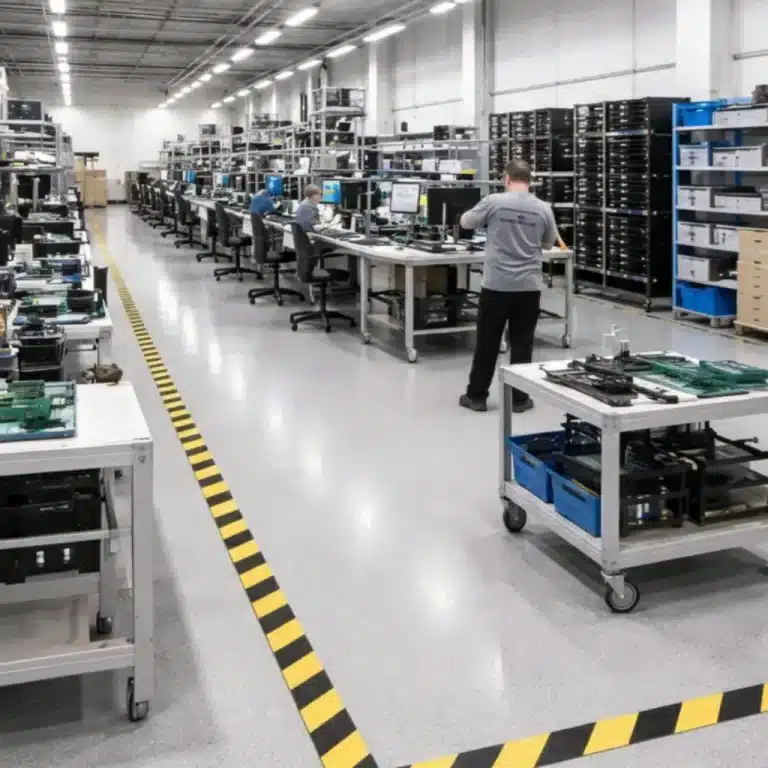
  • Electronics assembly lines

  • Clean rooms

  • QA labs and testing areas

  • Computer rooms and data environments

Performance highlights:

  • Surface-to-ground resistance: 10⁶ – 10⁹ ohms

  • Thickness: 1.5–2.0 mm

  • High abrasion and chemical resistance

  • Seamless, easy-to-clean epoxy floor coating

This system safely drains static charges at a controlled rate, protecting sensitive components without causing sudden discharge.

Conductive Epoxy Floor System (Electroshield ELC-5407)

Designed for high-risk environments such as:

  • Explosive chemical storage zones
  • Defense, aerospace, and munitions facilities
  • Areas requiring rapid static grounding

Performance highlights:

  • Surface-to-ground resistance: 10³ – 10⁶ ohms
  • Self-smoothing epoxy system (~2 mm thickness)
  • High compressive strength (>60 N/mm²)
  • Integrated conductive tape and primer network

This conductive epoxy floor system ensures immediate grounding, reducing ignition and failure risks in critical zones .

Why ESD Epoxy Floors Fail (And How Floorkrete Prevents It)

Most ESD flooring failures occur not because of the product, but because of poor system design.

Common mistakes include:

  • Ignoring concrete moisture and vapor pressure
  • Inadequate surface profiling (no CSP control)
  • Incorrect grounding layout
  • Treating ESD flooring as a single coat, not a layered system
  •  Wrong thickness of ESD flooring
  • Wrong selection of Products

Floorkrete® ElectroShield ESD flooring systems are designed as complete, tested assemblies, including:

  • Moisture-tolerant primers (Vapour barrier options when required)
  • Conductive tapes and primers
  • Self-leveling ESD epoxy topcoats
  • Defined application procedures by trained applicators only

This ensures long-term electrical stability, not short-term compliance .

antistatic flooring

Value Beyond Compliance: What You Actually Gain

Choosing the right ESD epoxy floor coating delivers more than static control:

  • Reduced product failures and rework
  • Improved audit and certification outcomes
  • Lower maintenance and repair costs
  • Safer working conditions for personnel
  • Longer floor life under industrial wear

In short, it’s a risk-management investment, not just a flooring upgrade.

Is ESD Flooring Right for Your Facility?

You should strongly consider ESD flooring if your facility includes:

  • Electronics or semiconductor manufacturing
  • Cleanrooms or controlled environments
  • Defence, aerospace, or explosive material handling
  • Data centers, labs, or QA testing zones

If you’re unsure whether static dissipative flooring or conductive epoxy flooring is right for your application, that’s exactly where expert guidance matters.

FAQ:

Static dissipative flooring releases static charges gradually, while conductive flooring transfers charges quickly to ground for high-risk environments.

ESD flooring typically complies with ANSI/ESD S20.20, maintaining surface resistance between 10³ and 10⁹ ohms depending on the system type.

Most ESD epoxy flooring systems are applied at a thickness of approximately 1.5 to 2.0 mm.

Yes, ESD flooring can be installed on existing concrete provided the substrate is structurally sound and properly prepared.

ESD flooring requires simple routine cleaning using ESD-compatible cleaners to maintain electrical performance.

Facebook
Twitter
LinkedIn
esd flooring

ESD Flooring That Protects Equipment, People, and Compliance

ESD Flooring That Protects Equipment, People, and Compliance A Practical Guide to Conductive & Static Dissipative Epoxy Floor Systems In electronics manufacturing, cleanrooms, defense facilities, and data-driven environments, electrostatic discharge isn’t a minor risk it’s a silent operational threat. One uncontrolled static discharge can: Damage sensitive electronic components Cause product

Read More »