Cementitious Waterproofing Advantages: Why It Remains a Trusted Construction Solution

Waterproofing is an essential step in protecting structures from water damage. Among various waterproofing methods, cementitious waterproofing has stood the test of time as a reliable and durable solution. From water tanks to walls and basements, this method offers unmatched versatility and performance.

Whether you’re a builder, contractor, or DIY enthusiast, understanding the advantages of cementitious waterproofing can help you make informed decisions for long-lasting construction protection using Multichem cementitious waterproofing products

Cementitious waterproofing

What Is Cementitious Waterproofing?

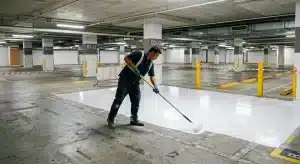
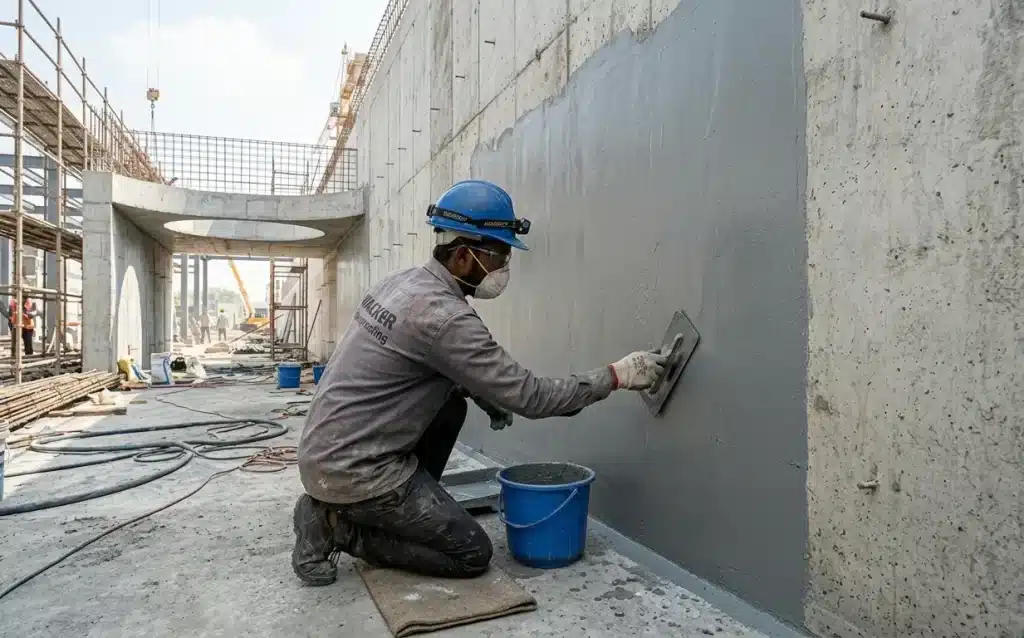
Cementitious waterproofing is a durable coating applied to concrete or masonry surfaces to prevent water penetration. It forms a strong, impermeable layer, making it one of the most trusted waterproofing solutions in construction.

  • Composed of cement, fine aggregates, and waterproofing additives
  • Strong adhesion to concrete and masonry surfaces
  • Easy to apply with minimal surface preparation
  • Provides long-lasting protection against water seepage
  • A versatile solution for walls, roofs, basements, and water tanks

Advantages of Cementitious Waterproofing

Cementitious waterproofing is a robust, cement-based coating designed to enhance structural durability while providing water resistance. Its technical advantages include:

  • Hydraulic Bonding: Forms a crystalline microstructure that penetrates concrete pores, blocking capillary channels and preventing water ingress with superior waterproofing chemicals
  • High Compressive Strength: Adds rigidity and strengthens surface layers, improving resistance to hydrostatic pressure , a key feature of advanced waterproofing solutions
  • Chemical Resistance: Protects against mild acids, alkalies, and salts commonly found in water tanks and basements.
  • Crack Bridging Capability: Can accommodate minor substrate movements and micro-cracks without compromising waterproofing integrity.
  • Permeability Reduction: Significantly lowers water vapor transmission, making it ideal for damp-prone areas and moisture-sensitive interiors.
  • Thermal & Weather Durability: Resistant to UV exposure, freeze-thaw cycles, and temperature variations, extending the service life of exposed structures.
  • Compatibility with Concretes & Mortars: Can be applied over new or existing concrete, masonry, or cement plaster surfaces without chemical incompatibility.

How Cementitious Waterproofing Protects Different Construction Areas

Threats and Solution

Threat: Seepage, leakage, and water contamination due to concrete porosity and micro-cracks.
Solution: Cementitious waterproofing forms a dense, impermeable layer that blocks capillary channels, preventing water loss and contamination. Using reliable waterproofing chemicals ensures long-term protection.

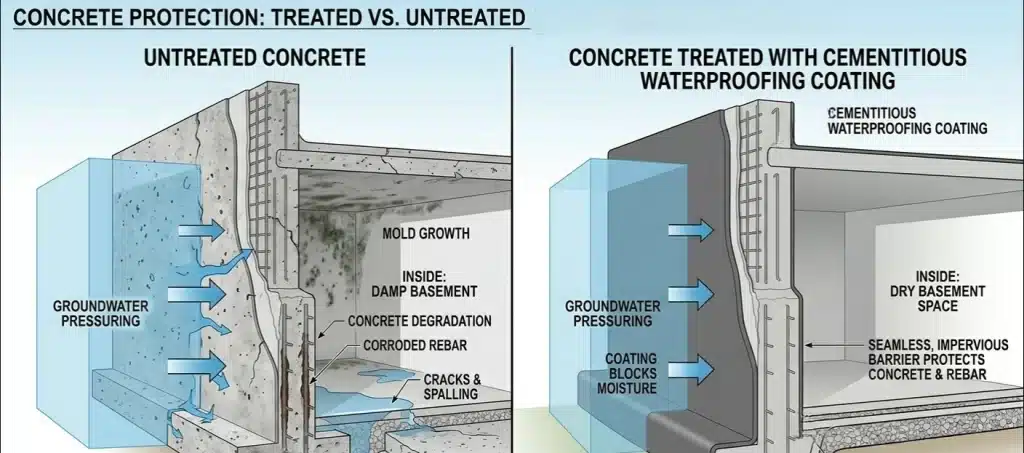
• Basements & Foundations

Threat: Ground moisture, hydrostatic pressure, and dampness can weaken the structure over time.
Solution: The coating provides high compressive strength and low permeability, resisting water ingress and protecting structural integrity.

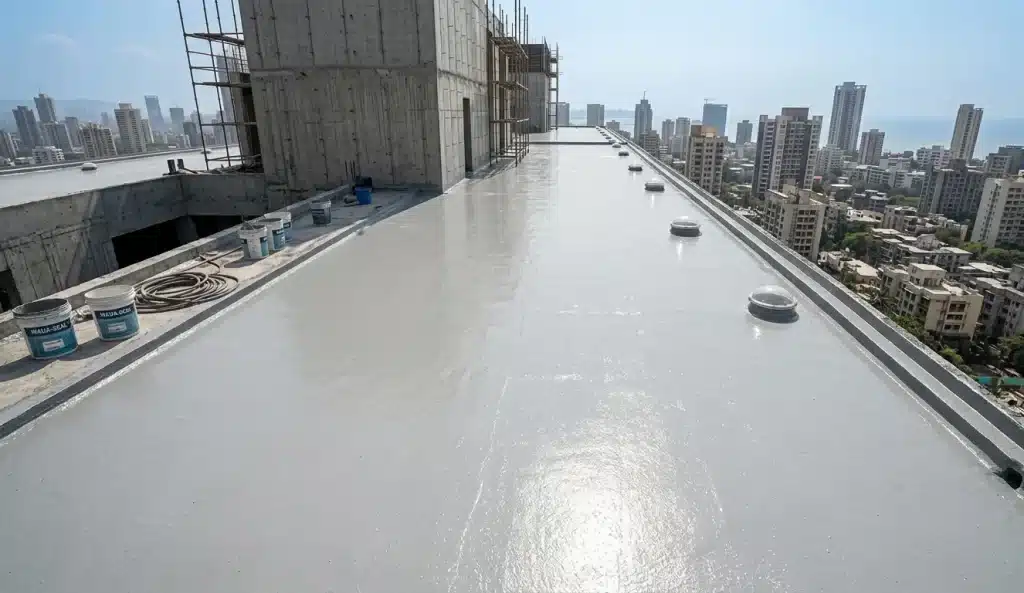
• Terraces & Rooftops

Threat: Rainwater penetration, ponding, and freeze-thaw cycles causing surface damage.
Solution: Cementitious waterproofing creates a seamless, weather-resistant barrier that prevents water entry and enhances durability.

• Walls & Drywalls

Threat: Rising damp, mold formation, and surface degradation due to moisture absorption.
Solution: A thin cementitious coating reduces water vapor transmission, prevents efflorescence, and improves wall longevity.

• Swimming Pools & Fountains

Threat: Water leakage, chemical attack from pool water, and substrate erosion.
Solution: Cementitious waterproofing ensures full water retention and chemically resistant protection, maintaining pool integrity.

Key Considerations

While cementitious waterproofing offers numerous advantages, it’s essential to:

  • Apply the coating in recommended thicknesses.
  • Prepare the surface properly for optimal adhesion.
  • Use high-quality cementitious waterproofing coatings for maximum durability.

Conclusion

Cementitious waterproofing continues to be a trusted and effective solution for protecting concrete and masonry structures. Among the reliable options in the market, Multiguard cementitious waterproofing from Multichem is available in 1K and 2K formulations, providing superior protection for water tanks, walls, and more. With its easy application, strong adhesion, and long-lasting performance, cementitious waterproofing remains a top choice for builders and homeowners alike, backed by the best waterproofing company expertise and high-quality waterproofing solutions.

Multiguard Product Range:

  • Multiguard A – Two-component premium waterproofing coating with >30% elasticity for basements, pools, and water tanks.
  • Multiguard A-Control – Two-component crystalline-polymer cementitious coating for superior water ingress protection.
  • Multiguard A-Shield – Cost-effective two-component waterproofing for concrete, masonry, and construction surfaces.
  • Multiguard A-Ecoshield – Polymer-cement-based two-component coating for durable and eco-friendly waterproofing.
  • Multiguard A-Elasto – High-performance two-component waterproofing for concrete, brickwork, and blockwork.
  • Multiguard A-SuperElasto – Two-component coating providing barrier against acidic gases and carbonation in concrete.
  • Multiguard A-HiperElasto – Flexible two-component coating resistant to waterborne salts, weathering, and chemicals.
  • Multiguard SuperMortar 1 – Fiber-reinforced ready-to-use screed waterproofing for terraces, retaining walls, and defect closure.
  • Multiguard A Kavach – Polymer-crystalline-cement coating for new and old construction, providing surface protection and waterproofing.
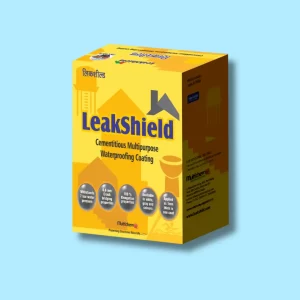
  • Leakshield – Single-component powder waterproofing for high-pressure walls, basements, tanks, and pools.
  • Multiguard Protect – Single-component alkaline screed waterproofing with elasticity and enhanced chemical resistance.

❓ Frequently Asked Questions (FAQs)

Cementitious waterproofing is primarily used to protect concrete and masonry structures from water penetration, including water tanks, basements, walls, and terraces.

Yes, the best cementitious waterproofing for dry walls provides a protective barrier against dampness and improves wall durability.

With proper application, cementitious waterproofing can last for 10–15 years, depending on environmental exposure and maintenance.

1K coatings are single-component and ready to use, while 2K coatings involve two components that mix before application for enhanced chemical resistance and durability.

Yes, cementitious coatings are non-toxic, low in VOCs, and environmentally safe, making them suitable for sustainable construction practices.

Facebook
Twitter
LinkedIn
polyurea waterproofing

Industrial Waterproofing Systems: Complete Guide to Waterproofing Products for long term performance

Industrial Waterproofing Systems: Complete Guide to Waterproofing Products for long term performance Imagine investing millions into an industrial facility only to see cracks, leaks, and corrosion appear within a few years. The culprit here is Inadequate waterproofing. In high-performance environments, the right waterproofing solutions can make the difference between durability

Read More »