From Basements to Roofs- How Modern Waterproofing Products Stops Leaks Before They Start

Cementitious waterproofing
Crystalline Waterproofing

Imagine waking up to a morning the monsoon knocking hard on your doors. Now what if your home or office felt like a fortress, safe and dry inside no matter how wild the weather gets outside? That’s the magic of waterproofing products; they aren’t just about keeping water out; they’re about giving you peace of mind for years to come.
Choosing the  waterproofing solution is therefore not simply about selecting a coating and applying it to the surface. The waterproofing system must be selected according to the source of water, substrate condition, exposure, movement, hydrostatic pressure, crack characteristics and service requirements. Modern construction projects use a combination of cementitious, crystalline, polyurethane, polyurea, acrylic, grouting and joint-treatment systems to address waterproofing requirements.

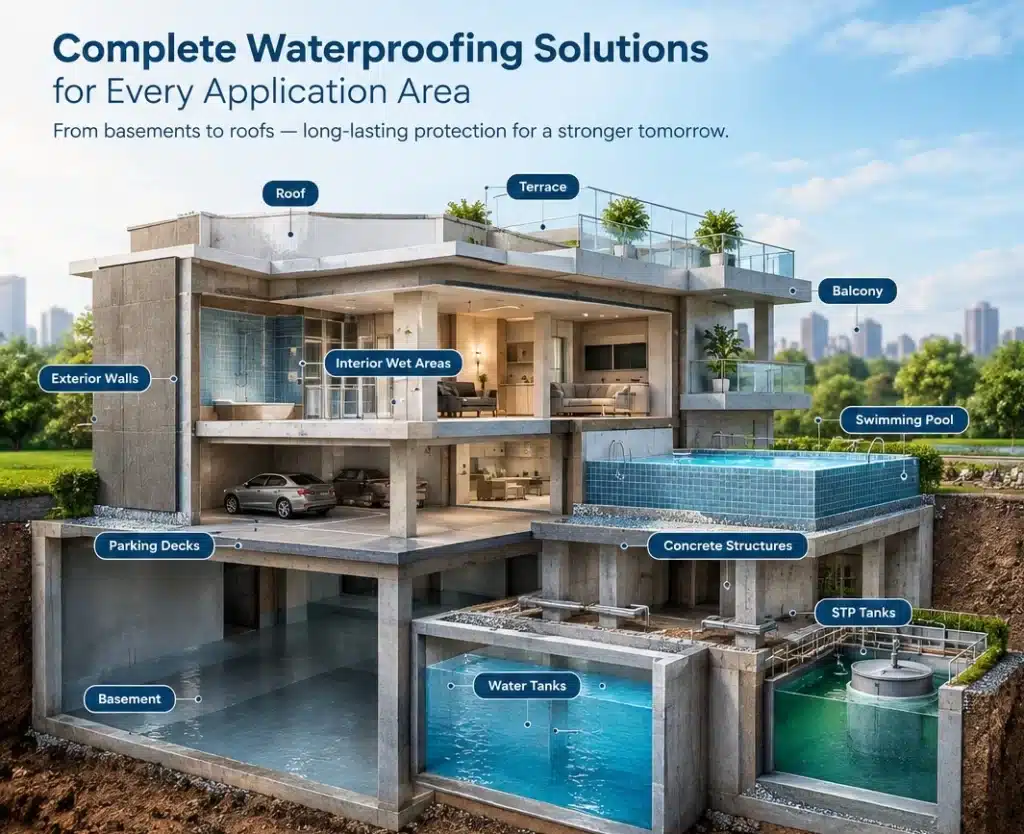
At Multichem we offer a range of professional waterproofing products and systems designed to address different construction requirements. Explore the range of Multichem waterproofing solutions and discover how various technologies help prevent water infiltration and enhance the durability of roofs, terraces, basements, water tanks, wet areas, walls, balconies, swimming pools and other essential structures.

Crystalline Waterproofing: Hydronil

Crystalline Waterproofing

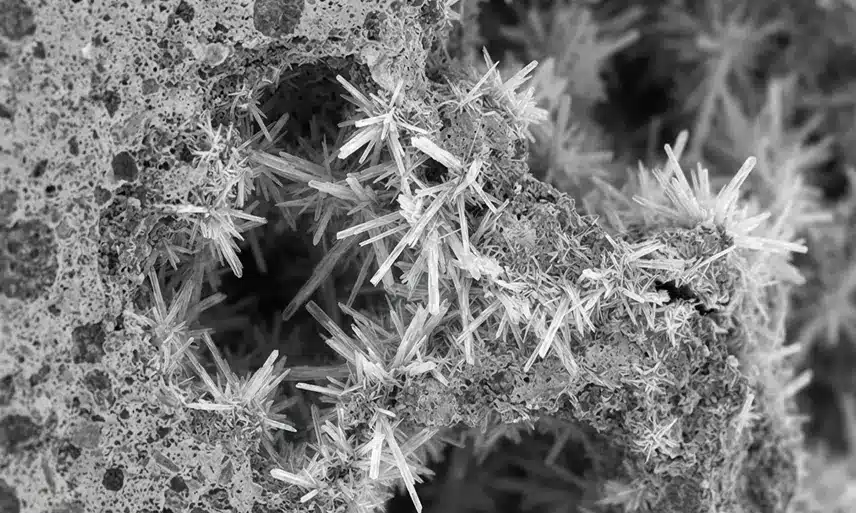
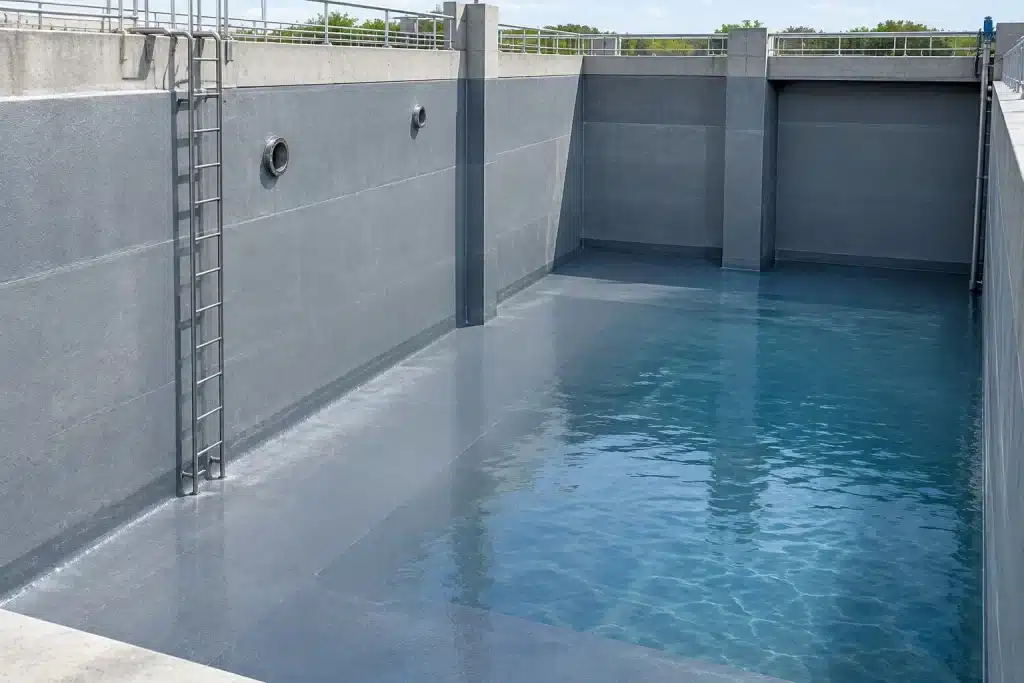
Think of an army of crystals diving into the concrete filling up cracks and pores like superheroes plugging leaks before they even appear. This crystalline action doesn’t just protect; it evolves with your structure continuously working to keep moisture at bay. These structures help reduce the movement of water through pores and discontinuities within concrete.

Multichem offers Hydronil Multiguard In-depth crystalline waterproofing for applications where concrete needs protection against water penetration making it suitable for basements, water tanks, concrete structures, foundations and other moisture-prone areas.

Polyurea Waterproofing

Polyurea is a waterproofing technology that forms a continuous flexible fast-curing membrane designed to protect concrete and other suitable substrates against water ingress while providing resistance to abrasion, chemicals and environmental exposure depending on the formulation.

Whether it’s sprayed on a surface like a roof or carefully hand-applied on tricky spots polyurea waterproofing is like a flexible raincoat for your building. Tough drying and highly elastic they stretch and moves with your structure providing seamless protection against water ingress.

Both spray-applied (Armoutuff) and hand-applied polyurea systems (Armourthane, Multithane, Ultrathane) are available from Multichem making them suitable for project requirements including roofs, terraces, decks, tanks, industrial areas and other demanding surfaces.

Polyurethane Coating

Here’s where the chemistry gets interesting! Polyurethane systems combine flexibility, strong adhesion and resistance to moisture and environmental exposure making them suitable for a range of waterproofing requirements. Depending on the formulation and project conditions they can be used on roofs, terraces, balconies, wet areas, concrete structures, water-retaining structures STP tanks and other areas exposed to moisture.

Multichem offers a range of Hydrothane polyurethane waterproofing solutions, formulated for application requirements and substrate conditions. The range includes solutions for demanding areas such as STP tanks and food-grade environments providing providing dependable resistance to water penetration while offering excellent flexibility long-lasting durability and resistance to chemical exposure.

Crystalline Waterproofing

Primers

Before the real waterproofing action begins the surface needs a foundation. That’s where Aquablock Epoxy primers and Multithane PU primer from Multichem step in. They help prepare the surface and help the waterproofing layer bond properly. A primer acts as the interface between the substrate and the waterproofing membrane helping establish adhesion, control substrate absorption and promote a more consistent waterproofing system. Think of them as the behind-the-scenes team making everything that comes next has the right start. Different primer solutions can be selected depending on the substrate and the waterproofing layer being applied.

Cementitious Coatings

Multiguard A cementitious waterproofing coating offers effective protection for concrete and masonry substrates by helping prevent water penetration and reducing the impact of moisture exposure. Multichem offers both 1K and 2K waterproofing coatings, formulated for durable dependable protection.

Multichem’s 1K system offers handling, good adhesion and moisture resistance. The 2K system combines cement-based powder with a liquid component to provide enhanced flexibility, adhesion and crack-bridging performance. Both systems are suitable for basements, foundations, wet areas, concrete structures, water-retaining structures, tanks, pools and other moisture-exposed areas.

Elastomeric Waterproofing Coatings

What if your waterproofing could bend and move along with the surface of fighting against it? That’s where elastomeric waterproofing coatings from Multichem come into the picture. Their flexible nature allows them to accommodate movement while helping maintain a protective layer. Elastomeric coatings are formulated for thick-film application.

They are particularly useful for roofs, terraces, exposed surfaces and other areas where temperature changes, weather conditions and surface movement are part of the challenge.

Polymer Waterproofing

Waterproofing doesn’t always have to be rigid. Polymer waterproofing solutions from Multichem are formulated with acrylic, SBR and styrene acrylic technology to bring flexibility and protective performance together helping surfaces deal with changing environmental conditions while reducing the risk of moisture penetration.

These coatings can be considered for a variety of exposed surfaces where flexibility, adhesion and long-term water resistance are important.

Integral Waterproofing Admixtures

Why stop at the surface? Multichem’s integral waterproofing admixtures range- Multigaurd IW– dive into the mix of your concrete and help ensure the structure resists water from the inside out. It’s like building a fortress where every brick’s water resistant. It helps reduce water penetration through pores and pathways within the cementitious material. Suitable formulations can make concrete less permeable to water. It is particularly suitable when waterproofing needs to be incorporated during construction.

These admixtures are added directly to cement-based mixtures to improve resistance to water penetration. They are suitable for use in foundations, basements, water-retaining structures, slabs and other concrete applications where effective moisture control and reduced permeability are essential.

Injection Grouting

leaks, honeycombed concrete and hidden structural voids require solutions that go beyond surface treatments. When water is under pressure and making its way through structural joints injection grouting becomes the vital emergency response and preventative stabilizer.

Multichem offers injection systems including Hydrofom, Primegrout and Multigrout designed to travel deep into concrete matrices. Grouting ensures that internal pathways, cold joints and construction seams are fully consolidated restoring the strength and water-tightness of basements, tunnels, dams and underground infrastructure.

Choosing the Right Waterproofing System: Application Matrix

Because no single product suits every exposure condition, selecting the correct chemical formulation based on substrate and environment is critical.

Application Area Primary Challenges Recommended Technology
Exposed Roofs & Terraces UV radiation, thermal expansion, standing water UV-Resistant Polyurethane, Polyurea, Cool Roof Elastomerics
Basements & Retaining Walls Continuous hydrostatic head, soil chemicals, structural settlement Crystalline Slurries, PU Grouting
Wet Areas & Bathrooms Intermittent water pooling, household cleaning chemicals, tile movement Cementitious, Acrylic, Polymer-Modified Systems
Water Tanks & STPs Constant hydrostatic pressure, chemical/microbial exposure, potable safety Pure Polyurethane, Food-Grade PU, Cementitious Coatings
Foundations & Slabs (New Construction) Internal capillary action, high groundwater tables Integral Crystalline & Hydrophobic Admixtures
Crystalline Waterproofing

Site Execution Quality Control & Testing Protocols

The waterproofing products are only as good as their field execution. Strict quality assurance measures must be followed throughout application to avoid defects.

Dry Film Thickness (DFT) Monitoring

Under-application leads to early membrane rupture while over-application can cause curing, cracking or solvent entrapment. Installers must use wet film thickness (WFT) gauges during application to ensure the final cured DFT meets design specifications.

Pin-Hole and Spark Testing

For liquid-applied membranes on structures such as swimming pools STP tanks and chemical bunds high-voltage spark testing (NACE SP0188) or low-voltage wet sponge testing identifies micro-porosity, pinholes or voids that are invisible to the naked eye.

Flood Testing (Ponding Test)

Prior to placing protection boards, screeds or tiles on surfaces like roofs, decks and wet areas the area should be bunded and ponded with water to a depth of 25 mm to 50 mm for a minimum of 24 to 48 hours. Any drop in water levels (accounting for evaporation) or dampness on the underside indicates a defect that must be repaired immediately.

Multichem Waterproofing System

Multichem provides an integrated end-to-end ecosystem engineered to meet the demands of modern construction. By manufacturing crystalline formulations fast-curing polyureas, high-build polyurethanes, advanced primers and polymer-modified cementitious systems Multichem delivers tailored waterproofing solutions for every structural challenge. From basements facing extreme hydrostatic pressure to exposed roofs enduring thermal stress Multichem Waterproofing combines materials, precise substrate preparation guidelines and technical compatibility to deliver long-term protection and structural longevity.

FAQ's

Primers seal porous concrete prevent air bubbles/pinholes in topcoats and create a strong mechanical bond between the substrate and membrane.

side waterproofing resists direct water pressure on the exterior face whereas negative-side waterproofing prevents water from penetrating through the interior face of a structure.

Yes crystalline chemicals remain dormant, within concrete and reactivate whenever water enters growing new insoluble crystals to seal hairline cracks up to 0.4 mm.

Polyurea sets within seconds forms an elastomeric membrane without joints and offers extreme impact, abrasion and tear resistance under heavy exposure

They help make the concrete more long-lasting by stopping water from getting. These admixtures work during the mixing process. They fill up spaces inside the concrete. This makes the whole concrete structure resistant, to water.

Facebook
Twitter
LinkedIn
Cementitious waterproofing

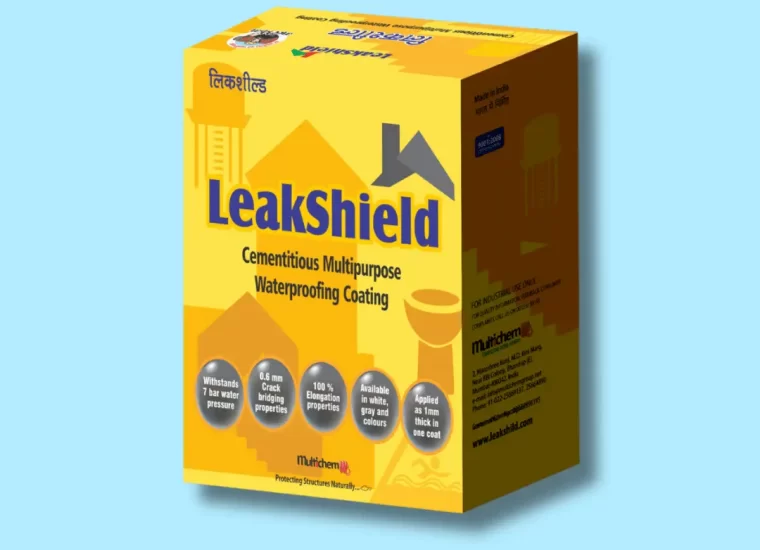
LeakShield Cementitious Waterproofing Coating for Durable Concrete

LeakShield Cementitious Waterproofing Coating for Durable Concrete Cementitious waterproofing provides a reliable solution for protecting concrete and masonry surfaces from moisture and water ingress. LeakShield by Multichem Group is a single-component cementitious waterproofing coating designed to help protect concrete, brickwork, blockwork and cement-rendered surfaces from water and moisture. It is

Read More »