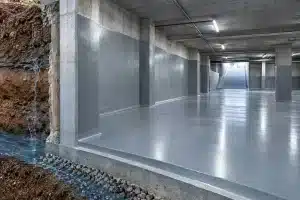
The Science of Polymer Waterproofing: Next-Gen Substrate Protection

polymer waterproofing

Water damage is a major cause of structural failure in concrete buildings. When moisture penetrates concrete, it rusts internal steel rebar, causes the surface to crack and flake off (spalling), and creates unsightly white salt deposits (efflorescence).

While traditional asphalt and bituminic rolls were once standard, they frequently fail over time:

  • Sunlight Damage: UV rays bake the material, making it brittle and prone to cracking.

  • Leaky Seams: Joined edges on roll-on sheets eventually split and let water pass through.

  • Tearing: Low shear strength means the layer tears easily when a building shifts.

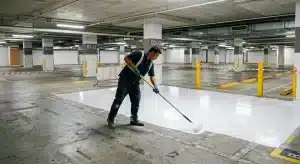
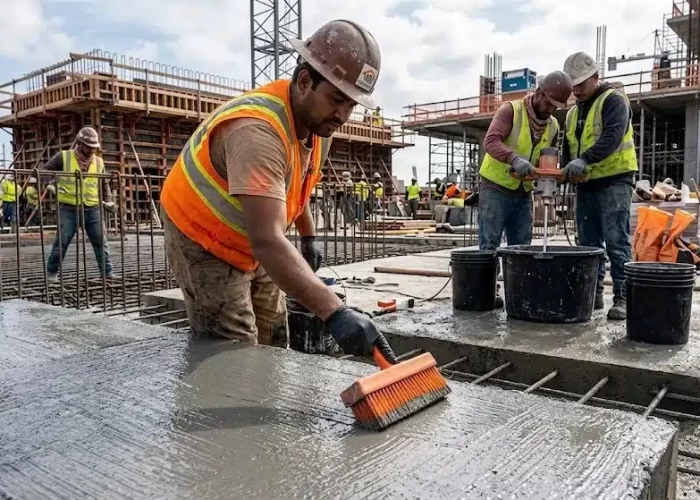
Modern polymer waterproofing eliminates these flaws. Applied as a liquid, it cures into a single continuous barrier with zero seams. The polymers create flexible chemical bonds that stretch without cracking, resist sunlight, and lock directly onto concrete to keep water out permanently.

Key Mechanisms: How Polymer Waterproofing Systems Work

Polymer modified waterproofing coatings rely on forming a continuous, flexible matrix across porous substrates. When applied, these systems function via three core mechanisms:

Polymer Film Formation: (Sealing Micro-Gaps)

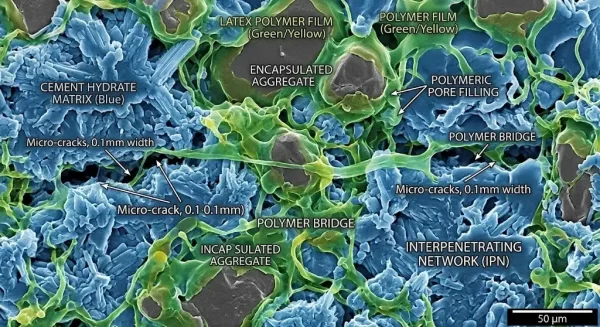
As water dries out of the liquid mix, tiny floating polymer beads squash together and merge into a solid, unbroken rubbery layer. This layer plugs up the microscopic pore holes inside the concrete where water usually leaks through.

Co-Matrix Formation: (Creating a Hybrid Mesh)

As the concrete hardens and the polymer dries at the same time, they weave into each other. This creates an interconnected network that locks the cement, gravel, and polymer tightly together into a far stronger material.

Bridge Crack Elasticity: (Flexing Over Cracks)

Highly flexible polymers allow the coating to stretch like rubber. It can span over moving cracks in the concrete—ranging from 0.5 mm to 2.0 mm wide—without snapping or breaking the waterproof seal as the building shrinks or shifts with heat.

co-polymer dispersion

Comparing Polymer Systems

Polymer Type Core Chemistry / Base Primary Application Key Performance Strengths
Polymer Modified Cementitious (PMC) Acrylic / SBR + OPC Cement Wet areas, podiums, water tanks High breathability, superior damp substrate adhesion
Polyurethane (PU) Isocyanate + Polyol reaction Exposed roofs, trafficable decks Exceptional elongation (>400%), UV resistance
Acrylic Coatings Pure Acrylic Ester / Elastomers Exterior walls, pitched roofs High solar reflectance, ease of single-component app

Polymer Modified Cement Mortar (PMCM)

When structural zones demand high compressive strength alongside dampness mitigation, polymer modified cement mortar (PMCM) serves as the ultimate barrier layer.

PMCM is formulated by replacing a portion of the mixing water in standard sand-cement mortar with synthetic polymer emulsions such as Styrene-Butadiene Rubber (SBR), Polyvinyl Acetate (PVA), or Acrylic Latices.

Polymer Modified Cement Mortar Matrix
Cement Hydrates
Polymer Film Interpenetration
High Compressive Strength
Reduced Water Absorption
Flexural & Tensile Strength
Pore Structure Blocking

Why PMCM Outperforms Standard Mortar

  • Reduced Water-Cement (w/c) Ratio: Polymer dispersions act as high-efficiency plasticizers, reducing the fluid required for workability while drastically reducing capillary pore volume.

  • Superior Adhesion/Bond Strength: Standard mortar relies solely on mechanical keying. PMCM develops chemical adhesion via polymer chains bonding to the mineral surface, offering pull-off strengths exceeding 1.5 N/mm².

  • Flexural & Tensile Upgrades: Standard concrete is notoriously brittle. PMCM introduces flexural elasticity, reducing shrinkage cracking during the thermal curing phase.

Conclusion

Traditional bituminous rolls and un-modified mortars no longer suffice for modern structural demands where movement, chemical exposure, and moisture ingress threaten concrete integrity. Polymer-modified technology represents a fundamental shift in civil engineering—replacing weak mechanical joints with monolithic, chemically bonded elastomeric barriers that flex, seal micro-pores, and drastically improve tensile resistance.

As a leading manufacturer of advanced construction chemicals, Multichem Group delivers engineered polymer-modified systems tailored for high-performance waterproofing and structural rehabilitation. From high-grade SBR and pure acrylic bonding emulsions to specialized 2K polymer-modified cementitious coatings and high-compressive PMCM repair mortars, Multichem Group supplies the core chemistry required to safeguard critical infrastructure, commercial developments, and industrial facilities. Partner with Multichem Group to access proven, lab-tested polymer formulations designed for long-term structural durability.

Check Multichem Products:

  • Multicrete CM: A high-performance acrylic co-polymer cement mix modifier infused with nanoparticles and backed by 20 years of proven performance data.

  • Flexcrete: An advanced acrylic co-polymer dispersion that serves as an admixture to produce high-strength patching mortars, screeds, renders, and waterproofing coatings.

  • Powercoat: A high-tech acrylic co-polymer latex that enhances cementitious mixes with superior flexibility, bonding strength, reduced cracking, and long-term waterproofing performance.

  • Mixcrete: An advanced acrylic-based modifier that boosts strength, adhesion, and waterproofing in cement blends, forming a durable slurry ideal for sealing porous surfaces.

  • Multicrete SBR: A single-component styrene butadiene rubber modifier that elevates cement mixes with superior strength, adhesion, and waterproofing for coatings, mortars, and screeds.

  • Mixcrete SBR: A versatile SBR-based modifier and waterproofer designed to enhance sand–cement mortars with improved polymer performance for hard-wearing and spray-applied applications.

FAQ

1. How does water vapor pass through polymer modified cement compared to polyurethane membranes?
  • Polymer Modified Cement (Breathable): Allows trapped water vapor inside the concrete to escape into the air, preventing pressure buildup and stopping the coating from peeling off.

  • Polyurethane Membranes (Airtight Barrier): Completely blocks all vapor; applying it on damp concrete traps moisture, leading to bubbles, blistering, and coating failure.

Concrete must be in a Saturated Surface Dry (SSD) state—damp inside with no standing water on top—for the coating to bond correctly. Excess puddles dilute water-based polymers and prevent them from merging into a solid film, while bone-dry concrete sucks moisture out of the mixture too quickly, starving the cement before it can fully cure and adhere.

No. While polymer membranes feature high elongation for bridging micro-cracks, they cannot withstand the severe multidirectional shear stresses of active structural expansion joints. Expansion joints must be sealed with dedicated elastomeric joint sealant systems, backed by expandable hypalon tapes, prior to coating the field area with the polymer membrane.

SBR latex provides excellent bonding, flexural strength, and water resistance, making it ideal for structural repairs and heavy-duty slurry coats. Acrylic polymers offer superior UV resistance, non-yellowing characteristics, and flexibility, making them the preferred choice for exposed roofs, external walls, and light-colored coatings.

Standard two-component (2K) systems typically follow a 1:2 or 1:2.5 ratio (Liquid Polymer : Dry Cementitious Powder) by weight. Always mix using a heavy-duty mechanical stirrer at low RPM (300–400 RPM) for 3–5 minutes to achieve a homogeneous, lump-free slurry without entraining excessive air.

Facebook
Twitter
LinkedIn

The Science of Polymer Waterproofing: Next-Gen Substrate Protection

The Science of Polymer Waterproofing: Next-Gen Substrate Protection Water damage is a major cause of structural failure in concrete buildings. When moisture penetrates concrete, it rusts internal steel rebar, causes the surface to crack and flake off (spalling), and creates unsightly white salt deposits (efflorescence). While traditional asphalt and bituminic

Read More »