Polyurethane Protective Coating: UV-Resistant Exterior Coatings for Industrial Applications

Polyurethane protective coating is a popular end protective coating in industrial coating systems due to its excellent weatherability, UV resistance, chemical resistance, abrasion resistance and long-lasting colour retention.

Key Takeaways

  • Polyurethane coatings are mostly applied as protective finish coats in multi-layer coating systems.
  • Aliphatic polyurethane is more resistant to UV, colour stability and gloss retention suitable for exterior applications.
  • Long lasting performance requires proper surface preparation and recommended dry film thickness (DFT) of the coating.
  • Polyurethane coatings withstand moisture, abrasion, chemicals, weathering and atmospheric corrosion.
  • Coating specification and application is guided by international standards like ISO 12944, ISO 8501, ASTM, and SSPC.

What is a Polyurethane Protective Coating?

A protective coating for steel, concrete, aluminium and other substrates, which consists of a polyurethane polymer-based finish coat to protect against environmental and mechanical deterioration. It is usually used as the outermost layer in a protective coating system to provide long life and colour and gloss maintenance.

Working Principle of Polyurethane Protective Coating:

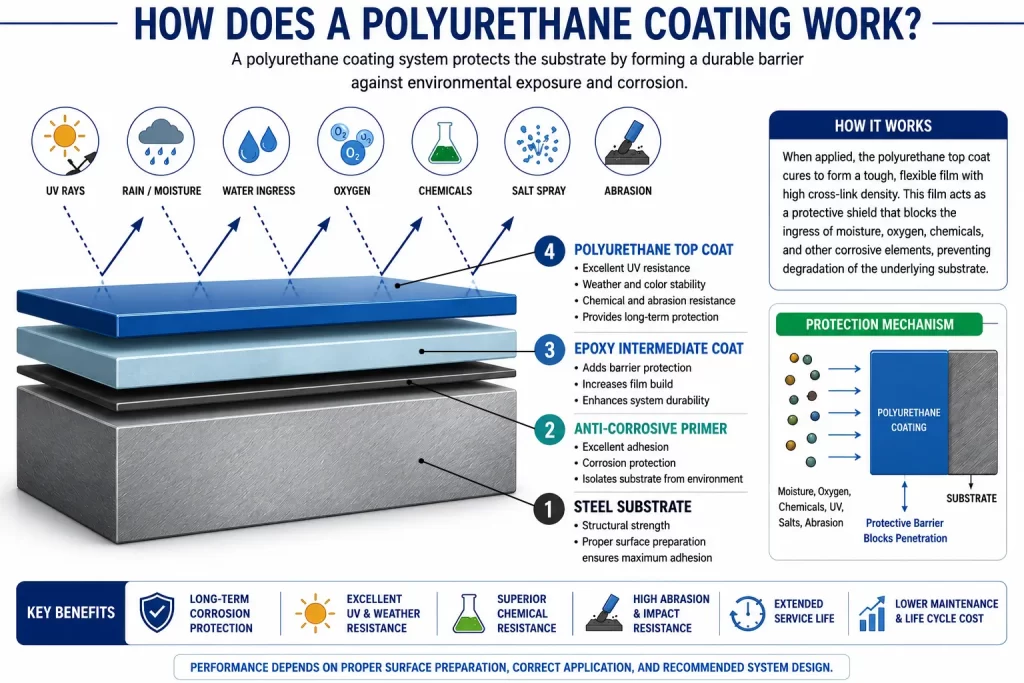
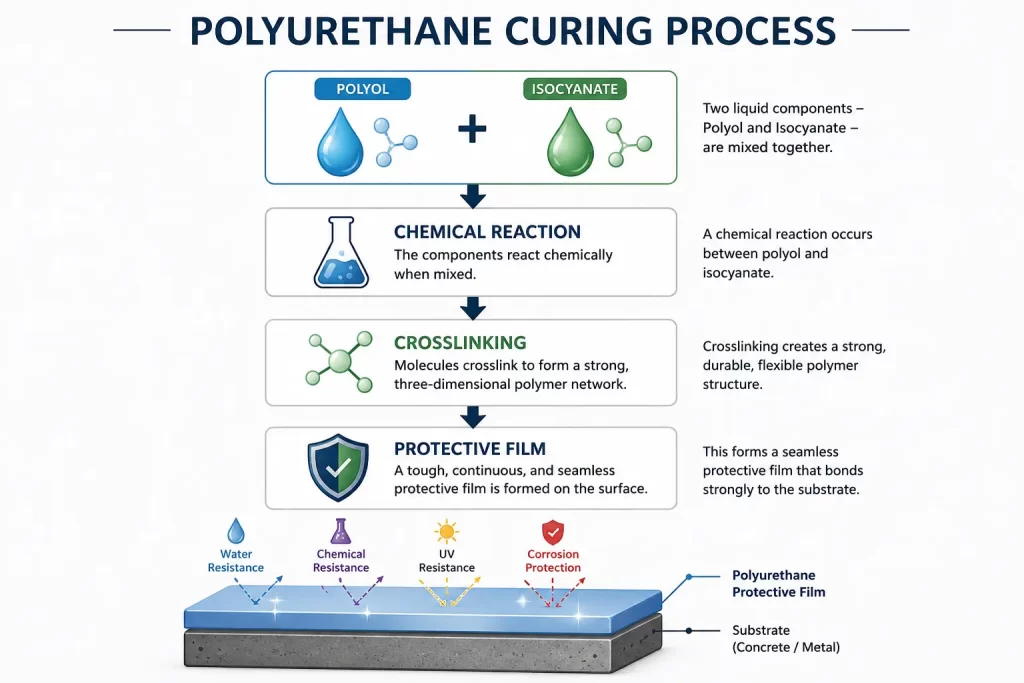
The protective effect of a polyurethane coating is achieved by creating a continuous layer that acts as a barrier between the environment and the substrate, providing a barrier to chemical attack.

On curing, the coating provides protection from: Moisture and water intrusion, Atmospheric oxygen, Ultra-Violet (UV) radiation, Industrial chemicals, Abrasion and impact, Dust and airborne contaminants.

Polyurethane Protective Coating

The cured polyurethane film delays the degradation process and contributes to prolonging the service life of the coating system without letting the elements come into contact with the substrate.

Types of Polyurethane Protective Coatings

Aliphatic Polyurethane Coating

Aliphatic polyurethane coatings are especially formulated for long term outdoor use. They have a molecular structure that is resistant to ultraviolet light, which ensures that the colour, gloss and weather resistance remains after years of exposure to the sun. They are commonly specified for bridges, structural steel, industrial buildings, storage tanks, transmission towers, and marine infrastructure.

Aromatic Polyurethane Coating

Aromatic polyurethane coatings are more prone to chalking and yellowing under the influence of UV radiation but are very strong and resistant to chemicals. They are usually designed for use in an indoor setting or in a location that is not anticipated to be exposed to sunlight for an extended period.

Property Aliphatic Polyurethane Aromatic Polyurethane
UV Resistance Excellent Limited
Colour Stability Excellent Moderate
Gloss Retention Excellent Moderate
Weather Resistance Excellent Good
Outdoor Use Highly Recommended Limited
Indoor Use Suitable Suitable
Typical Application Exterior Finish Coat Interior Protective Coating

Applications of Polyurethane Protective Coatings

Polyurethane protective coatings are used as the final protection in industrial coating systems that require long term durability, weather resistance and aesthetics.

Structural Steel

Long-term protection against atmospheric corrosion is needed in factories, warehouses, airports, stadiums, and commercial buildings that are constructed using structural steel.

Common Applications

  • Industrial plants
  • Warehouses
  • Power plants
  • Airports
  • Commercial buildings
  • Steel fabrication

Pipelines and Storage Tanks

Pipelines and storage tanks are constantly exposed to moisture, industrial chemicals, and weather elements.

Typical applications include:

  • Oil & gas pipelines
  • Water pipelines
  • Chemical storage tanks
  • Fuel storage terminals
  • Process vessels

Marine and Coastal Structures

One of the most corrosive environments is the marine environment where exposure to salt spray, humidity, and ultraviolet radiation occurs continuously.

Typical applications include:

  • Ports and harbours
  • Offshore platforms
  • Jetties
  • Coastal bridges
  • Shipyards

Bridges and Infrastructure

Coating systems for infrastructure assets must be durable, able to resist for decades, and yet maintain their aesthetic appearance in the environment. The urethane coating is commonly used for bridges, metro structures, transmission towers and elevated highways, as it provides corrosion protection and maintains colour and gloss over time.

Dry Film Thickness (DFT) Explained

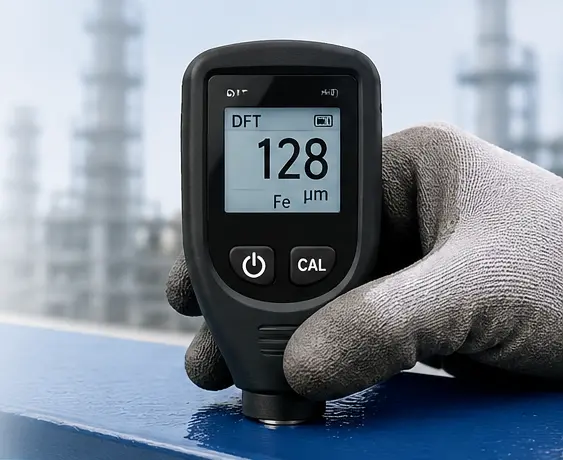
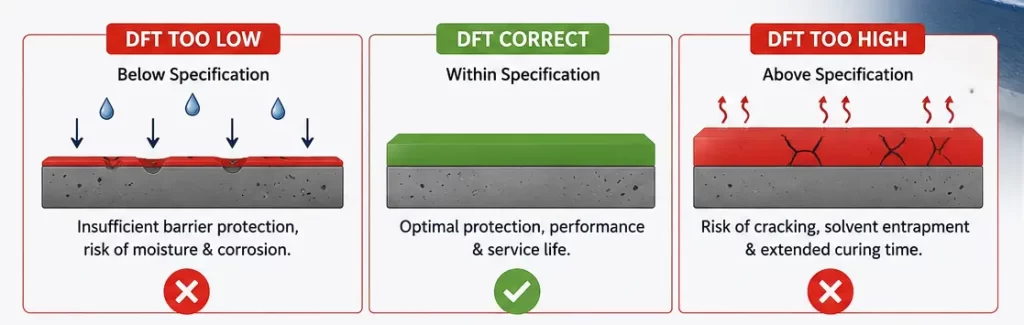
Dry Film Thickness (DFT) indicates the thickness of the coating after it has been cured, and is a very significant quality parameter in a protective coating system. It makes a direct impact on barrier protection, durability and years of service.

Application of a DFT lower than specification may mean the coating will not offer adequate protection from moisture and corrosion. On the other hand, if the DFT is too high, it may cause cracking or solvent entrapment, or result in longer curing time.

Normally, the thickness of the coating is measured by calibrated magnetic/electronic thickness measuring devices according to relevant inspection standards.

Typical Polyurethane Top Coat DFT

Parameter Typical Value
Dry Film Thickness (DFT) 40–75 microns per coat
Wet Film Thickness (WFT) Depends on volume solids
Number of Coats 1–2 (system dependent)

Always remember, the specified DFT should be the same as the coating manufacturer’s recommendation and the project specification.

How Polyurethane Coatings Cure

Polyurethanes cure by a chemical reaction between its constituents, whereas traditional paints dry by the volatilization of solvents. This curing process gives the coating durability, chemical resistance and mechanical strength.

The majority of industrial PU coatings are comprised of two parts – polyol (Part A) and isocyanate hardener (Part B). They can combine together in an appropriate ratio to create strong urethane bonds. There are some single-component systems that cure when exposed to moisture in the air.

As curing continues, the coating forms a continuous protective barrier, which shields from moisture, oxygen, UV, chemical and abrasion.

How UV Degrades Protective Coatings

Over time, ultraviolet (UV) radiation can cause many coating materials to deteriorate. This degradation over time leads to oxidation, chalking, gloss loss, fading and decreased appearance and protection.

Aliphatic polyurethane coatings are particularly formulated to have a molecular structure which does not degrade under the influence of UV. This means that they have a much longer colour, gloss and weather resistance than aromatic polyurethane coatings and are the most suitable choice for exterior use.

Industry Standards

Protective polyurethane coating systems are commonly designed, applied, and inspected in accordance with internationally recognised standards to ensure consistent performance and quality.

Standard Purpose
ISO 12944 Corrosion protection of steel structures by protective paint systems
ISO 8501 Surface preparation and cleanliness grades
ASTM D4541 Pull-off adhesion testing
ASTM D3359 Cross-cut adhesion testing
SSPC Standards Surface preparation and coating application
NACE Practices Coating inspection and corrosion control

Following these standards helps improve coating reliability, reduce premature failures, and extend the service life of industrial assets.

Polyurethane vs Epoxy vs Polyurea Coatings

Although polyurethane, epoxy, and polyurea coatings are often used together, each serves a different purpose in a protective coating system. Selecting the appropriate coating depends on factors such as UV exposure, chemical resistance, curing speed, and service environment.

Property Polyurethane Epoxy Polyurea
Primary Use Finish Coat Primer / Intermediate Waterproofing & Protective Lining
UV Resistance Excellent Poor Moderate to Excellent*
Corrosion Protection Excellent (with primer) Excellent Excellent
Abrasion Resistance Excellent Very Good Outstanding
Chemical Resistance Excellent Excellent Excellent
Colour Retention Excellent Moderate Good
Curing Speed Moderate Moderate Very Fast
Outdoor Performance Excellent Requires Top Coat Depends on formulation
Typical Service Bridges, Steel Structures Tanks, Pipelines, Steel Roofs, Tanks, Secondary Containment

Note: Polyurea UV performance depends on whether it is aromatic or aliphatic.

Common Causes of Polyurethane Coating Failure

The coating system can be poorly designed, applied, or maintained, causing failure before its time, even with a good quality polyurethane coating. It’s important to understand common modes of failure for better coating performance and service life.

  • Blistering

Raised bubbles form the coating caused by trapped moisture or contamination.
Causes: Moisture, inadequate surface preparation, wet substrate or solvent entrapment.
Prevention: Apply only to clean and dry surfaces under recommended application conditions.


  • Chalking

The coating breaks down in the presence of UV, causing the surface to become powdery.
Causes: Sun exposure over a long period, exposure to UV rays or coating ageing.
Prevention: Apply aliphatic polyurethane that is resistant to UV, recoat as directed.


  • Peeling & Delamination

The coating detaches from the substrate or between coating layers.
Causes: Failure to prepare surface properly, contamination, wrong recoating or adhesion problems.
Prevention: Prepare the surface properly and follow the specified recoating interval.


  • Cracking

If the coating is brittle, or too thick, cracks will form.
Causes: Too thick film, movement of structure, improper curing or ageing.
Prevention: Use the recommended DFT along with manufacture’s application instructions.

Inspection and Quality Control

Inspection is essential to verify that a polyurethane coating system has been applied correctly and meets the specified performance requirements.

 
Surface Preparation Inspection

Before coating begins, inspectors verify:

  • Surface cleanliness
  • Blast profile
  • Dust contamination
  • Moisture levels
  • Ambient conditions

Proper inspection at this stage helps prevent adhesion failures and premature coating deterioration.

 
Dry Film Thickness (DFT) Measurement

DFT is measured after curing using calibrated magnetic or electronic coating thickness gauges. Regular measurements ensure the coating meets the specified thickness and provides adequate protection.

 
Adhesion Testing

Adhesion testing confirms that the coating has bonded properly to the substrate.

Common methods include:

  • Pull-off adhesion testing (ASTM D4541)
  • Cross-cut adhesion testing (ASTM D3359)

Poor adhesion may indicate inadequate surface preparation or improper curing.

 
Visual Inspection

A final visual inspection checks for coating defects such as:

  • Pinholes
  • Runs
  • Sags
  • Orange peel
  • Holidays
  • Dry spray
  • Uneven gloss

Any defects should be repaired before the coating system is placed into service.

 
Factors That Influence Service Life

The lifespan of a polyurethane coating depends on several factors rather than the coating alone.

Major factors include:

  • Surface preparation quality
  • Primer compatibility
  • Coating thickness
  • UV exposure
  • Chemical exposure
  • Temperature fluctuations
  • Humidity
  • Mechanical wear
  • Inspection and maintenance practices

A properly designed and maintained coating system generally provides a significantly longer service life than one applied without adequate preparation or quality control.

 
Maintenance Best Practices

Routine maintenance helps preserve coating performance and reduces long-term repair costs.

Recommended practices include:

  • Inspect coated surfaces periodically for damage or corrosion.
  • Clean surfaces to remove dirt, salts, and industrial contaminants.
  • Repair scratches and mechanical damage promptly.
  • Measure coating thickness during major inspections.
  • Recoat weathered areas before corrosion develops.

Preventive maintenance is generally more economical than extensive repairs after coating failure.

Expert Tip

A polyurethane top coat performs best as part of a complete protective coating system that includes proper surface preparation, a compatible anti-corrosive primer, the recommended dry film thickness, and regular inspection. While polyurethane provides excellent UV resistance and weatherability, the overall durability of the system depends on correct specification, application, and maintenance.

Common Myths About Polyurethane Coatings

Myth 1: Polyurethane Can Be Applied Directly on Rust

Fact: Coating should be done after the removal of rust, loose scale and contamination. Surface preparation is crucial for the adhesion and durability.

Fact: Aliphatic polyurethane coatings are excellent in terms of long-term UV stability. Polyurethane coatings that are aromatic can yellow or chalk in sunlight.

Fact: If excessive dry film is present, it can cause cracks, solvent entrapment and curing defects. Always apply the specified DFT.

Fact: The complete coating system (primer, intermediate coat, polyurethane finish coat) provides corrosion protection in most industrial systems.

Why Multicoat MultiDur Polyurethane Protective Top Coat?

A well-designed polyurethane coating system can significantly extend the service life of industrial assets while reducing maintenance requirements. Multicoat’s Multidur Polyurethane Coating is engineered as a high-performance finish coat that delivers durable protection, excellent weather resistance, and long-term colour and gloss retention across a wide range of industrial and infrastructure applications.

Multidur Product Range:

MULTIDUR IC 1251 MC– A single component, moisture curing urethane designed for low to normal temperature or high humidity applications while providing chemical resistance equivalent to two-part urethane coatings.

  • Volume Solids: 91±3
  • Typical Thickness: 50-100 microns

MULTIDUR TC 1252E– A two component acrylic polyurethane coating giving excellent durability and long-term corrosion protection.

  • Volume Solids: 60±2 %

MULTIDUR TC1253– Two packs aliphatic acrylic polyurethane-based coating for steel & cementitious surfaces

  • Volume Solids: 63% ± 2%
  • Typical Thickness: 50-100 microns

MULTIDUR TC1254A high build, two pack polyurethane coating for spray/brush and roller applications onto steel pipes, concrete and field joints.

  • Volume Solids: 57%
  • Typical Thickness: 50-75 microns

MULTIDUR TC1257– A two component aliphatic polyurethane finish coating for long term

corrosion protection and durability.

  • Volume Solids: >66%
  • Typical Thickness: 50 microns

MULTIDUR TC1258A two pack acrylic polyurethane coating for spray application onto steel pipes, concrete surface and field joints.

  • Volume Solids: 72%
  • Typical Thickness: 50-75 microns

MULTIDUR TC 1266 MCMoisture Cure Single Component Polyurethane Coating with UV

Stability with maximum color and gloss retention.

  • Volume Solids: 66±3%
Facebook
Twitter
LinkedIn
Polyurethane Protective Coating

Polyurethane Protective Coating: UV-Resistant Exterior Coatings for Industrial Applications

Polyurethane Protective Coating: UV-Resistant Exterior Coatings for Industrial Applications Polyurethane protective coating is a popular end protective coating in industrial coating systems due to its excellent weatherability, UV resistance, chemical resistance, abrasion resistance and long-lasting colour retention. Key Takeaways Polyurethane coatings are mostly applied as protective finish coats in multi-layer

Read More »
epoxy injection grouting

Epoxy Injection Grouting for Crack Repair- Restoring Concrete Structures

Epoxy Injection Grouting for Crack Repair- Restoring Concrete Structures Factors such as shrinkage, thermal movement, overloading, corrosion of reinforcement, seismic activity, and poor construction practices can lead to cracks in concrete over time. These cracks, if left untreated, can risk structural integrity, water intrusion, corrosion and decrease the lifespan of

Read More »