💧 The Silent Destroyer of Concrete – And How Waterproofing Products Protect Your Structure

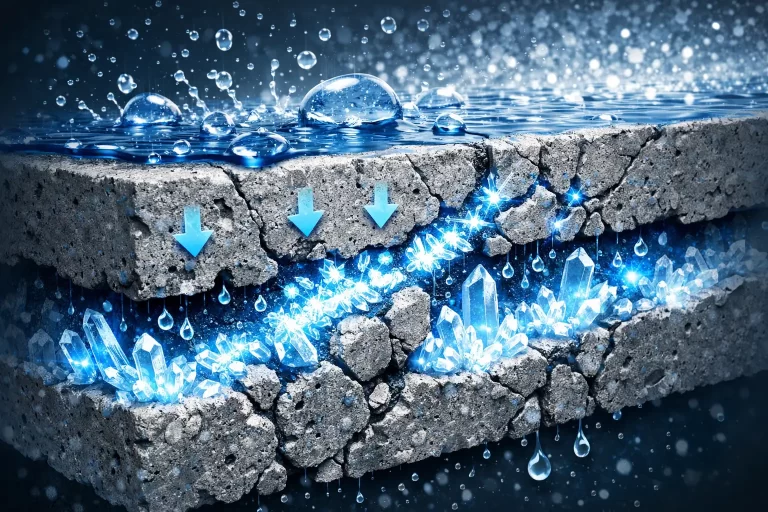
Concrete looks strong. Solid. Permanent, but.… it is a hard sponge.

Water is the biggest enemy of concrete.

Water finds its way through even the smallest pores and hidden cracks, quietly weakening and corroding structures until they’re seriously damaged.

waterproofing products

This is where modern waterproofing chemicals make a difference—not just shielding structures, but giving them lasting strength, durability, and peace of mind.

🚨 What Really Happens When Concrete Isn’t Waterproofed?
Before we look at solutions, it’s important to understand the damage water can cause:

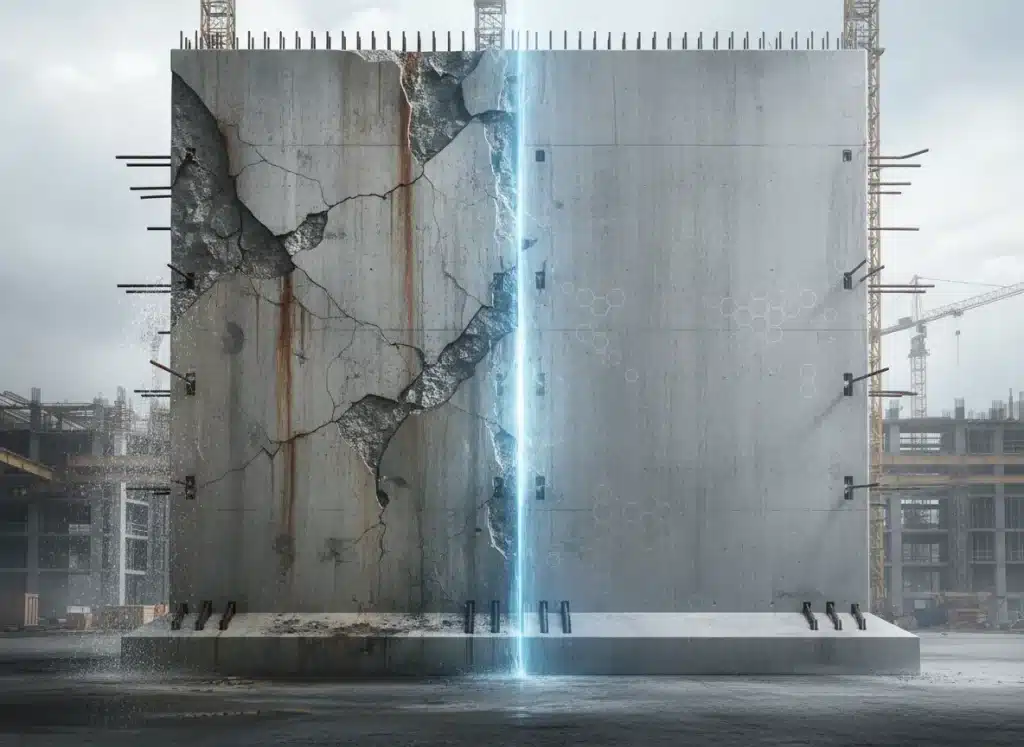
Water doesn’t just “wet” concrete, it attacks it chemically and structurally:

  • Corrosion of steel reinforcement – weakening the structural backbone
  • Formation of cracks and micro-cracks – letting more water in
  • Dampness, seepage, and leakage – ruining interiors and finishes
  • Chemical attack – from sulphates, chlorides, and other harmful elements
  • Reduced compressive strength – compromising safety
  • Mold, fungus, and unhealthy interiors – affecting health and comfort

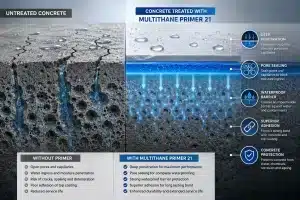
Concrete is naturally porous, with capillaries and pores that allow water to penetrate over time. Without proper protection, these tiny channels slowly turn into big problems.

💡 How Waterproofing Chemicals Save Concrete

Modern waterproofing solutions doesn’t just add a coating layer to surfaces; they transform concrete behavior. Here’s how:

1. Blocking Pores & Capillaries

Advanced chemicals penetrate deep and seal microscopic pores, preventing water movement.

  • Crystalline chemicals form insoluble crystals inside concrete
  • These crystals block water pathways permanently

2. Self-Healing of Cracks

Some technologies acts in the presence of moisture.

  • Can repair cracks up to 0.4–0.5 mm without manual intervention
  • Reactivates even years later when water enters, keeping the structure safe

3. Increasing Concrete Strength & Density

Integral waterproofing improves:

  • Density
  • Compressive strength
  • Durability

Some systems can reduce permeability by up to 60%, making concrete far more resilient.

4. Protecting Reinforcement Steel

Waterproofing chemicals:

  • Prevent water + oxygen entry
  • Reduces corrosion of steel
  • Extend structural life significantly

5. Reduce Maintenance Costs

  • No need for repeated repairs
  • Long-term protection
  • Lower overall lifecycle costs, eliminating frequent reapplications

These systems especially eliminate need for frequent reapplication

🧪 Types of Waterproofing Chemicals for Concrete

Let’s break down the most effective waterproofing products used in construction today:

1. Integral Waterproofing

Mixed directly into concrete.

Best for: Foundations, slabs, water tanks

✔ Reduces permeability
✔ Becomes part of structure
✔ Long-term protection

Penetrates deep inside the structure and forms crystals.

Best for: Basements, STP tanks, tunnels

✔ Self-healing
✔ Works from inside concrete
✔ Permanent waterproofing

crystalline waterproofing

3. Cementitious Waterproofing

Cement-based coatings applied on surface.

Best for: Bathrooms, pools, basements

✔ Easy application
✔ Strong bonding
✔ Breathable yet waterproof

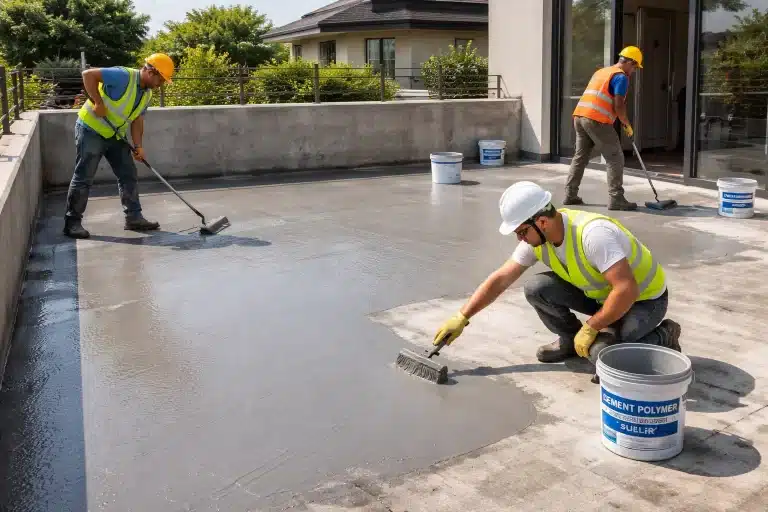
4. Cement Polymer Waterproofing

Polymer-modified cement systems.

Best for: Wet areas, terraces

✔ Flexible
✔ Crack-bridging
✔ High adhesion

polymer waterproofing

Liquid membrane forming flexible layer.

Best for: Roofs, balconies

✔ High flexibility
✔ Seamless coating
✔ Excellent durability

Advanced, fast-curing coating.

Best for: Industrial floors, podiums, terraces

✔ Ultra-fast curing
✔ High abrasion resistance
✔ Seamless protection

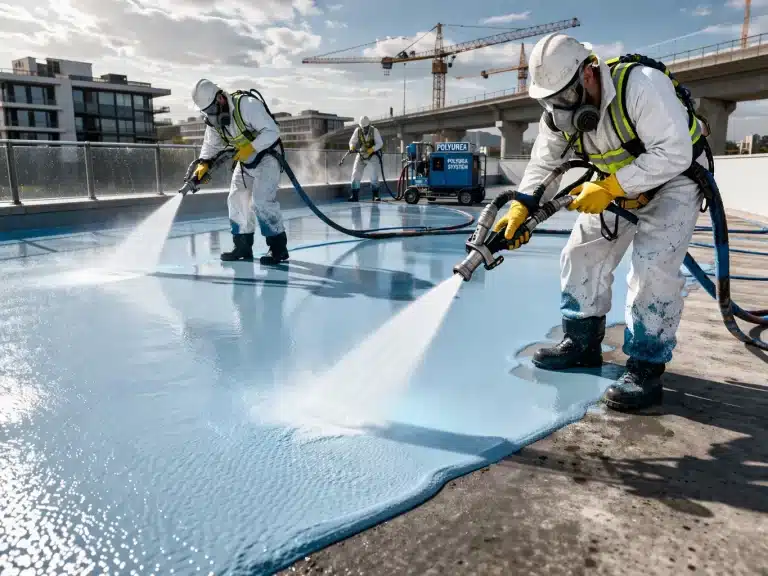
polyurea waterproofing

Highly elastic coatings.

✔ Handles structural movement
✔ UV resistant
✔ Ideal for exteriors

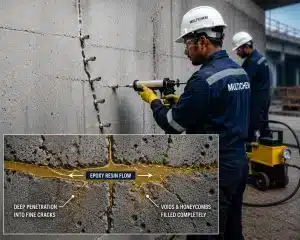
Used for repair and active leakage.

✔ Fills cracks
✔ Stops water instantly
✔ Ideal for tunnels & basements

Choosing the Right Waterproofing Solution

Not all waterproofing solutions are same.

The best waterproofing company will always recommend solutions based on:

  • Structure type (residential / industrial)
  • Water exposure level
  • Positive or negative pressure
  • New construction vs repair
  • UV exposure
  • Waterproofing location and atmosphere

Why Modern Waterproofing Is No Longer Optional

In today’s construction:

  • Climate change = more rainfall & humidity
  • Urban structures = higher stress loads
  • Repair costs = extremely high

Waterproofing is not an expense, it’s insurance for your structure.

🎯 Final Thought

Concrete doesn’t fail overnight….It degrades silently over time because of water.

And the smartest builders today are not just using concrete…They are using advanced waterproofing chemicals to make concrete last for decades.

At Multichem Group, we understand that every structure faces unique challenges. That’s why we offer a complete range of waterproofing products – from integral waterproofing, Hydronil’s crystalline systems, and cementitious coatings to advanced polyurea and polyurethane waterproofing, elastomeric coatings, and injection grouts.

At Multichem we don’t sell products, we sell solution!

Below is our Range of Waterproofing Products

Waterproofing TypeMultichem Solutions
Polyurea WaterproofingArmourthane, MultiThane, Ultrathane, Armourtuff
Polyurethane WaterproofingFlexithane, Ultraroof, Ultrathane, Hydrothane
Cement Polymer WaterproofingMulticrete, Mixcrete, Flexcrete
Crystalline WaterproofingHydronil
Cementitious WaterproofingMultiguard A Series, Leakshield
Integral WaterproofingMultiguard IW Series
Injection GroutHydrofom, Primegrout, Multigrout
Elastomeric WaterproofingMultiguard, Roofmate, Roofshield, Rainshield

❓ Frequently Asked Questions (FAQs)

Waterproofing chemicals prevent water penetration and protect concrete from damage.
They help avoid cracks, corrosion, and structural weakening over time.

The best solution depends on the application, such as integral, crystalline, or PU systems.
A combination of waterproofing methods often gives the most effective results.

High-quality waterproofing can last 10–25 years or more with proper application.
Some systems like crystalline and integral waterproofing offer long-term protection.

Yes, solutions like injection grouts and crystalline systems can seal leaks and cracks.
They also strengthen the structure and prevent future water ingress.

Selection depends on structure type, exposure, and area of application.
Choosing an experienced company like Multichem ensures the right solution and durability.

Facebook
Twitter
LinkedIn
anti corrosion coating

RustoBlock S: A Versatile Anti-Corrosion Coating for Metal & Concrete

RustoBlock S: A Versatile Anti-Corrosion Coating for Metal & Concrete Despite various developments in technology over the past few years, corrosion continues to pose significant problems for the construction industry. From roofing sheets, steel structures, pipelines, or concrete, exposure to moisture, oxygen, and other chemicals causes deterioration of materials over

Read More »