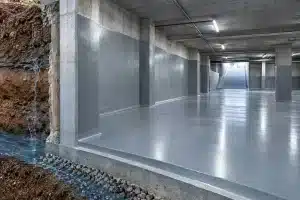
Cement PU Flooring: The Ultimate Hybrid Flooring for Heavy-Duty Industrial Performance

cement PU flooring

When floors fail, operations stop.

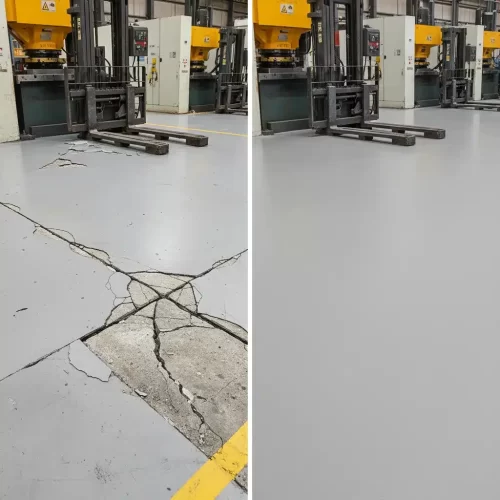
Cracks appear, Peeling happens, Chemicals stain, Hot water damages the surface, Forklifts leave marks.
This is where cement PU flooring becomes the right solution.

If you are looking for heavy-duty industrial flooring that handles heat, impact, moisture, and chemicals, this article will help you understand why PU concrete flooring is one of the strongest flooring systems available today.

What is Cement PU Flooring?

Cement PU flooring (also called PU concrete flooring or polyurethane cement flooring) is a hybrid flooring system.

It combines:

  • Polyurethane (PU) resin
  • Cement
  • Graded aggregates

This mix creates a PU modified flooring system that is stronger than normal epoxy or PU coatings.

heavy-duty industrial flooring

It is called hybrid flooring because it blends organic (PU) and inorganic (cement) chemistry in one powerful system.

Understanding the Hybrid Chemistry:

  • Cement gives strength and hardness
  • Polyurethane gives flexibility and chemical resistance
  • Together, they create a floor that can expand and contract without cracking

That is why chemical resistance polyurethane flooring works even in extreme environments.

  • It does not behave like regular cement.
  • It does not behave like simple PU coating.

It performs better because it is a hybrid.

Why Cement PU Flooring is Used in Heavy-Duty Industrial Flooring

Industries need floors that survive daily abuse.

Here’s what makes PU concrete flooring special:

1. Withstands Extreme Temperatures

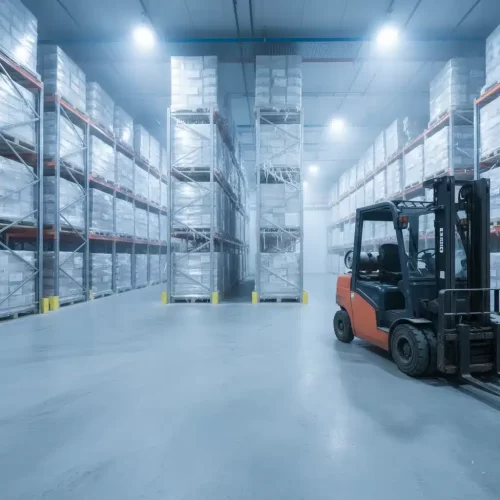
  • Cold storage areas below -40°C
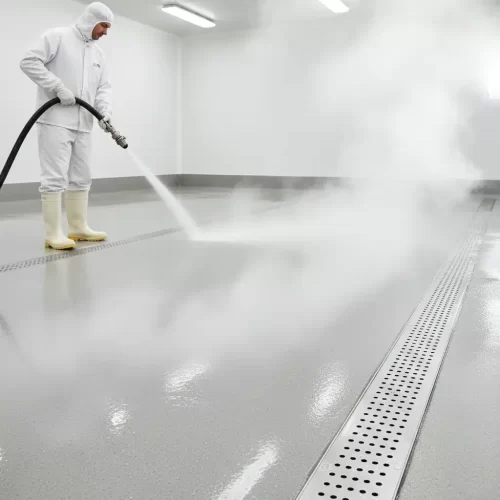
  • Hot water washdowns up to 130°C
  • Thermal shock resistance

2. Handles Heavy Loads

  • Forklifts
  • Trolleys
  • Machinery
  • Impact from dropped tools

3. Excellent Chemical Resistance

  • Oils
  • Fuels
  • Cleaning chemicals
  • Mild acids

This makes it ideal as chemical resistance polyurethane flooring in food, pharma, and processing plants.

4. Moisture Tolerant

Unlike epoxy, cement PU flooring can be applied on damp concrete.
This reduces failure due to moisture.

Major Application Areas of Cement PU Flooring

Hybrid flooring systems are widely used in:

Food & Beverage Industry

  • Dairy plants
  • Breweries
  • Meat processing units
  • Commercial kitchens
hybrid flooring

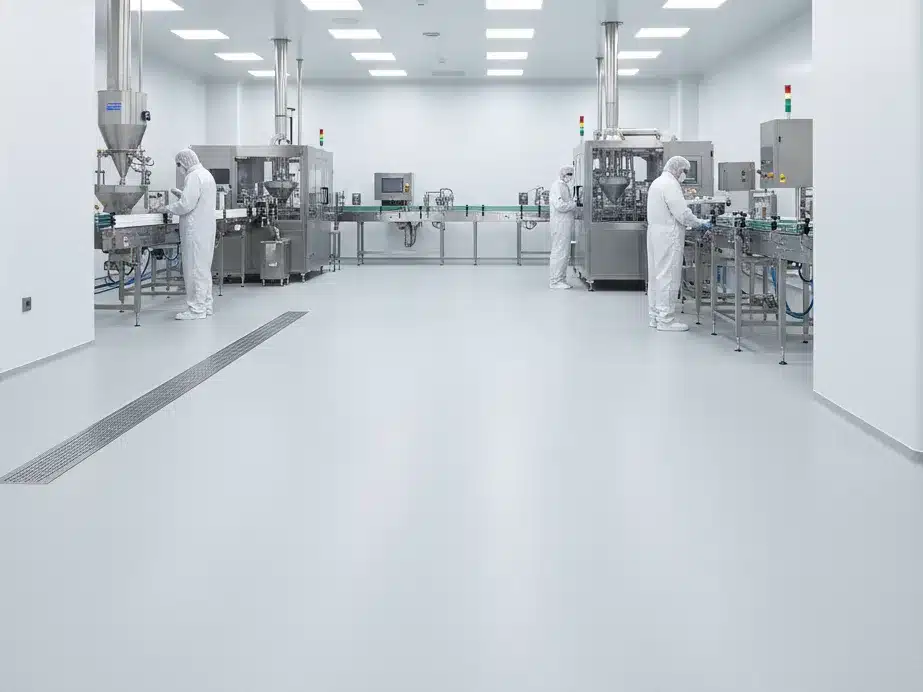
Pharmaceutical Units

  • Clean production zones
  • Sterile processing areas

Chemical & Manufacturing Plants

  • Processing areas
  • Production bays

Cold Storage Facilities

  • Freezers
  • Refrigerated rooms
chemical resistance polyurethane flooring

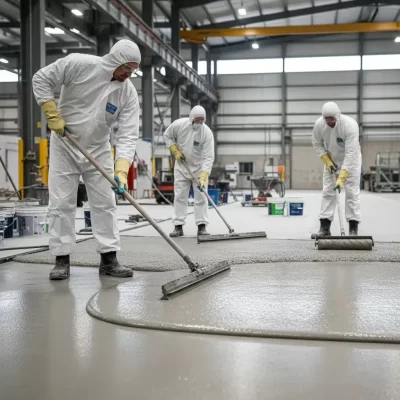
Warehouses & Industrial Units

  • Heavy machinery zones
  • Loading docks

Wherever floors face heat, moisture, and impact, PU modified flooring performs reliably.

Cement PU Flooring vs Other Flooring Systems

✘ Regular PU coating is thin.
✔ Cement PU is thicker and stronger.

✔ Cement PU is designed for structural durability.
✘It is not just a decorative top layer.

PU modified flooring

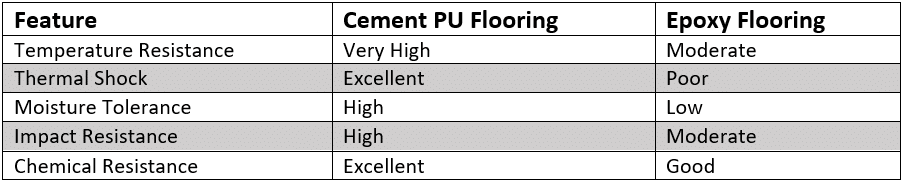
Epoxy is good.
But for heavy-duty industrial flooring, PU concrete flooring performs better in extreme conditions.

Key Benefits of Cement PU Flooring

Here are the main advantages:

  • High compressive and tensile strength
  • Excellent adhesion to concrete
  • Very low shrinkage
  • Abrasion resistance
  • Long service life
  • Hygienic and easy to clean
  • Slip-resistant finish options

This is why many industries now prefer hybrid polyurethane cement systems over traditional flooring.

Thickness Matters in PU Concrete Flooring

Cement PU flooring is available in different thicknesses depending on usage.

Thicker floors = better resistance to:

  • Impact
  • Thermal shock
  • Heavy loads

Selecting the correct system is important for long-term performance.

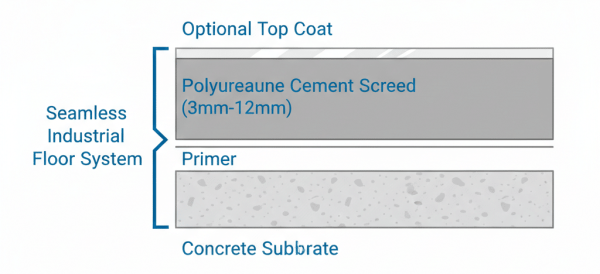
Top Coat

Why Choose Floorkrete for Cement PU Flooring?

Floors in industrial spaces must do more than just look good.
They must survive.

Cement PU flooring offers the strength of cement and the flexibility of polyurethane in one powerful hybrid system.

If you need heavy-duty industrial flooring that handles heat, chemicals, moisture, and heavy traffic, PU concrete flooring is a smart long-term investment.

Floorkrete by Multichem Group offers advanced Hybrid Polyurethane Cement Flooring Systems designed for Indian and global industrial conditions.

FloorCEM® Range:

  • FloorCEM PUC36 – For 3–6 mm applications
  • FloorCEM PUC69 – For 6–9 mm applications
  • FloorCEM PUC912 – For 9–12 mm heavy-duty applications

These systems are engineered for:

  • Thermal shock resistance
  • Heavy load movement
  • Moisture-prone environments
  • Chemical exposure

Floorkrete’s hybrid flooring solutions are built using proven polyurethane cement technology for reliable industrial performance.

FAQ:

Cement PU flooring is a polyurethane-modified cement flooring system used for heavy-duty industrial environments. It combines cement and polyurethane for strength, flexibility, and chemical resistance.

Yes, in extreme conditions. PU concrete flooring performs better in high temperatures, thermal shock, and moisture-prone areas compared to epoxy.

Hybrid flooring is commonly used in food processing plants, pharmaceutical units, cold storage, warehouses, and chemical industries.

It typically ranges from 3 mm to 12 mm depending on the industrial requirement and load conditions.

Yes. It offers excellent resistance to oils, fuels, cleaning chemicals, and many industrial substances.

Facebook
Twitter
LinkedIn
esd flooring

ESD Flooring That Protects Equipment, People, and Compliance

ESD Flooring That Protects Equipment, People, and Compliance A Practical Guide to Conductive & Static Dissipative Epoxy Floor Systems In electronics manufacturing, cleanrooms, defense facilities, and data-driven environments, electrostatic discharge isn’t a minor risk it’s a silent operational threat. One uncontrolled static discharge can: Damage sensitive electronic components Cause product

Read More »