Hygienic Coatings: Engineering Clean, Durable & Compliant Interior Environments

hygienic coatings

In controlled environments, surface protection is no longer about aesthetics alone. Hygienic coatings have evolved into functional performance systems designed to manage microbial resistance, moisture control, chemical exposure, and long-term serviceability.

This blog explores hygienic coating solutions from a technical standpoint, focusing on performance behaviour, substrate compatibility, and application discipline using water-borne acrylic hygiene coating systems as a reference.

Understanding Hygienic Coatings Beyond “Anti-Bacterial Paint”

Hygienic coatings for industry are engineered to create seamless, non-dusting, chemically resistant surfaces that do not support microbial growth. Unlike conventional decorative paints, these systems are formulated to:

  • Minimise surface porosity
  • Resist routine wash-down chemicals
  • Maintain adhesion under damp or variable humidity conditions
  • Prevent microbial colonisation at micro-crack and pinhole levels
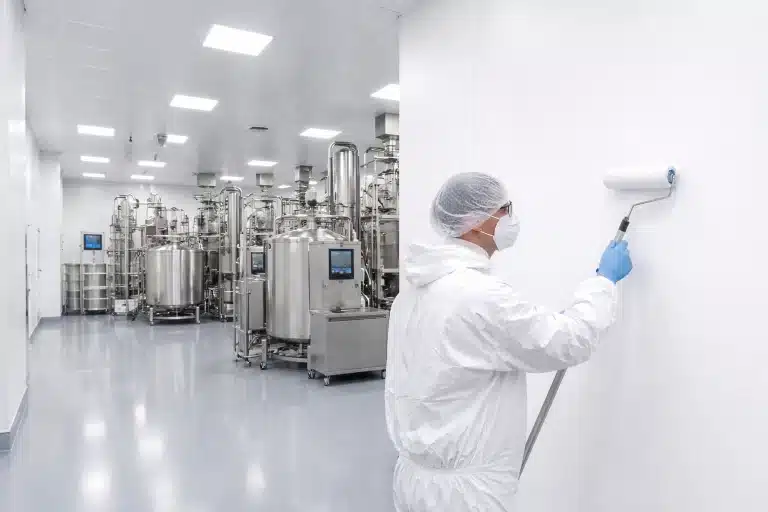
Hygienic Coatings applied on cleanroom wall

Performance Requirements in Hygienic Wall Coatings

For internal walls and ceilings in hospitals, pharmaceutical production rooms, food processing areas, clean rooms, and electronics manufacturing zones, hygienic coatings must deliver consistent performance across multiple parameters:

1. Seamless Film Formation

A continuous coating film eliminates joints, overlaps, and weak points where bacteria, dust, or moisture can accumulate. This is especially critical at wall-ceiling junctions and service penetrations.

2. Chemical & Cleaning Resistance

Routine exposure to detergents, disinfectants, mild acids, alkalis, and salt solutions demands coatings with stable polymer matrices that do not soften, chalk, or degrade under frequent cleaning cycles.

3. Adhesion on Damp Substrates

In retrofit projects and live facilities, absolute dryness is rarely achievable. Hygienic coating solutions with strong adhesion even on slightly damp concrete offer a practical advantage during shutdown-limited maintenance windows.

4. Elasticity for Crack Bridging

Micro-movements in concrete and masonry are inevitable. An elongation capacity in the range of ~150% allows the coating to accommodate minor substrate movement without cracking, preserving hygiene integrity.

Long-Term Performance & Maintenance Philosophy

A stable, chemically resistant, non-flammable coating system reduces:

  • Frequent repainting cycles
  • Risk of contamination during maintenance
  • Downtime in critical production zones

When combined with correct substrate preparation and disciplined application, hygienic wall coatings become an integral part of the facility’s risk management and compliance strategy.

Conclusion

In high-hygiene environments, choosing the right wall and ceiling protection goes beyond aesthetics, it is a critical component of operational safety, compliance, and long-term performance. Hygigard, a flagship product from Multichem, represents this approach by delivering a seamless, durable, and chemically resistant coating system designed to withstand rigorous cleaning, moisture exposure, and microbial challenges.
It ensures superior adhesion, flexibility, and longevity, making it ideal for hospitals, pharmaceutical units, food processing plants, and other controlled environments. With Hygigard, facilities can achieve not only cleanliness and hygiene but also a reduction in maintenance downtime, supporting a safer and more efficient operational environment.

FAQ:

Hygienic coatings are widely used in food processing plants, pharmaceutical manufacturing units, hospitals, laboratories, clean rooms, kitchens, dairies, cold storage facilities, and water treatment plants—anywhere strict hygiene and contamination control are required.

Hygienic coatings create smooth, joint-free, non-porous surfaces that eliminate areas where bacteria and fungi can grow. Some systems also incorporate antimicrobial properties that actively inhibit microbial proliferation.

Hygigard is a high-performance hygienic coating system designed for demanding environments. It offers excellent resistance to bacteria, chemicals, moisture, and repeated cleaning cycles. Hygigard forms a seamless, easy-to-clean surface that supports long-term hygiene, durability, and compliance in food, pharmaceutical, and healthcare facilities.

.

The service life of hygienic coatings depends on surface preparation, application quality, and exposure conditions. When properly applied, they offer long-term performance with minimal maintenance, even in high-hygiene environments.

Facebook
Twitter
LinkedIn
esd flooring

ESD Flooring That Protects Equipment, People, and Compliance

ESD Flooring That Protects Equipment, People, and Compliance A Practical Guide to Conductive & Static Dissipative Epoxy Floor Systems In electronics manufacturing, cleanrooms, defense facilities, and data-driven environments, electrostatic discharge isn’t a minor risk it’s a silent operational threat. One uncontrolled static discharge can: Damage sensitive electronic components Cause product

Read More »