If the Floor Failed, the Polyurethane Primer Was Chosen Wrong

When a flooring or waterproofing system fails prematurely, the root cause is almost never the topcoat.

It is the primer of polyurethane that was treated as a commodity instead of a system component.

Why Polyurethane Primer Is a Strategic Decision, Not a Line Item

Concrete is not static.

It breathes, absorbs, moves microscopically, and interacts with moisture, oil, and chemicals over decades.

A polyurethane primer sits at the most critical interface:

  • Between porous concrete and high-performance coatings
  • Between movement and rigidity
  • Between design intent and real-world abuse

If this interface is weak, even the most expensive coating system will delaminate.

What Makes a Polyurethane Primer Superior

Using Multithane Primer 21 as a reference, let’s examine what separates a best primer of polyurethane from generic alternatives.

1. Single-Component PU Chemistry (1K System)

Multithane Primer 21 is a 1-K polyurethane primer, eliminating site-mixing errors and ratio deviations common with epoxy primers.

Why this matters ?

  • Consistent film formation
  • Predictable curing
  • Reduced application variability across large areas

2. Penetration + Sealing, Not Just Bonding

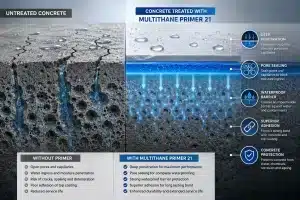
This polyurethane primer is designed to penetrate porous substrates and seal capillaries against:

  • Moisture
  • Oil
  • Fuel
  • Chemical contaminants

Epoxy primers often form a surface film; PU primers anchor inside the concrete matrix.

3. Controlled DFT for Long-Term Adhesion

Recommended DFT: 25–50 microns per coat

Multithane Primer 21

Too thick → brittle interface
Too thin → incomplete sealing

This controlled thickness is one reason polyurethane primers outperform cementitious slurries and acrylic sealers over time.

4. Recoat Window That Enables Chemical Bonding

  • Recoatability: 4–5 hours at 30°C
  • Slightly tacky surface promotes chemical interlocking with PU membranes, elastomeric coatings, and floor systems

This is critical in parking floors, basements, and industrial areas where failure usually starts at the interface.

Why Contractors Prefer PU Primers

From a site execution standpoint:

  • Brush or roller application
  • Coverage: 6–10 m²/kg, depending on porosity
  • Compatible with concrete, wood, and metal
  • Works seamlessly with other toppings

Lifecycle Perspective

Short-Term Thinking:

  • Lower primer cost
  • Faster approval
  • Early project closure

Long-Term Reality:

  • Delamination after 24–36 months
  • Patch repairs
  • Operational shutdowns
  • Blame shifted between applicator and supplier

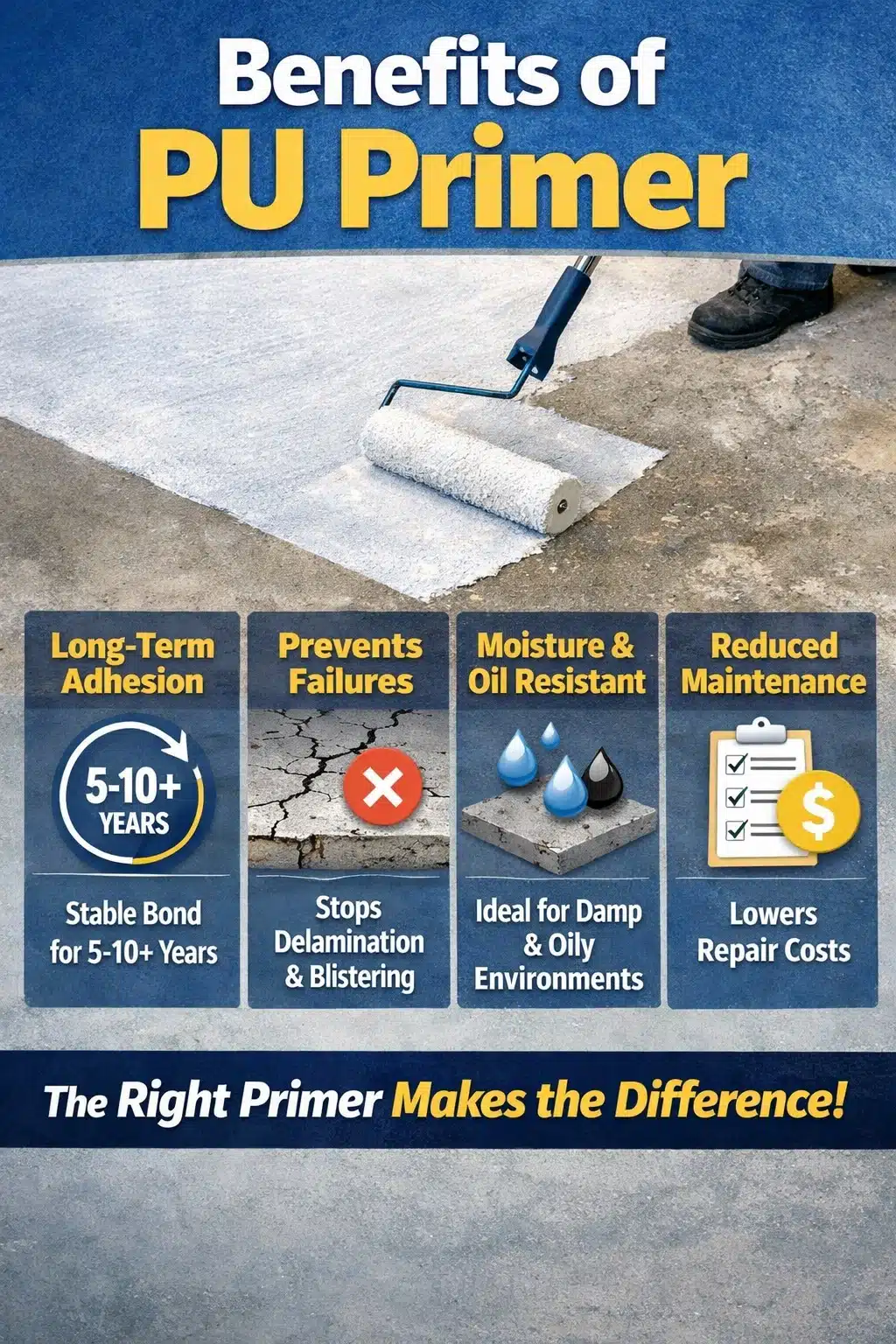
Projects that specify a best primer of polyurethane show:

best primer of polyurethane
  • Stable adhesion for 5–10+ years
  • Minimal interface failures
  • Lower maintenance

In basement and parking deck projects exposed to oil and moisture:

  • Epoxy-primed systems showed bond loss and blistering
  • Reapplication using polyurethane primer systems
  • No adhesion-related complaints for several years post-installation

The difference was not the coating.
It was the primer strategy.

For proven polyurethane primer systems that deliver long-term adhesion and performance, Contact Multichem Group: info@multichemgroup.net / +91 96190 91025

Facebook
Twitter
LinkedIn
esd flooring

ESD Flooring That Protects Equipment, People, and Compliance

ESD Flooring That Protects Equipment, People, and Compliance A Practical Guide to Conductive & Static Dissipative Epoxy Floor Systems In electronics manufacturing, cleanrooms, defense facilities, and data-driven environments, electrostatic discharge isn’t a minor risk it’s a silent operational threat. One uncontrolled static discharge can: Damage sensitive electronic components Cause product

Read More »