
No Sparks, Only Safety! Make a Smart Choice of Antistatic Flooring

Think of it as a floor with manners: it quietly takes the static and politely sends it to the ground. No drama, no sparks, just smooth and safe performance.

A single spark can damage entire facility, disrupt operations, lead to downtime, damage equipment and what not! Risk of life and also money. Hence controlling static electricity has became necessity in modern industrial setup. Whether it’s an electronics plant, a pharmaceutical company, or a data center holding sensitive and vulnerable hardware, an ESD-controlled floor is a first line of defense.

Whether you are building a new facility or upgrading an existing one, let’s understand the know-how of Antistatic flooring, how it works, where it matters the most and the threats it can lead to if it’s avoided.

What Generates Static Electricity in Industrial Environments?

1. Friction Between Materials

When two surfaces like conveyor belts, plastic sheets, or packaging materials rub against each other the electrons transfer and create static charge.

2. Synthetic Materials

Plastic pallets, PVC pipes, rubber rollers, shrink films, and other non-conductive materials easily build up static.

3. High-Speed Machinery

Fast-moving rollers, printing machines, textile machines, and bottling lines create friction that leads to charge buildup.

4. Dry Air / Low Humidity

Dry environments increase static generation. Many factories see more static issues in winter or in air-conditioned spaces.

5. Operators Wearing Non-Conductive Footwear or Clothing

Safety shoes with insulating soles and synthetic uniforms can cause charge build-up as workers walk.

6. Insulated Surfaces

Floors, work tables, and packaging stations that do not dissipate charge amplify static formation.

This leads to:

  • Mild electric shocks
  • Sensitive equipment damage
  • Compromise in product standard
  • Risk of sparks, especially in areas with chemicals
  • Machines and sensors breakdown or interruptions
  • Loss of time and money

This might give a clear idea on how important it is to have an Antistatic floor in your facility. It prevents the static charge buildup, protecting sensitive machinery parts and ensuring workers safety. It also helps to prevent sparks, especially important in chemical, pharma, electronics, flammable areas, maintaining stable production. Also, antistatic floors help industries to comply with ESD standards like ANSI/ESD S20.20 and IEC 61340. High-quality antistatic floors can maintain conductivity for 10+ years with proper maintenance. Now let us understand how this shield works.

Science Behind Antistatic Flooring

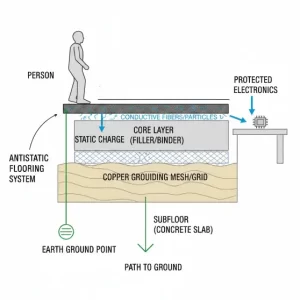
Instead of allowing static electricity to build up on the floor surface, it redirects the charge into the ground using special conductive or dissipative material.

Here’s how the science works:

  • Conductive additives like carbon, fibers, or conductive resins are blended into the flooring system,
  • These additives form a continuous pathway that allows electrical charges to move freely.
  • When a person walks on the floor or a machine operates, any static charge generated is picked up by the floor.
  • The charge is then safely transferred to the earth through the grounding system.

In short, antistatic flooring simply shows static charge the exit door. By grounding every charge instantly, it keeps your floor calm, your machines happy, and your operations shock-free.

antistatic floor coating

Difference between Electrostatic Dissipative (ESD) Flooring and Conductive Flooring

Electrostatic Dissipative (ESD) Flooring

Here the speed at which the static electricity from people, equipment, or materials goes to ground is comparatively slow. All these transfer goes gently in controlled way because too-fast discharge would cause its own damage. In short, ESD floorings are used when the items protected are sensitive in nature.

Application areas: assembly units, clean rooms, laboratories, packaging areas, medical and diagnostic rooms, and light manufacturing spaces.

Electrostatic Conductive Flooring

It provides the “express lane” for the static discharge for flowing to ground. This allows rapid and free flow of static electricity in the areas where a swift, complete discharge of static is required. Hence conductive floors ensure maximum protection against electrostatic discharge, keeping both equipment and workers safe.

Application areas: semiconductor manufacturing, data centers, chemical and pharmaceutical plants, explosive or flammable storage areas, high-risk industrial zones, etc.

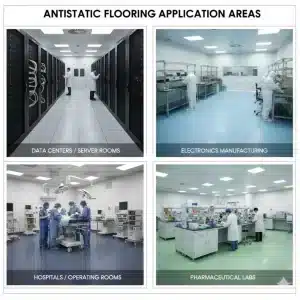
Where do Antistatic Flooring Protects:-

antistatic floor coating

  1. Electronics & Semiconductor Manufacturing– Protects sensitive components
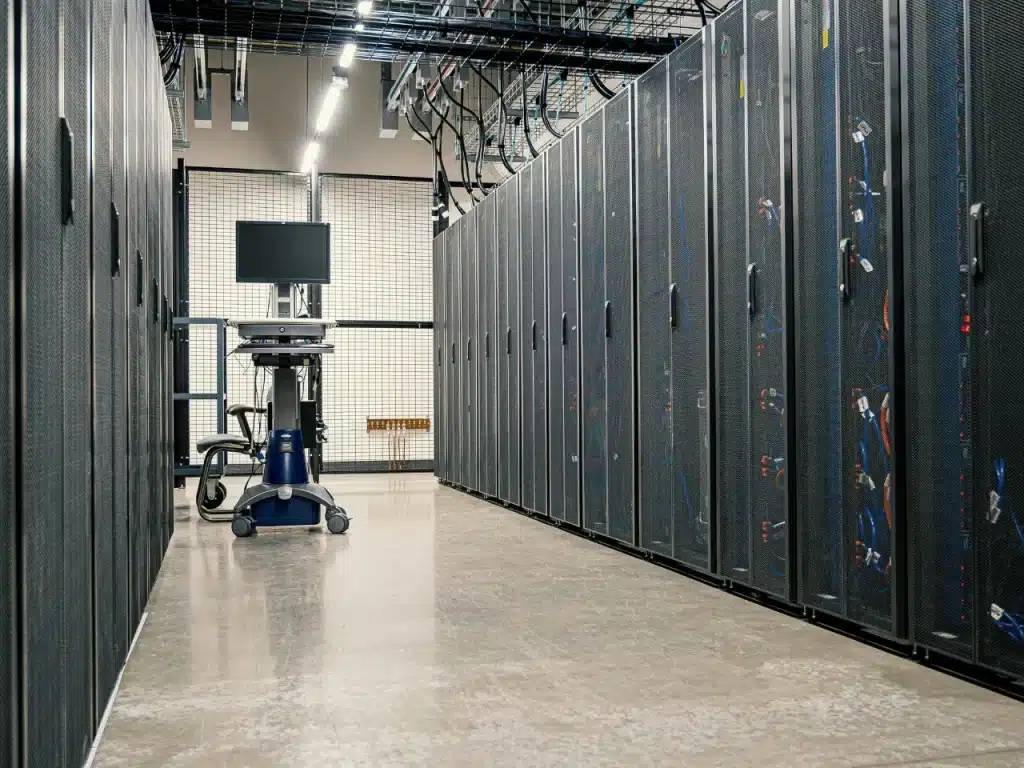
  2. Data Centers & Server Rooms– Prevents downtime caused by static shocks to servers and networking equipment.
  3. Pharmaceutical & Chemical Facilities– Minimizes sparks in flammable or reactive chemicals.
  4. Hospitals & Medical Facilities– Protects sensitive medical equipment and diagnostic devices.

Conclusion

When it comes to reliable antistatic, ESD, and conductive flooring, Floorkrete stands out with its advanced FloorShield and ElectroShield product range. Designed to meet every level of electrostatic control, these systems offer superior performance along with a choice of surface finishes and colours. We have high-performance epoxy and polyurethane options like ElectroShield ELC 5406, UD 5410, ULD 5411, and ULC 5412. Floorkrete delivers durable, hard-wearing floors suitable for the most demanding industrial and commercial environments. Whether you need electrostatic dissipation flooring, antistatic floor coating, or complete ESD protection, Floorkrete provides engineered solutions that ensure safety, longevity, and compliance.

Frequently asked question

1. What is the difference between antistatic, ESD, and conductive flooring?

Antistatic floors reduce static buildup, ESD floors safely dissipate charges, and conductive floors quickly transfer static electricity directly to the ground.

It protects sensitive machines, prevents sparks, improves worker safety, and reduces product rejection caused by static discharge.

Electronics manufacturing, data centers, pharma, chemicals, clean rooms, laboratories, and any facility dealing with flammable materials.

With proper maintenance, high-quality systems like Floorkrete’s ElectroShield range can last over 8–10 years.

Yes. Floorkrete offers a wide range of colours and surface finishes across its FloorShield and ElectroShield systems without compromising performance

Facebook
Twitter
LinkedIn
esd flooring

ESD Flooring That Protects Equipment, People, and Compliance

ESD Flooring That Protects Equipment, People, and Compliance A Practical Guide to Conductive & Static Dissipative Epoxy Floor Systems In electronics manufacturing, cleanrooms, defense facilities, and data-driven environments, electrostatic discharge isn’t a minor risk it’s a silent operational threat. One uncontrolled static discharge can: Damage sensitive electronic components Cause product

Read More »

Add Your Heading Text Here